Showing posts with label Russian. Show all posts

Sunday, 31 July 2016

Magic Realism in Russia


Over on my blog Adventures in the Czech Republic I blogged about Czech magic realism and how Slavic folklore influenced Czech national identity and with it magic realism.

This post brings you a fascinating Library of Congress video of a lecture by Oksana Marafioti about another Slavic country, Russia.  In this video the impact of Russian folk beliefs and religions (ancestor worship, shamanism and orthodox Christianity) on magic realism is outlined.

As the readers of this blog will be aware, I am a fan of Russian magic realism. Laurus by Eugene Vodolazkin was a recent highlight for me and absolutely fits with the thesis of the video lecture.

The video is an hour long and worth every minute of your time.


Wednesday, 2 December 2015

Laurus by Eugene Vodolazkin


It is the late fifteenth century and a village healer in Russia called Laurus is powerless to help his beloved as she dies in childbirth, unwed and without having received communion. Devastated and desperate, he sets out on a journey in search of redemption. But this is no ordinary journey: it is one that spans ages and countries, and which brings him face-to-face with a host of unforgettable, eccentric characters and legendary creatures from the strangest medieval bestiaries.


Laurus’s travels take him from the Middle Ages to the Plague of 1771, where as a holy fool he displays miraculous healing powers, to the political upheavals of the late-twentieth century. At each transformative stage of his journey he becomes more revered by the church and the people, until he decides, one day, to return to his home village to lead the life of a monastic hermit – not realizing that it is here that he will face his most difficult trial yet.

Goodreads description 

About a week ago I was listening to an interview with the author on BBC Radio and I immediately made a note to read it, so I was delighted to be granted a review copy of this novel from the publisher a few days later. 

You can download a podcast of the BBC programme in which it featured here: http://www.bbc.co.uk/programmes/p037br7d  The interview starts 10 minutes into the programme. I am not sure how long the BBC will offer this podcast, probably for a month. 
 
I love this novel - it is already high on my list of favourite magic realist books. I have said in previous reviews how much I like Russian or Slavic magic realism. For me it actually has more appeal than, dare I say it, the Latin American version. I think this is because of the role magic realism plays in Russian novels - it is a way of expressing the alternative to the rational. This is particularly the case because it is a response to a world view (Communism and post-communism) that utterly denies the spiritual alternative. It is also deeply rooted in the pagan and Christian orthodox church beliefs of the country. You could say that there is nothing magical in this book - not the holy fools walking on water nor monks levitating nor Laurus' ability to heal by the laying on of his hands - it is merely the Russian orthodox view of the world.


Laurus has an added appeal for me - it is a historical novel. I am a historian by training and am often disappointed by the failure of writers of historical fiction to present the world through the eyes of their characters. Too often characters have an all-too-modern scepticism about magic, when in fact they would have believed in it without batting an eyelid. Vodolazkin shows how historical fiction should be done and as a result the reader is utterly immersed in the world of late medieval Russia. 

I had no problem with the author's fascinating use of language in the book, which at times becomes the language of the time and at others involves slang. Occasionally too the tenses change from the past to the present. Were this a self-published novel the author would be accused of not having used an editor, but this book has been superbly edited and translated. The shifts in tenses are appropriate to one of the major themes in the book - that there is no such thing as fixed linear time. Time is shown to be flexible and one's life through it is not just cyclical but spiralling. Several of the characters are able to foresee events and one in particular, Laurus's Italian companion on the pilgrimage to Jerusalem, does so constantly, allowing the book to travel to the twentieth century at one point. It is as if the different centuries are concurrent. 

To balance this temporal fluidity the central storyline is in many ways quite simple. It is the story of Laurus' life from young boy learning herb craft from his grandfather to ancient hermit in a cave. In this simplicity it mirrors the accounts of the lives of holy men of the time. And yet Laurus' character is so well-drawn, without pandering to modern sensibilities, that the book is a compelling read.    

 As you can see I am hugely excited by this novel. It seems to me that it takes magic realism into new territory and so I recommend it without hesitation to anyone interested in the genre.


I received this book free from the publisher in return for a fair review.

Wednesday, 12 August 2015

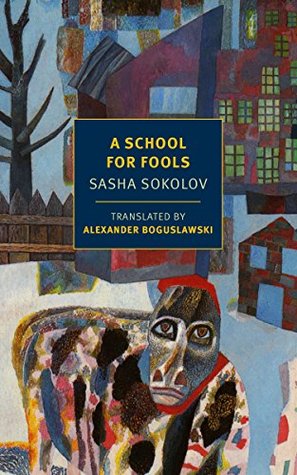
A School For Fools by Sasha Sokolov

By turns lyrical and philosophical, witty and baffling, A School for Fools confounds all expectations of the novel. Here we find not one reliable narrator but two “unreliable” narrators: the young man who is a student at the “school for fools” and his double. What begins as a reverie (with frequent interruptions) comes to seem a sort of fairy-tale quest not for gold or marriage but for self-knowledge. The currents of consciousness running through the novel are passionate and profound. Memories of childhood summers at the dacha are contemporaneous with the present, the dead are alive, and the beloved is present in the wind. Here is a tale either of madness or of the life of the imagination, in conversation with reason, straining at the limits of language; in the words of Vladimir Nabokov, “an enchanting, tragic, and touching work.”
Goodreads description

As I read this book I was reminded of a formative time in my life. I had left university only to become ill and as I waited for an operation I spent my time reading and watching films on television. One of the books I read was One Hundred Years of Solitude and so began my love of magic realism. One of the films I watched was Tarkovsky's film The Mirror. I was in the right state of mind for both book and film. I had time. I was willing to let go of expectations and experience these remarkable works of art. The experience was almost a mystical one.  

A School for Fools reminds me of Tarkovsky's film. Maybe this is partly because of its non-linear structure, the poetry, the disorientation, the slowness even, the focus on a young man growing up. It also reminds me of these things because you have to be in the right state of mind. I am not sure I was/am in the right "zone" to really appreciate the book. Perhaps the pressure of having to read and review a book a week for this blog played against me. The book is complex and full of symbols and not by any means an easy read. Nevertheless I was able to appreciate much of what it had to offer, if not fully enjoy it. 

At the centre of the novel is the narrator, or should I say two narrators, because the book's central character is a young man with schizophrenia and two distinct personalities, Pavel and Savl (Paul and Saul of the Bible), and the narration flicks between them in a sort of internal or possibly external dialogue. But the duality of the book doesn't stop there as we see the world through Pavel's eyes and find that other characters have two personifications. 

Pavel also has a problem with linear time and the narrative jumps backwards and forewards  without warning. Pavel can be at once a schoolboy at a special school (the school for fools of the title) and a successful engineer wooing a woman. I took that to mean he is at once the schoolboy and what he should have been. This is psychological magic realism of the first order.

Other elements of magic realism include the butterflies Pavel collects, which appear in the winter as well as in the summer. The schoolteacher and the boy's idol, the inhabitant of a dacha on the other side of the river, is able to be both alive and dead.  The river is identified by Pavel as the river Lethe. 

With so many magic realism books to read I seldom allow myself the luxury of saying that I intend to read a book again, but I do want to return to this book. I will do so when the time is right and my mind is able to fully grasp the book's brilliance. 

I received a copy of this book free from the publisher in return for a fair review. 


Wednesday, 20 May 2015

The Nose by Nikolai Gogol


"The Nose" is a satirical short story by Nikolai Gogol. Written between 1835 and 1836, it tells of a St. Petersburg official whose nose leaves his face and develops a life of its own.
Amazon description

Whilst in 1915 Gregor Samsa woke up to find he had been transformed into a monstrous bug, in 1836 Major Kovalyov woke to discover that he did not have a nose. Kafka's The Metamorphosis is often said to be the first piece of European magic realism, but Gogol's The Nose is every bit as magic realist. 

This is a delightful and witty short story with that very Russian sense of the surreal combined with satire, that one sees in Bulgakov's writings (Bulgakov was an admirer of Gogol's work). I could go into all sorts of linguistic and psychological analysis of the symbolism of a man losing his nose, or I probably could if I knew Russian. But I suspect that rather misses the point. As the story says: Nonsense really does occur in this world, and, sometimes, nonsense altogether without an element of plausibility.

Major Kovalyov clearly cares a lot about social status and appearances, with the result that the loss of his nose, which one suspects had been held in the air rather more than it merited, is a major blow (if you forgive the double pun). Things take an even more surreal turn when the Major encounters his nose dressed in the attire of a senior civil servant (of a higher grade than the Major's). 

As is the way in magic realism, there is no attempt at an explanation for the errant nose and in some ways the story drifts at the end, as Gogol starts to directly address the reader. An early version apparently revealed that the story was in fact a dream, but this resolution was abandoned by the author. I am glad that Gogol chose not to take this course - dream resolutions always seem something of a cop-out and the weirdness of the story works for me. It has worked for many other people as well, inspiring an opera by Shostokovich, various theatrical productions and the animated film (above) by Alexandre Alexeieff and Claire Parker, which uses pin-screen animation, probably one of the most time-consuming forms of film production ever invented, with over a million pins creating shadows on a white screen.

Wednesday, 8 April 2015

The Railway by Hamid Ismailov


Set mainly in Uzbekistan between 1900 and 1980, The Railway introduces to us the inhabitants of the small town of Gilas on the ancient Silk Route. Among those whose stories we hear are Mefody-Jurisprudence, the town's alcoholic intellectual; Father Ioann, a Russian priest; Kara-Musayev the Younger, the chief of police; and Umarali-Moneybags, the old moneylender. Their colorful lives offer a unique and comic picture of a little-known land populated by outgoing Mullahs, incoming Bolsheviks, and a plethora of Uzbeks, Russians, Persians, Jews, Koreans, Tatars, and Gypsies.

At the heart of both the town and the novel stands the railway station—a source of income and influence, and a connection to the greater world beyond the town. Rich and picaresque, The Railway is full of color. Sophisticated yet with a naive delight in storytelling, it chronicles the dramatic changes felt throughout Central Asia in the early twentieth century.

 Goodreads description

Have I told you that I have developed a liking for Russian magic realism? Yes, I think I have. And now I can add that I also enjoy magic realism from Uzbekistan, the now independent state which was part of the former Soviet Union. Hamid Ismailov is clearly in the tradition of Russian satirical magic realism that I admire so much in Bulgakov and Gogol, but this is combined with the traditions of Muslim Central Asia, which remind me of the magic realism of Salman Rushdie for want of better comparators. The result is fascinating and intoxicating.

If you are looking for a simple narrative and a conventional story structure then this is not the book for you. For starters the central character is the town of Gilas, rather as Macondo is a major character in One Hundred Years of Solitude. But unlike in Marquez's classic, we do not follow one family, but dozens of townsfolk over several generations - the author very helpfully provides a list. What is more the book references Uzbek historic events and customs - and again the writer provides footnotes. Add the fact that the book jumps around cchronologically and you can see why this is not an easy read.

So how did I approach reading The Railway? I could, I suppose, have been studious about it - referring to the dramatis personae and footnotes as I read. I could have, but I didn't. Even though I review all the magic realist books I read, I do not approach them in a methodical way. Instead I tend to be more impressionistic in my approach. My love of magic realism is partly because it speaks to the subconscious, and deals in visions and the poetic. To experience these it is best that I do not analyse too intellectually, at least not while I am reading. This then was my approach to the book and it paid off. 

It was an approach that I used when first I watched Tarkovsky's film Stalker. I was reminded of that film as I read this book. I am left with some crystal-clear images, so clear that they could be scenes in a film. There is the image of the boy angry and alone beside the railway, looking up and, seeing a girl on a passing train, blowing her a kiss. There is the image of the railway itself against the vast steppe - a ladder from earth to the sky. There are images galore. There is some sublime poetry in The Railway. I say sublime because the book has a strong strand of Islamic mysticism. Obid-Kori meditates in prison: Words can turn out other ways, words can be replayed and replied, relayed and re-lied., rehearsed and re-versed... but life is one, and life is from Allah. And what do we know of it? It cannot be sensed or weighed between words any more than the rays of the sun can be sensed between leaves... leaves... leaves... And only the leaves' shadow catches the little patches of light, surrounds, frames, defines, confines. As he gazes through the iron grating at the sky we are told that the grating was formed by two verticals and six rusty crossbars. It mirrors, although the writer does not say so directly, the form of the railway ascending to heaven. 

But if this book reminds me of Stalker it also reminds me of Master and Margarita. Ismailov's satire is brilliant, laughing at Russian attempts to homogenize the local inhabitants. They in turn take the communist slogans (written in a tongue they do not comprehend) to be magical charms to ward off harm. We laugh at the absurd language of the oppressor, e.g. circumcision is made the crime of "sabotage of the member". 

The way the narrative moves from one time to another allows us to see repetitions and variations. Throughout the book characters are shipped off to the gulags and some return. Others, like the Koreans, are deported to Gilas. The threat of imprisonment, deportation and death is present, regardess of whether it is the Tsar in Moscow, or Lenin or Stalin. Life goes on for Gilas, the book's central character. New people take the posts vacated by the disgraced. The people of Gilas continue on their own sweet way: drinking, pursuing their own advancement, and even making money as the entrepreneurial spirit of the people of the Silk Road turns even communism to their advantage. 

This is a book I want to read again. It certainly merits it and probably needs it. If you like One Hundred Years of Solitude and The Master and Margarita you will probably like this. 

I received this book from the publisher via Edelweiss free in return for a fair review.

Sunday, 15 February 2015

The Librarian by Mikhail Elizarov


If Ryu Murakami had written War and Peace

As the introduction to this book will tell you, the books by Gromov, obscure and long forgotten propaganda author of the Soviet era, have such an effect on their readers that they suddenly enjoy supernatural powers. Understandably, their readers need to keep accessing these books at all cost and gather into groups around book-bearers, or, as they're called, librarians. Alexei, until now a loser, comes to collect an uncle's inheritance and unexpectedly becomes a librarian. He tells his extraordinary, unbelievable story. 

Publisher's description

I am not sure what I expected when I opened this book. And as I read the first section I remained unsure. We are given the back-story, which was gently amusing. Gromov, a Soviet author of uninspiring books in which heroic workers overcome adversity, was so disregarded that few of his books remained, gathering dust. However a few people discovered that Gromov's books have a magical quality. If read in one sitting without missing a word, they can temporarily alter the mind of the reader. Different books have different effects - one gives the reader the power to influence others, one instills joy, another rage. These readers gather into gangs or "libraries" around the keeper or "librarian" of one or more book. In the way of all gangs, the libraries battle with each other for control of the books. 

The book really took off for me with the arrival of the narrator, Alexei Vyazintsev, in a small town to sell his late uncle's flat. What Alexei does not realize is that he has not only inherited a flat but a copy of a Gromov book and the post of its librarian.  He is rapidly plunged into the violent alternative world of the libraries. I was hooked and found it hard to put the book down. 

The Librarian works in so many ways. There is clearly an element of political and social comment here. There are obvious parallels with the wild west nature of post-Soviet Russia, with its criminal gangs and their wars. There is also a parody of the false mythology of the Soviet Union and even conventional western literature's use of archetypes: Alexei is a normal guy without friends who turns out to be the chosen one, and then Elizarov twists that archetype. But I am sure I missed a lot of references.

I was of course struck by the way the novel portrays the power of books and ideas to transform our view of the world and how The Librarian shows that human nature will turn something which is so redemptive into a stimulus for violence. The book is read before the battles to give heart to the combatants, it is carried into battle on a pole or on a chain around the librarian's neck. It reminded me of religious wars I had read about where the Bible or the Koran was/is treated in the same way and I was struck by how the most appalling wars have been stimulated by books.

And boy is this book violent at times! The battles between the libraries are portrayed in such graphic detail that it was like being inside a violent video game. The violence shocked me at first, but it didn't stop me reading and after a while I was so engaged in the battle for survival waged by Alexei's Library that I accepted the violence as a necessary part of Elizarov's narrative. 

There is an awful lot to think about in this book. I don't think the characterization was particularly strong, but in a way this book is not about individual psychology but that of the collective, on which it shines a piercing light. 

Yet again we have a fine example of Russian magic realism. Do I recommend reading it? Absolutely. 

I received a review copy of this book from the publisher in return for a fair review.


Wednesday, 21 January 2015

Senya Malina Tells It Like It Was by Stepan Pisakhov

Baron Munchausen... Paul Bunyan... SENYA MALINA!

An impish Russian peasant spins tale after tale tall about himself and the remote northern world that he calls home. Brimming with humour (much of it satirical), outrageous plots, vibrant language and clever allusion, and accompanied by masterful illustrations, this finely crafted creative translation of Pisakhov’s classic stories is for children and adults alike to cherish.

Goodreads description

I have an image in my head of a small boy lying in his bed chuckling as his father reads one of Senya Malina's tall tales. His father is laughing too, but not necessarily at the same things. After the boy has gone to sleep, his father goes downstairs and continues reading. 

This book of short stories/tall tales is an absolute delight. I am a sucker for folktales and this book falls within a tradition of tall-story folktales that you will find the world over. In the English-speaking world, especially in the UK and US, folktales are seen as suited only for children, but that is not the case elsewhere. I am writing this in the Czech Republic, where Czech adults still enjoy fairytales; their Slav cousins the Russians share this view. Stepan Pisakhov came from a family with a tradition of professional storytelling in the North of  Russia and wordplay and oral tales were part of his childhood. Born in 1879, Pisakhov grew up in Tsarist Russia, but he lived until 1960. Nevertheless the subject matter of his tales remains the lives of peasants who live close to the earth, struggling against the bureaucrats of both Tsar and the Communist party. Many of Malina's tales (Malina means raspberry) show the clever peasant putting one over on figures of authority. The divide between the rural and urban population is very obvious.  And as I read Blackwell Boyce's brilliant translation I could hear the dry rural humour and was reminded of listening to my farmworker uncle spinning his tales with a straight face and a twinkle in the eye.

There are three targets for Malina's tricks - the bureaucrats:
Bureaucrats as a species have such weak spines they need their uniforms to prop them up. It’s always puzzled me where they found the strength to laugh at us peasants and common folk,
the merchants from the town and the main representative of authority in the village - the local priest.

In the tale about the Russian/Japanese War (1904-1905) Pisakhov satirizes the way the Russion government, in order to gain support for an imperialist venture, claimed it was a religious war. The women of the village fool the army into taking felt versions of their menfolk instead, but Malina's wife is bad with the needle and he gets conscripted. The war is fought with religious symbols - crosses and incense bombs on the Russian side - and Malina narrowly escapes death when a large Buddha scores a direct hit on a warehouse he is guarding. Of course this story highlights what we have seen elsewhere in this blog, that magic realism is the literary device of the underdog, allowing in this case the Russian peasant to fight back. The truth of the campaign was that 40,000 to 70,000 Russian soldiers died in a war that was presaged the warfare of 1914-1918.

The magic realism in the tales works in several ways. In some tales Malina has extra skills - like the ability to skip on water or stretch his legs so far to block the merchants' way. In others it is whimsical such as the lovely tale of how Malina, unable to find somewhere to sleep, lies down on the seashore and draws the sea over him as blanket. In others it is beautifully poetic such as in the story Frozen Songs, in which the cold winters of the Russian north turn words into ice, so that words aren't heard but seen. Young women weave together frozen songs into lace sheets and mothers create gentle ice-words for their young children to play with. Of course when the merchants and the kings try to take advantage of these treasures, the people of the area have the last laugh. In many tales the story starts with a logic and then takes it in a surreal direction - such as the woman whose voice is so piercing that it can literally cut.

The people's closeness to nature runs through the stories and it results in some lovely pieces of magic realist humour: a bear is recruited to frighten off priests who are picking all the wildberries, specially trained polar bears sell milk and a brown bear tries to muscle in on the act by rolling himself in flour, fish catch themselves, gut themselves, salt themselves and leap all by themselves into barrels, Malina lassoes a flock of ducks and uses them as an umbrella.  

There is nothing I would fault in this book. The translation is, according to the translator, very much a liberal, creative one, but I get the impression that it is still true to the spirit of the original work. The illustrations by Dmitry Trubin (see cover above) are great fun and likewise in the spirit of the book. 

My one qualm with this book is its marketing and branding. The illustrations make it look like a children's book to my Western eyes and yet I note that Senya Malina Tells It Like It Was is not listed as in the children's category on Amazon. The pricing of the ebook however at $12 (£7) is high for a children's title and even in the current climate for an adult ebook. It is also a big book for children with a lot of stories. The publisher could have divided it into three parts and sold them at $2.99 each and I suspect got a lot more readers and made more money. It's a shame because this book deserves to be read widely.

I received this book free from the translator in return for a fair review.
 

Wednesday, 22 October 2014

On The Golden Porch & Other Stories by Tatyana Tolstaya


Thirteen stories by the first woman in years to rank among Russia's most important writers celebrate courage and the will to endure among the people who live on the periphery of society but who dream with a redeeming passion.
Goodreads description 

I have a particular liking for Slavic literature. In a previous review I raved about the short stories of Ekaterina Sedia and one of my favourite authors is the French Russian writer Andre Makine.  To that list of excellent Russian writers I can now add Tatyana Tolstaya. They all share a way of portraying and seeing the world as hauntingly beautiful filled with people whose lives are doomed to disillusionment.

The writer Tolstaya most reminds me of is not her famous grandfather but Chekhov. There is an ironic humour about her writing and yet she does not laugh at her subject, nearly all of whom are struggling with the loss of their dreams and aspirations.  Some are trapped by their relationships, some by hopeless unspoken love, and some by an absence of identity. They could easily be Chekhovian characters. Tolstaya draws each with loving and detailed care.

I was particularly impressed by Tolstaya's very individual writing style, with descriptions that are capable of being poetic and humourous at the same time. Take this one of the lobby of a women's hair salon as an example: stiff green sabres grew hilt-down out of large pots, and photographs of bizarre creatures with unpleasant glints in their eyes stared from the walls under incredible hair - towers, icing, rams' horns; or ripples like mashed potatoes in fancy restaurants. At other times the style is conversational, with short verbless sentences: More tea? Apple trees in bloom. Dandelions. Lilacs. Oof, it's hot. Leave Moscow - to the seaside. Although poetic the prose is economical. The writer's touch is light, allowing impressions to build in the reader's mind. 

Tolstaya's use of magic is equally light and impressionistic. She does not feel the need to highlight it, because it is a magic which runs deep in the Slavic soul and tradition. In the first story in the collection for example a five-year old girl is talking about her governess Maryvanna, whom she dislikes. She ends the story with the lines: Farewell Maryvanna. We're ready for summer. What does she mean by that? It helps to know that the spirit of winter is called Morana in Russian and in a ceremony to welcome spring an effergy is often burnt and then thrown in a river. In another example of Tolstaya's light touch with magic,  Rendezvous with a Bird features a boy's grandfather who is waiting for death, which comes in the form of a bird. The dark garden rose and fell like the ocean. The wind chased the Sirin bird from the branches: flapping its mildewed wings, it flew to the house and sniffed around, moving its triangular face with shut eyes: is there a crack?


I could write an essay about the themes I found in Tolstaya's stories: of the importance of the passage of time, of memory, and dreams and self-delusion. But the format of a blog post does not afford the space to do so. Instead I simply urge you to find  this book and read the stories for yourself. 

Thursday, 7 August 2014

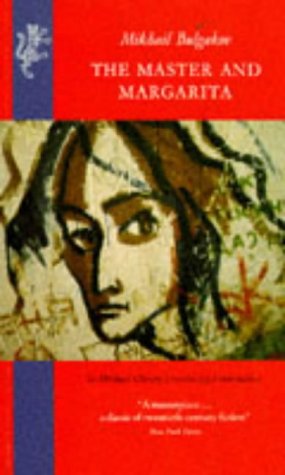
The Master and Margarita by Mikhail Bulgakov


Mikhail Bulgakov's devastating satire of Soviet life was written during the darkest period of Stalin's regime. Combining two distinct yet interwoven parts-one set in ancient Jerusalem, one in contemporary Moscow-the novel veers from moods of wild theatricality with violent storms, vampire attacks & a Satanic ball; to such somber scenes as the meeting of Pilate & Yeshua, & the murder of Judas in the moonlit garden of Gethsemane; to the substanceless, circus-like reality of Moscow. Its central characters, Woland (Satan) & his retinue-including the vodka-drinking, black cat, Behemoth; the poet, Ivan Homeless; Pontius Pilate; & a writer known only as The Master, & his passionate companion, Margarita, exist in a world that blends fantasy & chilling realism, an artful collage of grostesqueries, dark comedy & timeless ethical questions.
From Goodreads description

I have been looking forward to reviewing this book ever since I started this blog. It is quite simply my favourite book (magic realist or other) of all time. If One Hundred Years of Solitude opened my eyes to magic realism, then this book opened my heart and mind. 
And yet here I sit, with my hands paused above the keyboard, trying to find an approach to this review. It is simply impossible to do the book justice in a short blog post. There are so many aspects to it that merit discussion, preferably long discussions in front of an open fire with a glass in one's hand. I have read this book at least three times and each time I see and understand new things.  It is as if the book keeps changing, like the demonic characters in the book - Woland is described as having a limp in the right leg, the left leg, and no limp at all. He is short and then he is tall.  
Over the past two years I have often wondered how The Master and Margarita fits in with the various definitions of magic realism. At times I questioned whether it might better be described as surrealist satire, even fantasy - indeed it is sometimes described as such. If it is magic realism then why aren't some fantasies such as Neil Gaiman's American Gods?  Isn't there too much magic (including conventional fantasy characters, such as witches on broom sticks) and not enough realism? But as I have read Master and Margarita again, I have felt more at ease with its inclusion in the magic realist canon.

The context in which this book was written is crucial to understanding it. The book was so dangerous that (like the Master) Bulgakov burnt an early version of it. In Stalinist Russia it was necessary to write a book that was full of smoke and mirrors and yet it also needed to ring true.  In a totalitarian regime magic realism is a necessity.  

At the same time life in a totalitarian state can be surreal. If the great leader says something is black then it is black, even if it is white. Senior leaders disappear from state photographs and it is as if they didn't exist. History is rewritten. This is the world that Bulgakov is satirizing. It is a world that claims to be rational and realist and yet refuses to acknowledge what is happening in front of its eyes.  Only Margarita and the Master accept the fact that Woland is Satan and what is really happening and only they are unscathed by encountering black magic. All the other inhabitants of Moscow who appear in the novel are taught a lesson by Woland and his acolytes. 

The book opens with a quotation from Goethe's great drama Faust:

"Say at last - who art thou?"
"That Power I serve
Which wills forever evil
Yet does forever good." 

It seems to me that this quotation is crucial to the understanding of the book.  The question is Faust's and the answer that the demon Mephistopheles. Woland and his crew may be diabolical but in the grotesque carnivalesque world of this wonderful novel everything is turned on its head and black can truly be white.  Some Christians will find this book hard to stomach with its portrayal of the Devil as a necessary good/evil. But as Woland says: What would your good do if evil didn't exist, and what would the earth look like if all the shadows disappeared? After all, shadows are cast by things and people. I have noted elsewhere in this blog that two features of magic realism are ambiguity and duality. Both are at the heart of this book. 

The world of Stalin's Moscow is set alongside that of Pilate's Jerusalem. In both there is authoritarian rule, secret police, people afraid of speaking the truth about power (with the exception of Yeshua/Jesus), and people betraying others for money. What binds these two strands together is the Master's novel about Pilate. The most famous line in The Master and Margarita is probably manuscripts do not burn.  And yet the Master burns his manuscript and Woland burns it again at the end of the novel. This is a book about a book and about writing. Clearly there is a reference here to Bulgakov's own manuscripts: the one he burnt and the final one that was published after his death. It is a statement of how the book continues to exist within the writer and his readers. And it is also a book within a book. The Master's novel is not complete and must be finished to provide the resolution of Bulgakov's book. I have always found the conclusion of The Master and Margarita to be particularly haunting and at the same time almost uniquely satisfying.  


Wednesday, 11 December 2013

Moscow But Dreaming by Ekaterina Sedia


The first short story collection by award-winning author Ekaterina Sedia! One of the more resonant voices to emerge in recent years, this Russian-born author explores the edge between the mundane and fantastical in tales inspired by her homeland as well as worldwide folkloric traditions. With foreword by World Fantasy Award-winner Jeffrey Ford, Moscow But Dreaming showcases singular and lyrical writing that will appeal to fans of slipstream and magical realism, as well as those interested in the uncanny and Russian history.
Goodreads Description 

The twenty-one short stories in this stunning collection o=often focus on the outsider or displaced, whether it be the adopted Russian child, the ex-countess in Soviet Russia, the impoverished Prince of Burundi in exile in Moscow, or Hector of Greek myth with a mundane job yearning for a heroic death.  Magic realism works when there is this sort of dichotomy and in these stories it works really well. 

The stories are often infused with Russian myth and history.  In Kikimora a lesbian couple discover their true magical natures. In Tin Cans an old man working as a security guard at the Tunisian Embassy faces the ghosts of girls, sadistically raped and murdered by Stalin's henchman and KGB chief Beria. Other stories are set at the end of the October Revolution or at the Stalingrad Seige. All combine historical realism with fantasy and often violence.

Another element of alienation that we find in many of the stories is an alienation with  post-communist Russia, in which many people have seen their livelihoods and neighbourhoods decline in the face of materialism and gangsterism. In By the Liter two men absorb vodka and the memories of murdered mafia victims. 

Sedia is brilliant at taking a story in a way you don't expect it. It is virtually impossible to predict the ending even though the stories are short (about 15 pages). In addition she will often take a fictional genre and twist it: as in Zombie Lenin, in which a girl is pursued by the mummified Bolshevik leader, or in A Handsome Fellow - a take on the vampire myth (Upyr in Russian) set during the Stalingrad Seige. One of my favourite stories is The Bank of Burkina Faso which is based on this premise: what if those email scams about money frozen in overseas banks were actually true - and what if the banks only exist in dreams.

All the stories in this collection were excellent. The two that didn't work quite as well for me weren't set in either America or Russia (Ebb and Flow and Munashe and the Spirits), but that is quibbling. The author's writing is beautiful, her imagery unusual and the psychology of her characters is complex, even if she only has a few pages to draw it. 

Quite simply this is one of the best books I have read as part of my magic realism challenge.