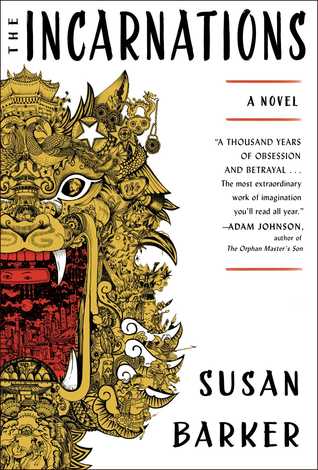
Hailed as “China’s Midnight’s Children” (The Independent) this “brilliant, mind-expanding, and wildly original novel” (Chris Cleave) about a Beijing taxi driver whose past incarnations over one thousand years haunt him through searing letters sent by his mysterious soulmate.
"Who are you? you must be wondering. I am your soulmate, your old friend, and I have come back to this city of sixteen million in search of you."
So begins the first letter that falls into Wang’s lap as he flips down the visor in his taxi. The letters that follow are filled with the stories of Wang’s previous lives—from escaping a marriage to a spirit bride, to being a slave on the run from Genghis Khan, to living as a fisherman during the Opium Wars, and being a teenager on the Red Guard during the cultural revolution—bound to his mysterious “soulmate,” spanning one thousand years of betrayal and intrigue.
As the letters continue to appear seemingly out of thin air, Wang becomes convinced that someone is watching him—someone who claims to have known him for over one thousand years. And with each letter, Wang feels the watcher growing closer and closer…
"Who are you? you must be wondering. I am your soulmate, your old friend, and I have come back to this city of sixteen million in search of you."
So begins the first letter that falls into Wang’s lap as he flips down the visor in his taxi. The letters that follow are filled with the stories of Wang’s previous lives—from escaping a marriage to a spirit bride, to being a slave on the run from Genghis Khan, to living as a fisherman during the Opium Wars, and being a teenager on the Red Guard during the cultural revolution—bound to his mysterious “soulmate,” spanning one thousand years of betrayal and intrigue.
As the letters continue to appear seemingly out of thin air, Wang becomes convinced that someone is watching him—someone who claims to have known him for over one thousand years. And with each letter, Wang feels the watcher growing closer and closer…
Goodreads description
I often discuss why a novel I am reviewing is or is not magic realism, but in this case I will not do so. The reason for this is to avoid spoiling the plot for you.
At the centre of the novel is the question: who or what is the writer of the letters that Driver Wang receives - letters that claim to come from the reincarnation of the character that Wang encountered in his several lives. This mystery drives the narrative on and has us, the readers, and Wang himself looking around for an explanation. The answer may or may not be magic realist. It is not a spoiler to say that the book is shot through with ambiguity - Wang had endured a spell in a mental hospital as a child, so could the arrival of the Watcher be part of a delusion?
The Watcher narrates Wang's previous incarnations and the interaction between the Watcher and Wang. Although the incarnations happened at different times in Chinese history and the incarnations are very different (Wang is a woman in one) there are some common themes to these accounts. The two characters are attracted to each other (they are often homosexual lovers) and yet one will always end up betraying and hurting the other. The Watcher claims that the letters are an attempt to bring a halt to this. As a writing device this means that Barker's novel is able to span the long and brutal history of China while keeping focused on one person. The letters are in effect a series of related short stories.
The letters are interspersed into the account of Wang's life in contemporary China and his unsatisfactory home and work life. Wang's childhood and youth are recounted in a series of flashbacks that help explain why this potential high flyer drives taxis for a living and why he had a breakdown. Wang is struggling to cope with his current life: it is asking a lot for him to take on his other lives. The book is a study in how to draw a psychological profile of a character, as understanding Wang becomes possibly as important to the reader as the identity of the Watcher.
Susan Barker's book is a stunning piece of writing, weaving the various threads in a way that enhances rather than hinders the plot and pace. The historical elements are beautifully if horrifyingly well-drawn.
I received this book free from the publisher in return for a fair review.