Showing posts with label Smoky Zeidel. Show all posts

Wednesday, 20 July 2016

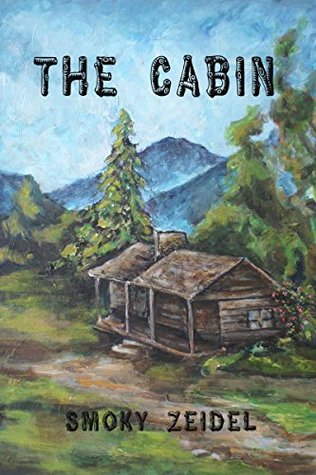
The Cabin by Smoky Zeidel


James-Cyrus Hoffmann has just inherited his grandfather's farm, and with it a mysterious cabin deep in the woods on Hoffmann mountain, a cabin he has dreamed about since childhood. When James-Cyrus enters the cabin, he is vaulted back through time to the Civil War era, where he meets Elizabeth, the brave young woman who lives there, and Malachi, a runaway slave.

James-Cyrus' neighbor, Cora, knows all too well the tragic history of the cabin. When James-Cyrus tells Cora about Elizabeth, Malachi, and his fantastic vault back through time, the two devise a plan to change the past and right a wrong that has haunted the Hoffmann family for generations. But can they find the key to unlock the past in time to change what history said happened to Elizabeth and Malachi?

Goodreads description

I reviewed Smoky Zeidel's The Storyteller's Bracelet in December: http://magic-realism-books.blogspot.com/2015/12/the-storytellers-bracelet-by-smoky.html. I enjoyed that book and so was very pleased when Smoky offered me a review copy of The Cabin

Time slip is something of a genre or at least subgenre of its own. And there is even a debate to be had whether it falls within magic realism. One of the issues with time slip is how you manage the implications of what happens when someone from the future impacts on the past. The grandfather paradox is well-known: You travel into the past and murder your own grandfather before he sires your mother or your father, and where does that then leave you?  Carl Sagan Ponders Time Travel Smoky Zeidel manages in The Cabin to solve this problem. I won't tell you how, as it will give away too much of the plot resolution.

The structuring of the novel is very artful, with chapters pursuing related storylines set in different times featuring the different generations. This could have been confusing, especially as there were some family names which recurred through the ages, but Smoky Zeidel managed to keep the different strands clear. In fact this weaving of stories across the ages is part of the underlying message and magic of the novel: There was a deep connectedness between mountain women in the Allegheny Mountains of Virginia, a connectedness that transcended the tangible, yet was as real as the forest itself. It was a part of the mountain magic, her grandmother had taught her when she was a young child, and it was particularly strong between Corrine and her sister, Catherine. 

I found the historical and folkloric context of the novel fascinating. As a Brit I was totally unfamiliar with the Native American tradition of fairy stones, and, I confess, I have only limited knowledge of the American Civil War and particularly the Underground Railroad, the network of secret routes and safe houses that allowed slaves to escape to the northern free states. The Hoffmann's cabin is one such safe house and it is also the portal between the different ages. 
   
This is a well-crafted and entertaining story, easy to read in one or two sittings. 

I received a copy of this book from the author in return for a fair review.
 

Monday, 1 February 2016

Interview with Smoky Zeidel


Having review Smoky's book The Storyteller's Bracelet a few weeks ago, I am delighted to welcome this talented writer to the blog to answer some questions.

Who are your favourite magic realist authors and why?
I love Gabriel Garcia Marquez, and Isabel Allende, of course. Who doesn’t? In The House of the Spirits by Isabel Allende, Clara’s psychic ability—her ability to talk to spirits, her gift for curses—are as natural for her as breathing. I think the fact so many magic realism authors are from Central and South America is because that sort of thing isn’t looked at as “crazy” in those cultures. They are considered gifts. 

Jose Saramago is another favorite. He’s from Portugal, and his Death With Interruptions is one of the finest (if toughest) books I’ve ever read. You actually fall in love with Death by the end of the book, but I don’t want to put any spoilers here, so I won’t say any more than that.

I hope Helene Wecker follows up The Golum and the Jinni with another magic realism book, because that—apparently her debut novel—was nothing short of brilliant. And I guess I should mention Haruki Murikami. I’m not as big of fan of his as some readers are, but I thought The Strange Library was one of the most fun books I read last year.

What is your all-time favourite magic realist book?
That’s a tough question. I have so many favorites, including those I mentioned already. But if I was stuck on a desert isle and could have only one magic realism book with me, it would be F.G. Hagenbeck’s The Secret Book of Frida Kahlo. Kahlo is my favorite artist, and I read everything I can get my hands on about her. This book absolutely blew me away. I was so enchanted with the ending, I had to go back and re-read it from the beginning so I could look for clues that lead to his ending.

Why do you write magic realism?
 I look at the world as a magical place. Perhaps it’s my more animistic way of looking at nature and life that is responsible, but I see magic everywhere I go. I talk to the trees, the rivers, the rocks, the desert, and they talk back. Oh, not in words, per se, but there is definitely a connection in my mind. My husband and I love to collect rocks, but I never take one without asking its permission. Sometimes, the rock is happy to be pocketed. Other times, I get the distinct impression I should leave it where it is, and I do. So, for me, it is natural to write magic realism, because, to me, magic realism is just what is.

Can you give us your definition of magic realism?  
I define magic realism as magic or supernatural occurrences happening in what otherwise is a “normal” setting and time. Books like The Wonderful Wizard of Oz are fantasy, because, for the most part, the story takes place in another world that does not exist. Same with the Harry Potter books. In both, part of the story is real: Dorothy’s life in Kansas, and Harry’s life with the Dursleys are normal settings with nothing supernatural about them, but most of those books take place in an alternate, very magical setting. But a book like House of the Spirits has Clara talking to spirits who come at her beck and call. While that has an element of fantasy to it, it’s magic realism, because not all the characters can do what she can do, yet those who know of her skills don’t question it at all. It’s part of their everyday existence.

Tell us about your latest magic realist book? 
My novel, The Cabin, was just released by Thomas-Jacob Publishing. In it, James-Cyrus Hoffmann has just inherited his grandfather’s farm, and with it a mysterious cabin deep in the woods on Hoffmann mountain, a cabin he has dreamed about since childhood. When James-Cyrus enters the cabin, he is vaulted back through time to the Civil War era, where he meets, Elizabeth, the brave young woman who lives there, and Malachi, a runaway slave. James-Cyrus’s neighbor, Cora, knows all too well the tragic history of the cabin. When James-Cyrus tells Cora about Elizabeth, Malachi, and his fantastic vault back through time, the two devise a plant to change the past and right a wrong that has haunted the Hoffmann family for generations.

While that might sound more fantasy than magic realism, it isn’t. While the magic in the book takes the characters by surprise at first, they don’t question it is happening, at least, not for long. The story is historically accurate as far as the setting and storyline about the Underground Railroad and the Civil War are concerned. The story itself was inspired by events that took place in my own family, events that were very much of this world.

The Cabin is available in print and in Kindle editions, as is my other magic realism novel, The Storyteller’s Bracelet.

Wednesday, 9 December 2015

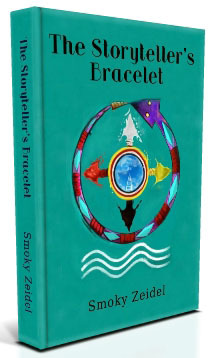
The Storyteller's Bracelet by Smoky Zeidel


It is the late 1800s, and the U.S. Government has mandated native tribes send their youth to Indian schools where they are stripped of their native heritage by the people they think of as The Others.
Otter and Sun Song are deeply in love, but when they are sent East to school, Otter, renamed Gideon, tries to adapt, where Sun Song does not, enduring brutal attacks from the school headmaster because of her refusal to so much as speak.

Gideon, thinking Sun Song has spurned him, turns for comfort to Wendy Thatcher, the daughter of a wealthy school patron, beginning a forbidden affair of the heart. But the Spirits have different plans for Gideon and Sun Song. They speak to Gideon through his magical storyteller's bracelet, showing him both his past and his future. You are both child and mother of The Original People, Sun Song is told. When it is right, you will be safe once more.

Will Gideon become Otter once again and return to Sun Song and his tribal roots, or attempt to remain with Wendy, with whom he can have no future?

Goodreads description

This is a story which takes a terrible and hidden part of American history - the enforced schooling of Native American children in the ways of the white man. There is an excellent Wikipedia article on the subject here: http://en.wikipedia.org/wiki/American_Indian_boarding_schools which reveals that the events depicted in The Storyteller's Bracelet - such as the abuse of Sun Song by the evil headmaster - are very much based on what really happened. Hats off to Smoky Zeidel for writing about the subject and doing so in a way that gives us an excellent story whilst not shirking from the darkness of the subject. Sadly the removal of indigenous children from their homes to often brutal boarding schools with the aim of taking away their culture and identity was not confined to North America.

The novel is not simply an account of Otter and Sun Song's experience in the school. It is also a spiritual and mythical journey, which evolves into a creation story. The fact that magic realism is so often focused on a clash between a dominant white European culture and an indigenous one is a problem for those of us white European authors who want to explore the subject. How does one approach it without appropriating the indigenous culture one is writing about? Smoky Zeidel is very clear that she is not Native American and so rather than take one first nation's experience and legends as her focus, she has drawn on different First Nations' beliefs and culture to create a creation story of her own. She does so with huge respect, admiration and love for the beliefs in question. That is one approach. Another, and one I followed, is to create a realistic fantasy world. Some people may understandably argue that no appropriation is acceptable. But where does that leave the freedom of the artist and the imagination? Comments/thoughts welcome.

Smoky Zeidel is an excellent storyteller herself. The central characters are well drawn - sympathetic while not being perfect. The pacing of the story was compelling. Recommended.

I received this book from the author in return for a fair review.