Showing posts with label horror. Show all posts

Thursday, 27 October 2016

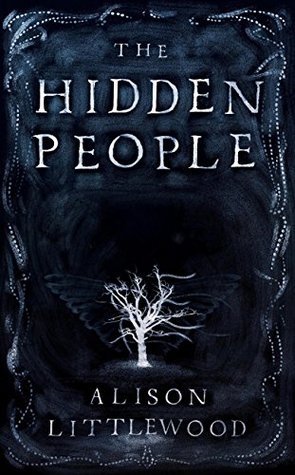
The Hidden People by Alison Littlewood

A chilling mystery - where superstition and myth bleed into real life with tragic consequences.
 
Pretty Lizzie Higgs is gone, burned to death on her own hearth - but was she really a changeling, as her husband insists? Albie Mirralls met his cousin only once, in 1851, within the grand glass arches of the Crystal Palace, but unable to countenance the rumours that surround her murder, he leaves his young wife in London and travels to Halfoak, a village steeped in superstition.

Albie begins to look into Lizzie's death, but in this place where the old tales hold sway and the 'Hidden People' supposedly roam, answers are slippery and further tragedy is just a step away . . .

Goodreads description

In time for Halloween, I bring you a review of a psychological horror story set in Victorian Yorkshire. The novel opens in London when the protagonist has his only meeting with his pretty cousin and future murder victim. They are at the Great Exhibition, an event that celebrated the triumphs of science and engineering of Queen Victoria's Britain. When Albie arrives in Halfoak after Lizzie's death, the church clock shows two times - London time and local time. Such a clock was not uncommon in that period, the arrival of the railways had highlighted the irregularity of time-keeping across the country. And it is also a symbol of the world into which Albie is stepping. The metropolis may have celebrated modern science, but in the countryside ancient beliefs (dating to pre-Christian times) continued. 

Littlewood's prose is modeled on that of Victorian novels, partly because it is narrated by Albie. A Yorkshire resident born and bred, the author is also able to reproduce the dialect of the locals accurately. Inevitably this means that the reader is reminded of Wuthering Heights, a reference that helps increase the sense of unease in the reader. 

The story unfolds slowly, perhaps too slowly, as Albie is drawn into the superstitions of the village and begins to doubt what he believes to be real. Is he going mad? Is there a rational answer to what happened to Lizzie and is now happening to Albie? When Albie's young wife arrives and they move into Lizzie's cottage and the site of the murder, things take a turn for the worse. Albie's obsession with his dead cousin causes tension within the marriage (how long has that been going on, we wonder). As his wife exhibits strange behaviour, Albie begins to wonder if she too is a changeling. Is history going to repeat.

Is this a magic-realism book? Well, it depends on how you read it. Littlewood offers a shocking alternative answer to why Lizzie died, but the ambiguity that pervades the novel continues to the end.

I received a copy of this novel from the publisher in return for a fair review.


Wednesday, 15 July 2015

Wylding Hall by Elizabeth Hand


When the young members of a British acid-folk band are compelled by their manager to record their unique music, they hole up at Wylding Hall, an ancient country house with dark secrets. There they create the album that will make their reputation, but at a terrifying cost: Julian Blake, the group’s lead singer, disappears within the mansion and is never seen or heard from again.

Now, years later, the surviving musicians, along with their friends and lovers—including a psychic, a photographer, and the band’s manager—meet with a young documentary filmmaker to tell their own versions of what happened that summer. But whose story is true? And what really happened to Julian Blake?

Goodreads description

Can a ghost story be magic realism? And if not, why not? 

This book rang a lot of bells for me. I spent my teenage years listening to Fairport Convention, Pentangle, and Led Zeppelin. I was into ancient British customs and mythology (especially Celtic legends), wore Celtic crosses, Indian cotton blouses and layered skirts, I even had the ubiquitous Afghan coat which smelled when it rained.  The posters that lined my bedroom wall were of Tolkien's Lord of the Rings (if you are over 50 you will know the one I am referring to) and sensitive poetic lead singers. Oh yes, I would have been a fan of Julian Blake and band. Elizabeth Hand is of my generation and I guess that she too was into the same things as I. She certainly knows how to conjure up the atmosphere of the time. 

This realism is added to by the narrative style - a series of short chapters each part of an interview with one of the surviving characters. These build to create a picture of the events of that summer. It took me a little while to form an image of the characters and to hear their voices, but they are generally well-drawn and distinct and so I soon settled back into the story. 

Other aspects of the story are more predictable, indeed regular, parts of any ghost story:  a tumbledown labyrinthine abandoned manor house, strange local customs, the locals coming out with cryptic comments which give the impression that they know something of the hall's dark secrets but aren't saying, and even a naive bunch of teenagers fascinated with the occult. I had the added insight that I know enough about the traditions and myths referenced by the book to see where things were heading. With the exception of one sentence (which I will not reveal to avoid spoiling the book for you) I was not surprised by the climax of the story, however that did not worry me or dent my enjoyment.

All of which brings me back to my opening questions? I think the answer to the first question is yes, ghost stories can be magic realism. And to the second: why can't they? Just because these are British traditions and beliefs and not those of Latin Americans or any other ethnic group, why are they not acceptable as magic in the magic realist sense? It is precisely because ghost stories are moored in a deep British collective subconscious that they work so well. 

You will note that I say ghost stories can be magic realism and not that they all are. Wylding Hall certainly is magic realism as far as I am concerned. This is because of the realism in the book, which is partly down the way the narrative works. The voices are real. They also differ in their interpretation and even in their accounts. There is an ambiguity about the conclusion to the story and how the characters feel about Julian. I would go so far as to say that despite the ghost story/horror set-up the book isn't actually about what really happened to Julian. For this reason the predictability I refered to earlier does not matter. For me the book is about the dynamic of the group and their relationship with the missing man, the way they are still trying to come to terms with and explain not only Julian's disappearance but also with him their ability to regain the magic of the music generated in the sessions at Wylding Hall. 

I really enjoyed this book and thank Open Road Media for granting me a copy of the book free in return for a fair review.