Wednesday, 26 March 2014

The House at the End of Hope Street by Menna Van Praag


When Alba Ashby, the youngest Ph.D. student at Cambridge University, suffers the Worst Event of Her Life, she finds herself at the door of 11 Hope Street. There, a beautiful older woman named Peggy invites Alba to stay on the house’s unusual conditions: she’ll have ninety-nine nights, and no more, to turn her life around. Once inside, Alba discovers that 11 Hope Street is no ordinary house. Past residents include Virginia Woolf, Dorothy Parker, and Agatha Christie, who all stayed there at hopeless times in their lives and who still hang around—quite literally—in talking portraits on the walls. With their help Alba begins to piece her life back together and embarks on a journey that may save her life.

Filled with a colorful, unforgettable cast of literary figures, The House at the End of Hope Street is a wholly imaginative novel of feminine wisdom and second chances, with just the right dash of magic.

Goodreads description

I found this book to be an easy read - I read it in one evening. It has a feel-good story about a magical house and its residents and is almost fairytale-like. Indeed in the first paragraph the house is described thus: the house appears to be enchanted. As if Rapunzel lives in the tower and a hundred Sleeping Beauties lie in the beds. And throughout the first chapter there are references to many more fairytales, with Peggy, the house's octogenarian owner, a benevolent witch complete with ghost cat, Oscar.

I know that a lot of readers like to read this sort of book. The house was enchanting and enchanted. No surprise then that when Alba walks through the door away from the real world and its problems, suddenly she is surrounded by magic (at which she hardly bats an eye). Pictures on the wall talk to her, books rearrange themselves on shelves, notes of advice appear out of air. It is a veritable Hogwarts.  Outside the house, the world is an altogether colder, less charitable sort of place. One might say that it is the realism to the house's magic. But does it make this book magic realism? Or should the magic be within the real? 

Whatever the answer to that question, I did get into the story and yes I did care what happened to young Alba Ashley, Peggy, Greer and Carmen. I, like Alba, still love a fairytale. But (you could tell there was a but coming) it was like reading literary candy-floss. After I put the book down, I felt unsatisfied.

The author's plotting at times was predicable and at others managed to surprise me.  But when you read in the first chapter, This house may not give you what you want, but it will give you what you need. And the event that brought you here, the thing you think is the worst thing that's ever happened? When you leave, you'll realize it was the very best thing of all, you sort of know what the ending will look like. Was it necessary to foreshadow it like that? But maybe that doesn't matter, many readers want and expect a happy ending.

So what are my conclusions: this is a great book if you want something undemanding, if you want a modern fairytale, if you want something to curl up with. I enjoyed it at that level. I just wanted more. I suppose I like my fairytales with the darkness left in. There are some sad elements in The House at the End of Hope Street. Abuse, physical and mental cruelty, loss of a child, all feature in the residents' pasts and I suppose I wanted those brought out more. Just as I wanted more made of the famous women whose portraits line the walls and advise the current residents. So much could have been done to bring out the "feminine wisdom" of the blurb.

I received this book from the publishers via Netgalley in return for a fair review.
Enhanced by Zemanta

Monday, 24 March 2014

The Sorcerer's Apprentice by Charles Johnson


Interweaving the real and the surreal, Charles Johnson spins eight fantastic tales of transformations and metamorphoses. An Illinois farmer teaches a young slave everything he knows—yielding fatal consequences. A young boy growing to manhood as a country sorcerer’s apprentice learns the difference between power and strength. These stories capture human experiences in a new and startling light.
Goodreads Description

As readers of this blog will know I have a liking for short stories, indeed some of my favourite magic realist books are short story collections. The Sorcerer's Apprentice did not live up to my high expectations. For starters there is less magic realism in this collection than the blurb suggests, although there is sufficient to merit inclusion in this blog and my list of magic realist books.

To go through the stories in order:
The Education of Mingo
A disturbing Frankestein story about how a lonely elderly white farmer buys a young African slave and tries to educate him.

Exchange Value
A tale about the love of possessions. Two young thieves steal the belongings of a dead old hoarder and then something strange happens.

Menagerie, a Child's Fable 
An Animal Farm story about what happens in a pet shop when the owner disappears.

China
A middle-aged man's discovery of martial arts threatens his marriage.  An allegory about relationships and the self.

Alethia
An aging black professor is threatened by an attractive female student and by the questions she raises about his life choices.

Moving Pictures
The weakest story in the book - a writer opts for lucrative script-writing over his art. 

Popper's Disease
A sci-fi philosophical piece - a middle-aged black doctor is asked to heal an alien. 

The Sorcerer's Apprentice
There was a time, long ago, when many sorcerers lived in South Carolina, men not long from slavery who remembered the white magic of the Ekpe Cults and Cameroons...
This is a story of an apprentice sorcerer who tries too hard against the advice of his mentor.

There are some obvious themes here: mid-life crisis and race, both of which I am interested in. But the stories did not engage me. This was partly due to the author's tendency towards philosophizing; and there was also something about the author's language that jarred. But these are personal bugbears and other people will not share them. 

I received this book from the publisher via Netgalley in return for a fair review.

Wednesday, 19 March 2014

Under the Frangipani by Mia Couto


Coming back from the dead, the narrator turns into a night spirit and inhabits the head of a Mozambican police inspector who is investigating a surreal murder. But could the true victim be traditional African beliefs and a way of life ravaged first by Portuguese colonialism, then by civil war, and finally by Western materialism? Using both fable and allegory, Mia Couto creates a mysterious and surreal epic that brilliantly captures the spirit of post-independence Africa.

Why is it that you go for ages without a magic realist detective story and then two come along within a month? But Under the Frangipani is very different from Burning Angel. Couto plays with the detective story genre in this book, stretching it and distorting it. For starters the inspector has people queuing up to admit to murdering the oppressive Excellency Vatsome, but then many of the confessions include magic - such as a woman who turns to water at night and a man who will die if he cries - so can they be believed?

Then there is who or what is murdered? As one of the elderly suspects says, the crime that's been committed here isn't the one you're trying to solve.

There is Vatsome's death of course. But there is also the death of the Ermelindo Mucanga, the dead narrator who takes up residence in a corner of the inspector's mind. As the detective uncovers something of the truth about Vatsome's murder, so Mucanga begins to remember how he too was murdered. And lastly there is the detective's death. We know that he is due to be murdered at the end of the book and so we are looking for the future murderer.

But as the nurse Marta points out what is being murdered is the old Mozambique, the Mozambique of magic, family and humanity. For this book is also an examination of the corruption of individuals, such as Vatsome, and of black society following the revolution. Vatsome fought against the white Portuguese colonists, but he is corrupted by the war. Again Marta puts her finger on the truth when she says: The culprit you seek, my dear Izidine, isn’t a person. It’s war. The war’s to blame for everything. The war killed Vatsome… War creates another cycle of time. Our lives are no longer measured by years or seasons. Or by harvests, famine or floods. War establishes the cycle of flood… War swallows up the dead and devours its survivors. 

Although he is black the young detective is a city dweller and European trained. He is naive in this world, where traditional beliefs mix with the old people's mockery of him. He is naive too about what is to become of him - not analyzing the motives of his superiors in sending him there. 

As has been noted so many times on this blog, magic realism often comes from two cultures rubbing up against each other. In a recent review in the Paris Review the author says: For an African writer it would be very difficult to think of realism and magic as two pillars of the same concept, because the way we feel and think results from the permanent crossing of those frontiers. This very African magic realist novel reminds me most of Pedro Paramo. Both are short, both have a dream-like and poetic quality. I am not sure that it works as well as Pedro Paramo, because I wanted more substance in the plotting and because Pedro Paramo has to be one of the most impressive books I have ever read. Nevertheless Under the Frangipani is impressive.
Enhanced by Zemanta

Thursday, 13 March 2014

Finding Magic Realist Books


I am sometimes asked how I discover so many magic realist books. Magic realism is not a category in Amazon's listings and if you search for it you will get a load of children's fairy books and very few books that would qualify as magic realism. If you look up books that you know to be magic realism you will find them listed under a range of categories.

Obviously one way for you to find magic realist books is to follow this blog (see right). You can also look at the list of 195 books I have in my collection. I have a confession to make: that list is badly out of date as my collection has grown to about 300 now, but I haven't had the time to update the list on this blog.

There are other lists out there, the most obvious being the ones on Goodreads. In Goodreads you get lists of magic realist books which have been voted on by Goodreads members: there are two main lists. Favourite Magical Realist Novels has 654 books on it: https://www.goodreads.com/list/show/143.Favorite_Magical_Realist_Novels As the books are ranked according to votes cast, the best place to start is therefore at the top of the list where the books have a lot of votes. Magical Realism has a more manageable 92: https://www.goodreads.com/list/show/13309.Magical_Realism Of course these lists do rely on the members understanding what “magic realism” is, and when you look at them you will soon see that not everyone does!


Of course once you start buying magic realist books on Amazon, the Amazon recommendation system kicks in – “people who bought this also bought...” which can be a good way of finding similar books. It can also produce totally irrelevant results, so do check the description and use the look inside feature.

Both Goodreads and Shelfari have groups of magic realism fans, however they don't seem to be very active. I recommend joining the Magic Realism Books Facebook Group and not just because I am the administrator. There are lots of discussions on there with readers and writers of magic realism taking part. Some of the writers offer review copies to group members. https://www.facebook.com/groups/magicrealism/

Browsing for magic realist books is hard in physical bookshops for the same reason. They can be shelved all over the place. I have created a list on my computer of “magic realism books I do not have”, which I have printed out and carry around with me just in case. But I've also got quite good at recognizing a magic realist book by its cover. I can't say exactly what distinguishes them, sometimes the title, sometimes the design. I have a pinterest page featuring the covers of the books I have reviewed, do have a look and maybe you can see what I am talking about. http://www.pinterest.com/zoebrooks/magic-realism-reviews/

Wednesday, 12 March 2014

Red Now and Laters by Marcus J Guillory


Meet Ti John, a young boy growing up in Houston in the 1980s, the decade of Reaganomics, disco music, and the candy of choice - red Now and Laters. Raised in a Black Creole family by a voodoo-practicing father and strict Catholic mother, he is blessed with a special gift: spiritual healing. On a regular basis, a deceased ancestor visits Ti John, announcing himself with the smell of smoke and serving as a spiritual guide.

But the community Ti John belongs to isn't easy. It turned from white and middle class to black and poor after the oil bubble burst in the 1960s, and the flood of 1977 sealed its current fate as a ghetto. Ti John struggles to remain an ordinary kid, but even with a rodeo-star father he idolizes, an overprotective mother who forbids him to play with the neighborhood "hoodlums," and the help of supernatural guides, nothing can shield Ti John from the rough side of inner-city life. He witnesses violence and death, gets his heart broken by girls, feels the anger of his own embittered father, struggles to live up to his mother's middle-class aspirations - all while trying to become the man he's expected to be. Will Ti John fall prey to the bad side of life - or will he recognize and hold on to the good?


Goodreads description 

My travels through magic realism have taken me to many parts of the world and to cultures and beliefs alien to my own. In the case of Red Now and Laters I have been introduced to the world of Creole culture, to voodoo traiteurs (traditional healers) and to the black rodeo circuit stars. The book moves in time from the post Civil War Louisina of the 1870s via the 1940s to the ghettos of 1980's Houston. Although the book centres on young Ti John and his need to balance the contrary demands of his parents and find his own path to adulthood, it also presents the stories of John Frenchy, Ti John's father, and of their ancestor the Burning Wood Man, Nonc Sonnier. This gives the book huge depth and it is in the tradition of a number of magic realist books that follow several generations of a family and show the practice of magic being handed down. I, who knew nothing of Louisiana Creole history, found this aspect of the book fascinating.

Regular readers of this blog will know that I have interest in traditional healing and that I have reviewed several books that are about the subject, such as Bless Me Ultima and The Hummingbird's Daughter. Ti John has inherited his father's and his ancestor's gift for healing and must reconcile that with his Catholic education and the streetwise lives of his friends. In fact, as is so often the way with magic realism, the story is very much about reconciling different, apparently clashing, cultures. Such a clash can be destructive and Ti John comes close to throwing away his chances, just as his father has done before him.  Or it can be for the good. Will Ti John win through?
I enjoyed this book, even though at times I needed an interpreter - luckily some of the creole phrases are translated as footnotes, but other elements, such as some of the ghetto slang, also needed explaining. For my non-American readers "Now and Laters" are a type of sweet, and function as a way of buying favours in Ti John's life. But don't let the language put you off.  It's worth it.

I received this book from the publisher via Netgalley in return for a fair review.


Enhanced by Zemanta

Wednesday, 5 March 2014

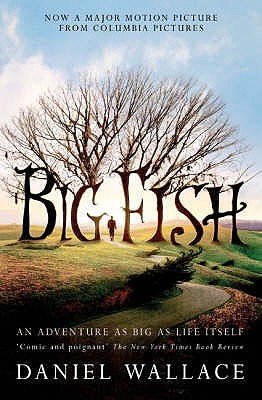
Big Fish by Daniel Wallace


He could outrun anybody, and he never missed a day of school. He saved lives, tamed giants. Animals loved him. People loved him. Women loved him (and he loved them back). And he knew more jokes than any man alive.

Now, as he lies dying, Edward Bloom can't seem to stop telling jokes -or the tall tales that have made him, in his son's eyes, an extraordinary man. Big Fish is the story of this man's life, told as a series of legends and myths inspired by the few facts his son, William, knows. Through these tales -hilarious and wrenching, tender and outrageous- William begins to understand his elusive father's great feats, and his great failings.

Goodreads description

What a fascinating book! I found myself thinking about it for days after I had finished reading it and have delayed writing this review as a result. Big Fish works on all sorts of levels. It is deceptively simple: the story of a young man facing his father's impending death and realizing that he does not really know him from the personal mythology that his father has woven about himself. The book regularly references classical myths: for example Hercules' labours and Ovid's fish metamorphosis . Edward is in some ways trying to make himself larger than life, even immortal with his tales.

William wants to understand whether his father believes in heaven and immortality.  When he asks, Edward replies with a joke in which Jesus meets an old carpenter at the Pearly Gates, who tells him that the only remarkable thing about him is his son: "He went through a most unusual birth and later a great transformation. He also became quite well known throughout the world and is still loved by many today."  Jesus hugs the man saying "Father, Father!" to which the old man replies "Pinocchio?" This joke is a wonderful example of Wallace's layering of images and symbolsThere is clearly a parallel drawn between the three father/son relationships and the son mistaking the father. But it is also a double sleight of hand:  the joke is Edward's way of hiding from his son, but it also reveals how he does it - by distracting the hearer from the truth: the old man is not god, just as Edward is not.  

It is these layers that mean that this is not some sort of Walter Mitty or Baron Munchhausen story. The book is about reality and a terrible reality at that. It is about what makes a man and what makes him great. Throughout his life Edward is trying to be a "big fish", a great man. To do that he leaves behind his home and his family and roams the world, seeking acclaim and fortune, the American Dream. As he is dying he dreams that his garden fills with people who admire him, trampling on the flowers and overwhelming his wife and son. But at the end he needs his son to affirm his greatness. William's response is that a great man is one loved by his son.

I could spend hours discussing the many images and stories in this novel and still not do them justice. I was reading on a forum discussion recently that "magic realism is like living in a poem" and this book certainly falls within that definition and just as poetry has perhaps a more profound reality than many a piece of realistic fiction, so the same is true of Big Fish. The book ends with a final flourish of magic realism, which is unexpected. But then earlier William had said that the ending is always a surprise.  I should have known to expect the unexpected.

Wednesday, 26 February 2014

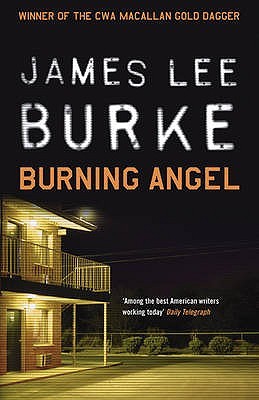
Burning Angel by James Lee Burke


Sonny Boy Marsallas, a New Orleans street hustler, entrusts Detective Dave Robicheaux with a mysterious notebook, kicking off a series of violent incidents and raising questions that need answers, and fast... What did Sonny's girlfriend know that got her murdered? Why is Sonny known as Red Angel by Central American guerrillas? And what do the Mafia want with a desolate stretch of New Iberia? This time Sonny Boy may have pushed his luck with the Giacano family one deal too far. A rich, sardonic and terrifying portrayal of contemporary America with a setting which is as charged as an electric storm.

Goodreads description

As I have said before, magic realism is more of a literary approach than a genre and as such you will find it used in all sorts of genres. In this case the genre is mainstream American detective fiction. I've always had a liking for detective fiction and so the idea of a book using magic realism in a detective novel really appealed. I'm not sure what was expecting but it was nothing as good as this. The magic realism fits easily into the genre, it feels entirely natural in the book and fulfills an important role. But I am running ahead of myself. 

The characterization is superb. The book's central figure, Dave Robicheaux, is a complex character. He is haunted by his experiences in Vietnam, having frequent nightmares which merge into the present and future. Several of the other characters are likewise scarred or distorted by wartime experiences. 

The moral ambiguity of war runs through the book. Sonny was involved in Reagan's dirty wars in South America, as was the shadowy organization that is threatening Sonny and possibly Dave himself. Moral ambiguity suffuses the book. Morality is shown to be relative: Dave may not be perfect but there are others who are worse, such as Helen, his police colleague who beats up suspects, or Dave's former colleague, Clete, now private eye, who assists rapists and plants evidence.  Even Clete and Helen are seen to be generally on the right side, compared to the mobsters who tear an innocent woman apart to get information or flay their opponents alive. In such a world even a hustler like Sonny can be seen as a hero, and we understand why Dave will not betray his trust. 

Sonny's hero status is enforced by the magic realism. He has the reputation for being immortal, having survived an attack in South America which killed everyone around him. His pursuers finally catch up with him and he disappears under the waves, bleeding from several bullet wounds, but is he really dead?

Lee Burke's writing style can be lyrical and philosophical as well as gritty, using all three aspects move the story forward: The moon was down, and in the darkness the waving cane looked like a sea of grass on the ocean's floor. In my mind's eye I saw the stubble burning in the late fall, the smoke roiling out of the fire in sulphurous yellow plumes, and I wanted to believe that all those nameless people who may have lain buried in the field - African and West Indian slaves, convicts leased from the penitentiary, Negro laborers whose lives were used up for someone else's profit - would rise with the smoke and force us to acknowledge their humanity.

As can be seen from the above extract, the book puts the action in a wider political and historical context. Set in Louisiana, the bones of slaves and dead native Americans lie beneath the surface, both literally and symbolically, and the consequences of the past play in the present: I've often subscribed to the notion that perhaps history is not sequential; that all people, for all of history, live out their lives simultaneously, in different dimensions perhaps, occupying the same pieces of geography, unseen by one another, as if we were all part of one spiritual conception.  It is a view of history that fits neatly with magic realism and one I identify with. 

As you can tell, I really enjoyed this book. Thank goodness Lee Burke is such a prolific writer. I will be back for more.

Wednesday, 19 February 2014

House of Purple Cedar by Tim Tingle


"The hour has come to speak of troubled times. It is time we spoke of Skullyville." Thus begins Rose Goode's story of her growing up in Indian Territory in pre-statehood Oklahoma. Skullyville, a once-thriving Choctaw community, was destroyed by land-grabbers, culminating in the arson on New Year's Eve, 1896, of New Hope Academy for Girls. Twenty Choctaw girls died, but Rose escaped. She is blessed by the presence of her grandmother Pokoni and her grandfather Amafo, both respected elders who understand the old ways. Soon after the fire, the white sheriff beats Amafo in front of the town's people, humiliating him. Instead of asking the Choctaw community to avenge the beating, her grandfather decides to follow the path of forgiveness. And so unwinds this tale of mystery, Indian-style magical realism, and deep wisdom. It's a world where backwoods spiritualism and Bible-thumping Christianity mix with bad guys; a one-legged woman shop-keeper, her oaf of a husband, herbal potions, and shape-shifting panthers rendering justice. 
Goodreads description

One of the joys of this blog has been my discovery of novels by writers of native American heritage, such as Louise Erdrich, Leslie Marmon Silko, Alfredo Vea and Rudolfo Anaya. Now to that list I can add Tim Tingle. Tingle is perhaps better known for his children's books: Crossing Bok Chitto won the American Indian Youth Literature Award in 2008. This book however is for the adult market, although it would also be suitable to older children.

Maybe because of the author's background in writing children's literature the book has a gentleness and morality which was appealing. These didn't prevent the author from tackling hard subjects - the book opens with the murderous arson attack on a Choctaw school by white racists and two women in the story are victims of domestic violence. Nevertheless these are countered by both Amafo's choice of forgiveness rather than violent response and an attempt to understand the motivation of even the most vicious of men. A part of me (maybe the adult part) kept thinking that life isn't/wasn't like this, but then another part wanted the moral resolution that the book offers.

Justice prevails in this book. Amafo is able to find allies within the white community, such as the wonderful one-legged Maggie Johnston. Most importantly for the purpose of this blog the Choctaw central characters find allies in the natural world and the spirits of their family. This is where the magic realism appears, especially in the form of a panther, that may or may not be Rose's dead grandmother. As is so often the case in magic realist books, there is an ambiguity about what is happening at this crucial point in the story. But earlier we see the spirits of the dead through the eyes of the young narrator Rose, who has inherited her grandfather's sight: Rose, if you are real quiet and learn to see people, you can know the ones weighed down by death. Find out what makes them happy, what they like to do or talk about. Making Walking People laugh is a very good thing to do too, sweetheart. When the spirits laugh, everybody is happy.

Tim Tingle is an experienced oral storyteller and this shows in the book. House of Purple Cedar's central plot may be the serious matter of the persecution of Amafo and his family by the hateful marshal, but the book is leavened by the tale of how Maggie Johnston saves her future husband, Terrance, from the gallows. This tale of the most incompetent bank robber you can imagine reads like a comic fable. It had me giggling when Terrance is threatening to cut a hostage's throat with a butter knife to the bemusement of onlookers. But then there is something fable-like about the whole book. The story is partly told by an elderly Rose and it feels like something told by the fireside. Indeed, as I discovered in the book's acknowledgement section, the tale of the panther/protector had been inspired by just such an account by a real woman remembering her childhood. All of which reminds me of what Marquez once said: the truth is that there’s not a single line in all my work that does not have a basis in reality. 

I received a review copy of this book from the publisher via Edelweiss in return for a fair review.

Wednesday, 12 February 2014

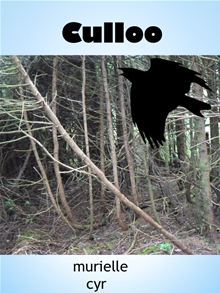
Culloo by Murielle Cyr


Tala can't wait to be thirteen; then no one better tell her what to do. The Welfare Officer is knocking on her door again and her father isn't home to answer. Tala only has a few hours to find her missing father before she and her brother, Dason, get placed in a foster home.

Her quest brings her to secluded woods where she discovers that a group of bear poachers are responsible for her father's disappearance. Her adventures bring her in contact with the legendary woodland characters: the pipe-smoking frog-like people and the giant ferocious black bird. Can she survive the night alone in woods alive with hungry bears and angry hunters? Will she be able to find her father before the hunters do?


Goodreads description

This short novel for young adults is a lovely read. I read the book in one sitting. Very rapidly your sympathies with the spirited young heroine are established. Tala's reasons for following her father into the woods with her little brother are made clear, as is the justification for hiding from the family's nosey neighbour. But I also like how towards the end of the novel we are made to revisit one of Tala's decisions. I  have a problem with novels for youngsters that portray children taking huge risks without questioning and thus making the reader think twice about copying the heroine.

I enjoyed the way the book wove Native American myth and legendary creatures into the story without going over the top into fantasy. We do not see the mythical giant bird, the culloo, nor do we see the little frog-like stone people, but we see a large feather, smell the pipe smoke. Tala prays to the spirits: Great Spirit of the Air, Great Spirit of Water, of Earth and of Sky, Please protect my father from any harm.  But at the end of the day Tala and Dason must rely on their wits and understanding of the forest to save their father, not on magic. 

The book is well plotted and paced, keeping the reader's interest to the end. Generally this is an excellent book and one I would have greatly enjoyed when I was a youngster. My one criticism is of the cover, which looks amateurish and doesn't communicate the lovely story inside.  

Wednesday, 5 February 2014

The Taste of Apple Seeds by Katharina Hagena


When Iris unexpectedly inherits her grandmother's house in the country, she also inherits the painful memories that live there.

Iris gives herself a one-week stay at the old house, after which she'll make a decision: keep it, or sell it. The choice is not so simple, though, for her grandmother's cottage is an enchanting place where currant jam tastes of tears, sparks fly from fingertips, love's embrace makes apple trees blossom, and the darkest family secrets never stay buried.

As Iris moves in and out of the flicker between remembrance and forgetting, she chances upon a forgotten childhood friend who could become more.

The Taste of Apple Seeds is a bittersweet story of heartbreak and hope passed down through the generations.

Goodreads Description.

This is not the literary book that the description promises and one might have expected from the writer's biography as an academic who has written a book on Joyce's Ulysses. But if you lower your expectations The Taste of Apple Seeds has much to offer. It is a pleasant, gentle read, with some lovely poetic descriptions. 

I particularly liked the descriptions of Bertha, Iris's grandmother and her decline into senility: Her brain silted up like a riverbed. Then the riverbank began to crumble, until large chunks fell crashing into the water. The river lost its form and current, its natural character. In the end it didn't flow anymore but just sloshed in all directions.  The portrayal of Bertha and her family's reactions to her and her illness were painfully close to home for me. Of course this picks up the theme of remembrance and forgetting that runs through the book. 

The book is strong on the sensory nature of memory - the smell, taste and texture of apples, the sensation of old clothes on the skin and nose. But I felt that it turned away from confronting awkward memories. The memories climax with Iris recalling the (accidental?) death of Iris' cousin Rosemarie. But the climax was something of a disappointment. Likewise there is no great tension coming from the revelation that Iris' grandfather had been a Nazi. He had been sent to a denazification camp, where the inmates had been made to recall and confront the awful deeds of the Nazis, their own and those of others.  There are all sorts of interesting things going on here: about Germany's history, but also about this man who chose to remember the places of his childhood, a childhood that he had hated, in poetry. I wanted to know more. But it is left at that.

Instead the book often focuses on the routine of Iris' stay - what she is buying in the shop, what she is wearing and the possible love interest with a childhood friend. At times it verges on Chick Lit. It also verges on magic realism, but so mildly that I am not sure why. Iris' beautiful aunt born as lightening struck the house gives electric shocks to people she touches. Is that why Rosemarie has her accident? Apples fruit overnight as two lovers make love. Blackcurrants turn white with shock. I know that magic in magic realism doesn't need a reason, but I just wish Katherina Hagena had gone for it: gone for the magic realism and a deeper exploration of memory and motivation. She clearly is a very talented writer, I just wanted more.

I received this book from the publisher via Edelweiss in return for a fair review.
 

Wednesday, 29 January 2014

Butterfly Winter by W P Kinsella


The final novel from legendary Canadian author WP Kinsella.

Butterfly Winter, W.P. Kinsella's first novel in 15 years, is the story of Julio and Esteban Pimental, twins born in the Caribbean country of Courteguay, an enchanted but impoverished enclave on the border between Haiti and the Dominican Republic where time moves at its own pace and reality is open to question.

The brothers are born to play baseball, they even played catch in the womb, and at the age of ten they leave home for the American Major Leagues. Julio proves to be a winning pitcher who, much to the frustration of any team that signs him, will only throw to his catcher brother, who is a very weak hitter.
Amazon description


W P Kinsella's magic realist baseball novel Shoeless Joe, the book that was translated into the film Field of Dreams, was already on my to-read (and to-buy) list, when I got the opportunity to receive a review copy of this, his last book. Kinsella had given up on writing following being struck by a car but then after fifteen years at the age of 76 Kinsella published this book. 

Butterfly Winter reads like a book by someone who is overflowing with ideas and enthusiasm and enjoying the process of writing tremendously. The book revels in magic - a blanket of monarch butterflies cover the bodies of young lovers, foetuses play baseball in the womb, plants grow and flower upside down, soldiers are speared by herons - so much so that the realism plays a lesser part. Set in a fictional magical Latin American country instead of a magical USA this book is closer to the roots of magic realism.  

Although the book has baseball as a theme, it is also about writing and fiction. There are two narrators - a gringo journalist (perhaps a fictional Kinsella), investigating the story of the baseball-playing twins as well as the history and politics of Courteguay, and an old wizard, baseball guru, country's president and fraudster (perhaps also Kinsella). Kinsella has great fun with the latter narrator, whose identity shifts along with his name during the course of the book: I am what is known in literary circles as an unreliable narrator. The wizard's ironic comments allow Kinsella to explore the nature of fantasy and truth: Who's to say what is truth. People tell tales, and as the tales emerge they become as good as truth. In Courteguay, anything that can be imagined exists. The telling is the truth. Truth is spun like silk: truth is manufactured. 

All this makes for a fun and funny book, but then Kinsella ventures into the dark territory of Latin American magic realism as the pregnant partner of one of the twins is held and tortured as a political opponent of the sadistic dictator of Courteguay. The change of tone is a shock, but not nearly as shocking as the way the story then continues in a generally comic vein. 

Kinsella also plays with the chronology of the story, which moves backwards and forwards all over the place. As the wizard comments: This is Courteguay... The word chronological is not in our language, neither is sequence. Things happen. That is all there is to it.

The book isn't perfect. Kinsella has rather too much fun packing the magic realist kitchen sink into the seventy-eight short chapters. But readers of magic realism are bound to find much to enjoy.

I was given this book by the publisher via Edelweiss in return for a fair review.

Wednesday, 22 January 2014

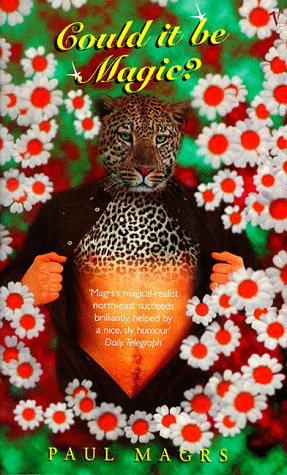
Could it be Magic by Paul Magrs


The ordinary inhabitants of a small-town council estate turn out to hold extraordinary secrets in Paul Magrs' strangely compelling novel, Could It Be Magic?. Set in the grey wastelands of the north-east, Magrs has looked beyond the ravages of boom and bust Britain--with its council ghettos and widespread unemployment--to reveal a community brimming with passions. At first glance, the leading characters are exceptional only in their mediocrity: Elsie, old before her time, weighed down by a crippled son and depressive husband, whose only solace lies in a bottle of gin; tattooed Mark, who spends his days bodybuilding and nights babysitting his ex-wife's new baby; Penny, who left school too soon and fills her house with students; Andy whose gay lover left him for a better life. But the arrival of Penny's Mam on New Year's Eve (with her own startling secret) sets off a chain of astonishing events. Fantasy mingles with the mundane until it's hard to know what to accept as commonplace and what to dismiss as trivial. A frisson of sexual energy sparks from council roof to satellite dish as Magrs' characters discover their innermost secrets and how to live life to the full. 
Goodreads description

Magic realism set on a council estate in the North East of England, really? Yes, really. If you consider magic realism to be where magic appears in an otherwise realistic world. Not if you are one of those who subscribe to a definition based on two cultures. There is one culture in this book: that of the British working class.

And does it work? Absolutely. This is a very realistic portrayal of the lives of the inhabitants of a council estate in a bleak town sitting near a motorway. Each character is drawn in detail and with love, but in such a way that you don't get overwhelmed with back story. You come to understand and even like people that in real life you might consider avoiding, such as the local busybodies. I don't know Magrs' background but I would guess that he grew up in a place like his fictional Phoenix Court. There is a sense of unease about the place, a sense of threat partly from the gang of lads at the Forsyth's house, partly from the ever present desire on the part of most of the inhabitants to know everything about everyone else and worse to meddle. There is a sense of hopes unfulfilled, lives going nowhere, a desire to get away that for most of the novel is not realized. And yet this is a community and, as the ending reveals, one that continues to call its members back.

The magic just slips in. The first time it happens you have to check that you really did read that. Then slowly it grows. In Magrs' book there is clearly a link between magic and sex. The leopard boy is a product of a one-night stand between Andy and the tattooed Mark. The clubfoot of Elsie's son Craig appears to be cured following fellatio with Penny. I was really impressed by how well Magrs writes about sex, both gay and heterosexual. There is a lovely sex scene at the end between Fran and her husband, which concludes with: tonight is quite a shock to her. She had forgotten how she and Frank were, after all, experts in each other.  

The Independent's reviewer Michael Arditti has rather snootily dubbed Magrs' style as magic soap opera and compares it unfavourably with the magic in Allende's work. Soap operas play an important part in the lives of the characters and indeed in a key moment in the plot at the end of the book. But that is only right. Soap operas are important, as Andy's grandfather commented when he first saw Coronation Street: It's like real life! They're talking like real people on here.  
Enhanced by Zemanta

Wednesday, 15 January 2014

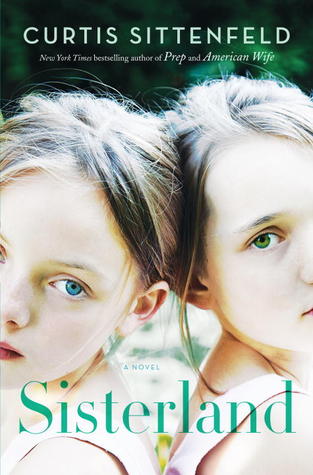
Sisterland by Curtis Sittenfield


From an early age, Kate and her identical twin sister, Violet, knew that they were unlike everyone else. Kate and Vi were born with peculiar “senses”—innate psychic abilities concerning future events and other people’s secrets. Though Vi embraced her visions, Kate did her best to hide them.
 
Now, years later, their different paths have led them both back to their hometown of St. Louis. Vi has pursued an eccentric career as a psychic medium, while Kate, a devoted wife and mother, has settled down in the suburbs to raise her two young children. But when a minor earthquake hits in the middle of the night, the normal life Kate has always wished for begins to shift. After Vi goes on television to share a premonition that another, more devastating earthquake will soon hit the St. Louis area, Kate is mortified. Equally troubling, however, is her fear that Vi may be right. As the date of the predicted earthquake quickly approaches, Kate is forced to reconcile her fraught relationship with her sister and to face truths about herself she’s long tried to deny.


The book takes its title from the notice that sister Vi posted on the girls' room when in fifth grade:
Sisterland
Population 2
Do NOT enter without permission

But that is what we as readers do in this novel - we enter sisterland. I am not a twin, but I am very close to my younger sister, and can identify with the push and pull of the relationship between Kate and Vi, although now my sister and I are adults we do not have the strains that Kate and Vi feel. 

The differences between Kate and Vi almost seem cliched - Kate is the conformist, Vi the rebel; Kate the thin one, Vi overweight; Kate married and a stay-at-home mother, Vi has just announced a lesbian relationship; and in particular Kate repressing her special powers, Vi embracing and celebrating her special powers. But in Sittenfield's hands the portrayals of the sisters are not cliched. Kate is the narrator of the piece and she is not a sympathetic character. She lacks any sense of self-awareness, unable to see how irrationally she behaves, how demanding and peevish she seems. Inevitably we see Vi through Kate's eyes and she too at times seems selfish and unaware. Although we do get the impression that Vi is the more interesting sister, but she never comes fully into focus. 

Given that the two sisters are meant to have psychic powers and are twins, it is interesting that Sittenfield does not give them the ability to read each other's minds, although at one point Kate does hear words spoken to Vi over earphones. Kate is so afraid that everything she dreams of or imagines is a prediction that she is jittery and a fussy mother. Rather than try and tune her powers, she decides to abandon them. The book seems to accept, as Kate does, that the powers do exist, and in that sense is magic realist.

The book might seem to have a plot driver in the question of whether Vi's predicted earthquake will materialize, but to my mind the plot really is about the relationship between the sisters and whether Kate will become more self-aware. The earthquake forecast is a medium for that. As the allotted time for the earthquake approaches, Sittenfield alternates the chapters between the present and accounts of significant events in the sisters' past. 

There is a lot of detailed realism in this book. The writer goes into detail about Kate's mundane life - the nappy changes, what's for lunch, etc. I know some readers really like that in a book, but I confess I don't, and I thought at times "Get on with it, already!" I would have liked more of a character arc too, particularly for Kate. But having set up Kate as the narrator, Sittenfield was trapped by the limitations of Kate's character, although part of the fun of the book was trying to work out what was really happening despite the narrator's inability to see it. 

Sisterland is not my favourite book of the year, but one I know a lot of people will enjoy. 

I received this book from the publisher via Netgalley in return for a fair review
Enhanced by Zemanta

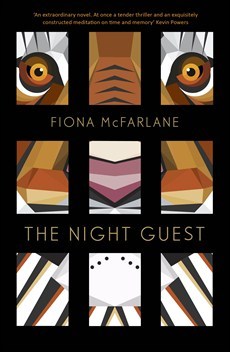
The Night Guest by Fiona McFarlane


Ruth is widowed, her sons are grown, and she lives in an isolated beach house outside of town. Her routines are few and small. One day a stranger arrives at her door, looking as if she has been blown in from the sea. This woman—Frida—claims to be a care worker sent by the government. Ruth lets her in.
     Now that Frida is in her house, is Ruth right to fear the tiger she hears on the prowl at night, far from its jungle habitat? Why do memories of childhood in Fiji press upon her with increasing urgency? How far can she trust this mysterious woman, Frida, who seems to carry with her her own troubled past? And how far can Ruth trust herself?
     The Night Guest, Fiona McFarlane’s hypnotic first novel, is no simple tale of a crime committed and a mystery solved. This is a tale that soars above its own suspense to tell us, with exceptional grace and beauty, about ageing, love, trust, dependence, and fear; about processes of colonization; and about things (and people) in places they shouldn’t be. Here is a new writer who comes to us fully formed, working wonders with language, renewing our faith in the power of fiction to describe the mysterious workings of our minds.


Goodreads Description

Psychological suspense, with its emphasis on disorientating the reader and challenging reality, is a sub-genre highly suited to magic realism. This debut novel by Australian author Fiona McFarlane is an excellent example of this.

The book starts normally enough with the retired elocution teacher Ruth pottering around in her seaside home. Even the arrival of the careworker, Frida, seems normal.  Into her life comes an old crush from her youth and everything looks set for a gentle love story, but then suddenly you feel the book jolt into more alarming territory, when Ruth discovers Frida is living in her home:

“You assumed I was leaving, obviously. Who knows why.”

“And why I wouldn’t I assume you were leaving? It’s not as if you live here.”

“Oh, dear.” Frida lifted her feet from the towel ... remember, we talked about George, all my trouble with George? And you said I could stay as long as I needed to. So here I am.” ...

“That isn’t true, Frida, what you’re saying to me now, it’s not true. I’d remember.” Ruth was certain; but there was a feeling of unraveling, all the same; an unwound thread. She did recognize the part about trouble with George.

“You know your memory’s not what it used to be.”

“I do not know that.” 

You find yourself looking back at what has gone before - Frida's arrival, the tiger in the house and Ruth's reaction to it and you realize that a) you have been seeing the world through Ruth's eyes, b) that she and you have missed clues and c) something very strange is happening and you cannot make out what it is.  From then on the story plays with your lack of certainty. Is Ruth hallucinating? Is it a very accurate picture of dementia? The mother of a friend of mine was convinced that she had a second doctor lived in her attic. Or is Frida plying her with hallucinatory drugs and playing with her mind?  The relationship between Frida and Ruth is fascinating and by no means a simple black and white affair, as there seems to be some real connection between the two. At the end of the book another character remembers how Ruth and Frida had run together like lovers.

 A key element in this uncertainty is the magic realist tiger.  Does it exist? Is it a sign of Ruth's  mind deteriorating? Is Frida play-acting? The tiger was Frida's now... She was proud of him and of her arm; the heroics of the night before seemed to give her precedence in all household matters. Nothing is clear, everything is uncertain. Maybe the tiger is even real. 

This is a story which will have you checking up on your elderly relatives and wondering what your life might be like when you become old and vulnerable. It is truly unnerving and brilliantly so - beautifully written and constructed. Fiona McFarlane is an author to watch.

I received this book from the publisher via Netgalley in return for a fair review.


Enhanced by Zemanta