Tuesday, 20 September 2016

The Ugly by Alexander Boldizar

Muzhduk the Ugli the Fourth is a 300-pound boulder-throwing mountain man from Siberia whose tribal homeland is stolen by an American lawyer out to build a butterfly conservatory for wealthy tourists. In order to restore his people’s land and honor, Muzhduk must travel to Harvard Law School to learn how to throw words instead of boulders. His anarchic adventures span continents, from Siberia to Cambridge to Africa, as he fights fellow students, Tuareg rebels, professors of law, dark magic, bureaucrats, heatstroke, postmodernists, and eventually time and space. A wild existential comedic romp, The Ugly tells the tale of a flawed and unlikely hero struggling against the machine that shapes the people who govern our world.
Goodreads description

When I read the blurb on Netgalley I wasn't sure whether this book fitted within the magic realism remit of this blog. I still don't know. It is hard to tell in this novel what is real, surreal, magic or indeed the consequence of the central character imbibing too much alcohol derived from the urine of fly-agaric eating reindeer.  

The book follows two alternating narratives - that of Muzhduk's journey to and time in Harvard and that of his later travels in Africa to save his girlfriend. This technique of interwoven narratives seems to be very popular at the moment if my reading is anything to go by. There is a inherent difficulty in this structure in that both narratives have to retain the reader's interest. I am not sure it entirely works in The Ugly. I was more interested in the African narrative than in the word-throwing world of Harvard.

This novel comes from a tradition of satire that goes back centuries. A larger than life (literally) central character travels from a "simple" homeland and encounters a "sophisticated" other world. By dint of native intelligence, strength and naivity, the hero is able to take on the strange world he finds himself in. This book doesn't stop at revealing the false nature of the rituals and sophist arguments that are held in high esteem at the university and wider society. No. Boldizar goes further and introduces the surreal into the equasion. Muzhduk has a fling with witch-like tutor Oedda, and encounters a blue bear (based on the Harvard tradition of the Pooh tree). The surreal and magical of course appear in the African narrative, as they should. But I wonder whether it was necessary to have them so intensively in both strands.

When I read the prologue to the book - that section set in the Slovakian enclave in Siberia (there is a brilliant explanation for this in the novel) - I thought "Wow, this is going to be great." But as Muzhduk moves to Harvard my enjoyment lessened. There was still some fun, but I found myself skipping chunks of the long legal dialogues. This is a first novel and it shows. Boldizar was the first post-independence Slovakian to go to Harvard, where, surprise surprise, he read law. He also spent time working in the Sahara. There is just too much going on in this book for my liking. Dare I say it - the author is having rather too much fun.

I received this book free from the publisher free in return for a fair review

Sunday, 18 September 2016

Konundrum by Franz Kafka


In this new selection and translation, Peter Wortsman mines Franz Kafka's entire opus of short prose--including works published in the author's brief lifetime, posthumously published stories, journals, and letters--for narratives that sound the imaginative depths of the great German-Jewish scribe from Prague. It is the first volume in English to consider his deeply strange, resonantly humane letters and journal entries alongside his classic short fiction and lyrical vignettes  Composed of short, black comic parables, fables, fairy tales, and reflections, Konundrums also includes classic stories like "In the Penal Colony," Kafka's prescient foreshadowing of the nightmare of the Twentieth Century, refreshing the writer's mythic storytelling powers for a new generation of readers.
Goodreads description

This is a collection that every lover of magic realism should go out and buy. You will find here Kafka's greatest short prose works, including The Metamorphosis (here titled Transformed) the story that inspired Gabriel Garcia Marquez to adopt magic realism in his work. But there is much more here. Many of the short stories were completely new to me and helped me put The Metamorphosis in the wider context of his writings and view of the world. I had previously wondered whether Kafka was more of a surrealist than a magic realist, but I found those thoughts vanishing as I read.

I was struck by the variety in the fiction in this collection and orginality of thought and treatment. Who would think to write a piece where a bridge is the central character and narratior? Or would portray Poseidon as an accountant? Or start a story with the lines:  
Honored gentlemen of the Academy!
You have accorded me the honor of inviting me to present a report on my past life as an ape.

Also included in the collection are non-fiction pieces. Some are only a few lines, some extended meditations, The subject matter includes the role and nature of parables, writer's block, office life (Kafka worked for an insurance company), childhood and more.

I have not and could not read these stories in their original German, but it does seem to me that the translator Peter Wortsman has been able to create a sense of Kafka's own voice in this book - a voice that is humane and at times humourous, that presents the surreal as if it was the normal. As Wortsmann says in an afterword, he gives us these precious nuggets of a gold miner in the caves of the unconscious. 

Kafka's works featured in this collection are:
Words are Miserable Miners of Meaning
Letter to Ernst Rowohlt
Reflections
Concerning Parables
Children on the Country Road
The Spinning Top
The Street-Side Window
At Night
Unhappiness
Clothes Make the Man
On the Inability to Write
From Somewhere in the Middle
I Can Also Laugh
The Need to Be Alone
So I Sat at My Stately Desk
A Writer's Quandary
Give it Up!
Eleven Sons
Paris Outing
The Bridge
The Trees
The Truth About Sancho Pansa
The Silence of the Sirens
Prometheus
Poseidon
The Municipal Coat of Arms
A Message from the Emperor
The Next Village Over
First Sorrow
The Hunger Artist
Josephine, Our Meistersinger, or the Music of Mice
Investigations of a Dog
A Report to an Academy
A Hybrid
Transformed
In the Penal Colony
From The Burrow
Selected Aphorisms
Selected Last Conversation Shreds


I received this book from the publisher in return for a fair review.

Thursday, 8 September 2016

The Burning of San Porfirio by Joel Hirst


What happens when the revolution burns out and the magic is gone? Pancho Randelli doesn’t know or care. Released from jail to wander the wasteland, he’s haunted by the loss of his great love, Susana, and wonders at the fate of his deputy, Carlitos. He fears for the life of his best friend and hopes he has not become just another victim of madness.

In desperate search for Carlitos, Pancho begins his quest across the shattered landscape of a broken country. While trailing behind cold tracks and blurry memories, he finds something wholly unexpected: freedom. This is not the case for General Juan Marco Machado, who wallows in power at long last. For him, things are not how he originally imagined.

Without magic, all the money and power in the world cannot save the general from downfall and despair. While Pancho may find what he seeks, the general finds nothing but anguish. At the end, neither man will escape the inevitable results of the ideas upon which the revolution advanced, lived for a season only to burn itself out.
Goodreads description 

The Burning of San Porfirio is the sequel to The Lieutenant of San Porfirio, which I reviewed at the end of 2013 here. Although I enjoyed The Lieutenant, I had some reservations about it. I have no such reservations about Joel Hirst's sequel.

The reason for this is partly because this book continues and finishes the story of the two men - Pancho and Machado. There is an inherent problem with writing a story of two books or more - how to finish the earlier book without the reader feeling disappointed with an incomplete ending. Moreover the characterization is inevitably not complete in the first novel. There is a school of thought that you should not publish books in series until all are written, so the reader can move on to the next book when they finish the previous one.

The Burning in a way picks up where The Lieutenant left off. Picks up not in the sense of time, as many years have past and the young student leader is now a white-haired political prisoner of many years, but in some ways Pancho's story has been in a hiatus during his prison years. Outside the prison the world has changed for the worse under the socialist dictatorship that Pancho had defied so unsuccessfully. For Machado the intervening period has seen a steady climb to power and wealth as the dictator's right-hand and as the country's drug lord.

The novel follows the stories of the two men. When the dictator dies, Machado makes his play for supreme power and Pancho is released under amnesty into a world he hardly recognises. Pancho journeys through a country now riven by civil unrest as Machado and his rival the vice-president fight it out. But whilst it is a physical journey, Pancho's journey is also in some ways a modern-day secular pilgrim's progress. Pancho encounters a series of temptations on his travels in his search for political and personal enlightenment.

The descriptions of the landscape of South America are top notch and made all the more powerful because the land itself contains a magic which reflects what is happens. Such an approach can be a sloppy easy device to develop atmosphere, but here it is genuine magic realism.

One criticism - I don't think the cover works for this reflective piece of magic realism. Yes, the city of San Porforio and the wider country are torn apart by war and conflict, but this is not a war novel as such. It is so much more.

I thank the author for giving me a review copy in return for a fair review.


Saturday, 27 August 2016

Interview with Bianca Gubalke


Who are your favourite magic realist authors and why? 
As far as I can think back, my main interests, besides my love for Nature, were always the Arts and Spiritual Healing. This lead to studies of Shamanism following teachers like Michael Harner, where we naturally worked with another ‘reality’ – which was something I knew from the San people in the Kalahari of South Africa.

At that time, I was also drawn to the fascinating work of Carlos Castaneda. Here, the ‘magic’ in form of a search for power came in. It stunned me as it was not in synch with what a true shaman – who is a healer – aspires to. It appears that real insights were drawn from other sources and traditions, but Castaneda knew how to write and package the message, and he did something else: He put himself into the story.

Much later, my film editor gave me a small book that was so special, that I went all the way to London to get the adaptation rights. The author was a Nigerian writer: Amos Tutuola. It may be my African heritage – although my cultural roots are also firmly grounded in Europe – but this vivid, extraordinary writing with its special rhythm immediately resonated with me, and I still enjoy it today.

Of course, I could not resist Joanne Harris’ strong and sensuous ‘magical woman’ (‘magical mother’) and her culinary temptations, blown by the wind into a rigid little French town, where she opens – of all names - ‘La CĂ©leste Praline’ opposite a . . . church! Played by my favourite actress, Juliette Binoche, this was an absolute treat. As a magical realism story, ‘Chocolat’ has much more depth than it seems.

What is your all-time favourite magic realist book? 
Bearing in mind that there are so many books I still want to read, so far, my all-time favourite magic realist book is: The Palm-Wine Drinkard by Amos Tutuola.

Why do you write magic realism? 
I did not set out to write a magic realism novel.

I wrote my story for a young girl who deeply cares about Nature and its survival, bearing in mind that everything is a reflection. And I wrote it for baby boomers, who are too busy on treadmills to stop and reflect on life’s most important questions, who now panic as their own transition draws closer. In the end, my mission is always to heal.

As a hypnotherapist, we work on different levels with each patient. While always aware of the ‘here’ and ‘now’, we work with the subconscious. We’re here and there – whereby ‘there’ is like a gap between thoughts. It’s a natural process; the patient is always in control. This can be taken much further during past life regression, where one moves beyond the death experience into other lives and even existences that are a far cry from what we consciously know. While this process takes place in our known world, our so-called ‘reality’, it has a perceived ‘magical’ component for some, that is exploited on stage in a totally misleading way.

Also, all my creative work as a screenplay writer or filmmaker included different ‘realities’ – and so does my debut novel. Life’s mundane fabric contains many strings of magic – not as a mere decoration, but as a part of it. So when my editor suggested ‘Magical Realism’ as the appropriate genre, it immediately made sense.

Can you give us your definition of magic realism? 
I’ve read many definitions for magic realism, none of which I truly resonate with. Maybe it’s because I cannot imagine a reality without magic? The following thought – based on a quote from the Bible, John 17:14-15 – is an attempt to express what I feel: In magical realism, as a literary genre, we play with the notion that we are in the world, but not of it. This awareness can lift or defeat us; it can be used to harm or to heal. 

Tell us about your latest magic realist book? 

It's called The Immortal Life of Piu Piu 

Description
Set in a land of shifting realities – the Western Cape coast of South Africa, between Nature's paradise and a ruthless world – and based on the heartbreaking true story of a human-animal bond, this magical journey reveals how a young girl and the wild creatures who are her constant guides, join in the ultimate adventure: to reveal the mystery of life after death.

The Main Characters

  • Pippa - A natural born leader who joins forces with wild creatures and natural scientists, long dead, to unlock the mystery of the invisible world. She seeks KNOWLEDGE. 
  • Piu Piu - An experiment, a catalyst – and the happiest Egyptian goose on earth until the Unthinkable happens and destroys her world. She seeks FREEDOM. 
  • Charlot - The shadow, hunter, killer – he's always there, right behind you! So be warned: He's ruthless in a ruthless world. He wants . . . FOOD. At least, it seems so . . . 

About the Novel
We all know about the surge of interest in the survival of consciousness after death as millions of baby boomers face their own mortality. All this is reflected in popular TV shows and movies, as well as trailblazing videos on the Web. The fact is that life's fast pace and our personal fears often keep us from addressing the most important of existential questions, which can cost us our emotional wellbeing, happiness and health, and we may not pass on the right message to our children. This is where this enchanting tale – with its touching human-animal bonds, that awaken a sense of care and guardianship for the Earth – fills the gap. As you follow the hero's journey of self-discovery, spiritual awakening, personal transformation and healing, discover how your feelings are the key to your eternal soul: 'What you are not the vibration of remains invisible to you.'

Sunday, 21 August 2016

Out of the Darkness by Katy Hogan


Following the sudden death of her beloved mother, Jessica Gibson's world falls apart. But after meeting a man who seems heaven-sent, she starts to feel she has something to live for again, and soon discovers that their connection holds far more significance than she could ever have imagined. And when Jessica strikes an unlikely bond with Alexandra Green, the two new friends are taken on an emotional journey into the world of the supernatural, where psychic mediums pass on messages from beyond the grave. What -- or who -- is causing the strange goings-on in Alex's home? What secret is she keeping from Jessica? And who is the young woman who so badly needs their help? In a series of surprising twists and turns, the pieces of the puzzle finally fall into place and a mystery is unwittingly solved -- with life-changing consequences for all involved.
 

'Out of the Darkness' is an uplifting tale of friendship and redemption; of love and loss. And life...after death.
Goodreads description

I am accustomed to reviewing magic-realist fiction that hails from non-Western cultures that accept the spirit world interacting with that of the living. But what about magic realism from the UK that does the same? Is that the same? Some people might argue that it is not the same - that belief in spirits is not part of the Anglo-Saxon tradition, that this is a literary device or maybe part of the ghost story genre. But they would be wrong. There are many people in the UK and US who are believers in the spirit world and its guides.  

As Katy Hogan explains in a postscript at the end of the book, her mother believed in tarot cards and other psychic phenomena. Hogan's own experiences re-enforced her beliefs and inspired the book. The fact that the spiritual element in the book is based on the genuine beliefs of the author gives this book an interesting alternative feel. 

This is a gentle story, which focuses on the three central female characters and their growing relationship with each other. All three are steered by the spirit of a young man. Who that young man was/is and what his relationship to the women was/is form a key part of the story arc. There are of course some tear-filled moments in the novel - keep a box of tissues handy - but inevitably there is an uplifting ending. After all, the novel starts with the line: Love will always find the way, until we meet again some day...

I received this book free from the author in return for a fair review. 

Sunday, 14 August 2016

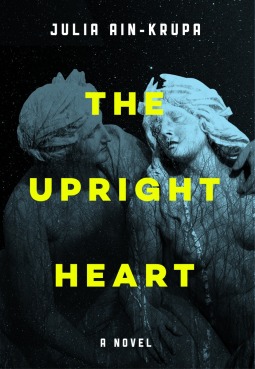
The Upright Heart by Julia Ain-Krupa


The Upright Heart chronicles the return from Brooklyn of a Jewish man, Wolf, to his native Poland soon after World War II. He is haunted by the memory of his Catholic lover, Olga, whom he abandoned to marry a woman of his own faith and start a new life in America, and who perished sheltering the parents and younger sister he left behind. Harassed on the streets of postwar Poland, Wolf is watched over by the spirits of those who died during and after the war but have yet to let go. His story is woven together with those of others, living and dead, Catholic and Jew, including the deceased students of a school for girls, a battalion of fallen German soldiers, and an orphan boy who wanders the streets of Krakow, believing in a magic pill he has conjured up as a way to survive.


Goodreads description

The war is over, but the suffering is not. Not for the living, nor for the dead. Dead and living exist in a state of limbo, all trying to move on. The living with their lives and the dead from the world they now inhabit as ghosts. 

Julia Ain-Krupa weaves a lyrical, dreamlike novel of intermeshed stories. The narrative shifts from one point of view to another and from first to third-person voices. Often the point of view is not easy to identify immediately and the reader must rely on picking up clues. This can be distracting, but it is usually best to go with the flow and not worry about it. The disorienting effect is probably deliberate, reflecting as it does the circles of limbo in which the characters exist. The story does move forward, even if at times this is not apparent. And for most of the characters there is a resolution of some kind by the end of the novel. 

This is not an easy book to read and not every reader will enjoy it. First there is the bleakness of the subject matter  - Holocaust literature isn't for everyone. And secondly there is the style. 

I have read and reviewed several magic-realist novels that deal with the Holocaust. Most recently there was In the Land of Armadillos by Helen Maryless Shapiro. You will find an interesting insight into Magic Realism and the Holocaust on Helen's blog here.  I must say I preferred Helen's approach to the Holocaust to Julia Ain-Krupa's. Stylistically The Upright Heart is similar to that of A Kingdom of Souls by Daniela Hodrová, which likewise presents a world in which the dead exist alongside the living. It is interesting to note the similarity in cover design. However Hodrova's novel is grounded in a place (a house overlooking a cemetery in Prague), which gives it a framework that The Upright Heart lacks. 
 
Reviewing has made me familiar with several outstanding examples of Holocaust literature and how magic realism can throw light on the subject. This book therefore was not as much as a surprise for me as it might be for others. But for most readers its approach will be new and very different to that of much of the Holocaust literature one sees on bookstore shelves. 

I receive this book free from the publisher in return for a fair review.

Monday, 8 August 2016

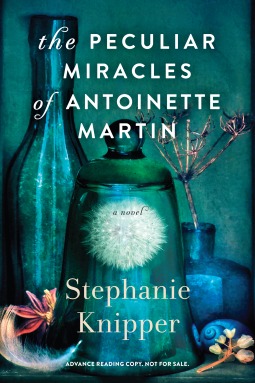
The Peculiar Miracles of Antoinette Martin by Stephanie Knipper


Sisters Rose and Lily Martin were inseparable when they were kids. As adults, they've been estranged for years, until circumstances force them to come together to protect Rose's daughter. Ten-year-old Antoinette has a severe form of autism that requires constant care and attention. She has never spoken a word, but she has a powerful gift that others would give anything to harness: she can heal things with her touch. She brings wilted flowers back to life, makes a neighbor's tremors disappear, changes the normal course of nature on the Kentucky flower farm where she and her mother live.

Antoinette's gift, though, puts her own life in danger, as each healing comes with an increasingly deadly price. As Rose—the center of her daughter's life—struggles with her own failing health, and Lily confronts her anguished past, they, and the men who love them, come to realize the sacrifices that must be made to keep this very special child safe.

Goodreads description

The wounded healer is an archetype that can be found throughout literature and is fundamental to Jungian approach to psychotherapy. Generally this is an archetype that applies to adults - the doctor who chooses to heal because of the experience of illness in his past or indeed the detective who is drawn to the job because of an unsolved crime in her personal life. There is, however,  another take on this where there is no choice, where the ability to heal others is a "gift" given to the healer who is themselves wounded or damaged. In such a case the healer is often, but not always, a child. This is in line with the image of a miracle-working healer who needs to be innocent. We have seen this child as healer elsewhere in this blog, most recently in  Robin Gregory's The Improbable Wonders of Moojie Littleman.

There are three central characters in this novel - the two sisters (Rose and Lily) and Antoinette. The chapters flick between their points of view and stories, also moving backwards and forwards in time to provide the full picture of their relationships.  Sisterhood is a central theme of the book. Although Rose and Lily have become estranged, they still love each other with a depth that is only possible between siblings. They are very different from each other - Rose the artistic, outgoing one and Lily the mathematical and introverted one. Indeed Lily is so introverted that she too has autistic tendencies - the obsessive need to count objects at the time of stress being one. Because of this, she is both afraid of dealing with Antoinette and yet has much in common with her. 

Stephanie Knipper bravely starts the story with a chapter seen from Antoinette's point of view. Although the book description above says that Antoinette is autistic, the author's position on Antoinette's condition is not clear - indeed when Lily asks about the doctors' diagnosis, she is told:  At first they thought it was autism, but that never fit. She's affectionate....It's like she's locked in her body and can't get out. Another major theme of the book is being different. At times Antoinette is described by minor characters as "retarded", which annoys Antoinette and her family. She is different, but so too is Lily. So too are all of us, each in our own way.

Although The Peculiar Miracles of Antoinette Martin is patently a weepy and readers should approach it with Kleenex in hand, I didn't find myself crying. I am not sure why. It is not because I am averse to a bit sobbing over my kindle, I am. Maybe it's because at times the plot twists were predictable (that's the problem with dealing with archetypes). Maybe it was because this is at its heart a feel-good story, with all the characters, even the minor ones, being well meaning. I like my fiction harder-nosed. But that is my problem. A lot of readers are going to love this book.

I received this novel from the publisher in return for a fair review.


Sunday, 31 July 2016

Magic Realism in Russia


Over on my blog Adventures in the Czech Republic I blogged about Czech magic realism and how Slavic folklore influenced Czech national identity and with it magic realism.

This post brings you a fascinating Library of Congress video of a lecture by Oksana Marafioti about another Slavic country, Russia.  In this video the impact of Russian folk beliefs and religions (ancestor worship, shamanism and orthodox Christianity) on magic realism is outlined.

As the readers of this blog will be aware, I am a fan of Russian magic realism. Laurus by Eugene Vodolazkin was a recent highlight for me and absolutely fits with the thesis of the video lecture.

The video is an hour long and worth every minute of your time.


Friday, 29 July 2016

Magic Realism Writers From Around The World

For this year's bloghop I am concentrating on the international nature of magic realism. One of the joys of this blog has been reading books by writers from all over the world. When I updated the list of books in my collection here, I was struck by how many countries were represented. What follows is drawn from that list. 

I have not included writers whose books are from the mainstream Anglo Saxon tradition. The blue links take you to reviews on the blog. 

Carlos Acosta - Cuba
Chingiz Aitmatov - Russian Kyrgyzstani
Michal Ajvaz  - Czech 
Rabih Alameddine - Lebananese 
Kathleen Alcala - Mexican American (Jewish)
Sherman Alexie - First Nation American
Dean Francis Alfar - Filipino
Edwar Al-Kharrat - Egyptian
Ibrahim al-Koni - Libyan
Isabel Allende - Chilean
Jorge Amado - Brazilian
Rudolfo Anayo - Chicano American
Mario De Andrade - Brazilian
Marie Arana - Peruvian
Reinaldo Arenas - Cuban
Miguel Angel Asturias - Guatemalan
Bernardo Atxaga - Spanish Basque
Marcel Ayme - French
Fadi Azzam - Syrian
Chitra Banejee Divakaruni - Indian American
Michel Basilieres - Canadian
Bertice Berry - African American
Ingrid Betancourt - French Argentinian
Lauren Beukes - South African
Maxim Biller - German (born in Czech Republic)
Adam Bodor  - Transylvanian Hungarian
Jorge Luis Borges - Argentinian
Hafid Bouazza - Moroccan Dutch
Andre Brink - South African
Italo Calvino - Italian
Cuca Canals  - Spanish
James Canon - Columbian
Alejo Carpentier - Cuban
Mircea Cartarescu - Rumanian
Adolfo Bioy Casares - Argentinian
Carlos Castaneda - Peruvian-born American
Rosario Castellanos - Mexican
Ana Castillo - Mexican-American Chicano
Joao Cerqueira - Portuguese
Patrik Chamoiseau - French Martinique
Pia Chaudhury - Indian British
Yi Chung-jun - South Korean
Paul Coelho - Brazilian
Julio Cortazar - Argentinian
Mia Couto - Mozambiquan
Marie Darrieussecq - French
Junot Diaz - Dominican
Chitra Banerjee Divakaruni - Indian American
Alfred Doblin - German
Jose Donoso - Chilean
Kerstin Ekman - Swedish
Mikhail Elizarov  - Russian
Louise Erdrich - Native American
Mario Amparo Escandon - Mexican American
Laura Esquivel - Mexican
Heinz Insu Fenkl - Korean American
Carlos Fuentes - Mexican 
Romulo Gallegos - Venezuala
Cristina Garcia - Cuban
Elena Garro - Mexican
Aleksandar Gatalica - Serbian
Zulfikar Ghose - Pakistani American
Gogol - Russian
Hiromi Goto - Japanese Canadian
Gunter Grass - German
Jiri Grusa - Czech
Xiaolu Guo - Chinese British
Suentra Gupta - Indian
Abdulrazak Gurnah - Tanzanian
Katherina Hagena - German
Knut Hamsun - Norwegian
Thomas Olde Heuvelt - Dutch
Daniela Hodrova - Czech
Peter Hoeg - Danish
Tess Uriza Holthe - Filipino American
Nalo Hopkinson  - Jamaican Canadian
Witi Ihimaera - New Zealand (Maori)
G Cabrera Infante - Cuban
Anosh Irani - Indian 
Hamid Ismailov - Uzbek
Mette Jakobsen - Danish
Pai Ilmari Jaaskelainen - Finish
Tahar Ben Jelloun - Moroccan
Cynthia Kadohata - Japanese American
Franz Kafka - Czech 
Jonas Karlsson - Swedish
Raj Kamal Jha - Indian
Hiromi Kawakami - Japanese
Daniel Kehlmann - German and Austrian
Porochist Khakpour - Iranian American
Daniil Kharms - Russian
Thomas King - American Canadian 
Laszlo Krasnahorkai - Hungarian
Guus Kuijer - Dutch
Milan Kundera - Czech
Eka Kurniawan - Indonesian
Antoine Laurain  - French
Halldor Laxness - Icelandic
Peter Tieryas Liu - Asian American
Jose Lezama Lima - Cuban
Mario Vargas Llosa - Peruvian
Rani Manicka - Malaysian
Gabriel Garcia Marquez - Columbian
Carole Martinez - French
Tomas Eloy Martinez - Argentinian
Rohinton Mistry - Indian-born Canadian
Mayra Montero - Cuban
Shani Mootoo - born in Dublin, raised in Trinidad, lives in Canada 
Pat Mora - Mexican American
Harry Mulisch - Dutch
Haruki Murakami - Japanese
Nabokov - Russian
Gina Barkhordar Nahai - Jewish Iranian
Bahiyyih Nakhjavani - Born Iranian,  grew up in Uganda and now lives in France
Andres Neuman - Spanish Argentinian
Tea Obreht - Bosniak Serbian
Silvina Ocampo - Argentinian
Kenzaburo Oe - Japanese
Nnedi Okorafor - Nigerian American
Ben Okri - Nigerian
Helen Oyeyemi - Nigerian British
Vikram Paralkar - Indian American
Nii Ayikwei Parkes - Ghanaian
Shahrnush Parsipur - Iranian
Milorad Pavic - Serbian
Victor Pelevin - Russian
Miroslav Penkov - Bulgarian
Ludmilla Petrusevskaya - Russian
Stepan Pisakhov - Russian
Salvador Plascencia - Mexican American
Manuel Puig - Argentinian
Christopher Ransmayr - Austrian
Dolores Redondo - Spanish Basque
Darcy Ribeiro - Brazilian
Philomena van Rijswijk - Australia
Manuel Rivas - Spanish
Carolina De Robertis - Uraguayan - American
Eden Robinson  - First Nation Canadian
Arundhati Roy - Indian
Juan Rulfo - Mexico
Salman Rushdie - British Indian
Preeta Samarasan - Malaysian
Jose Saramago  - Portuguese
Patricia Schonstein - South African
Ekaterina Sedia - Russian
Erick Setiawan - Indonesian
Elif Shafak - Turkish
Ryhaan Shah - Indo-Guyanese
Meir Shalev - Israeli
Anton Shammas - Palestinian
Siddharth Dhanvant Shanghvi - Indian
Leslie Marmon Silko - First Nation American
Sjon - Icelandic
Sasha Sokolov - Russian
Manil Suri - Indian American
Noemi Szecsi - Hungarian
Antonio Tabucchi - Italian
Paco Ignacio Taibo - Mexican
Ngugi Na Thiongo - Kenyan
Tim Tingle - First Nation American
Tatyana Tolstaya - Russian
Amos Tutuola - Nigerian
Luis Alberto Urrea - Mexican American
Luis Valenzuela - Argentinian
Carl Johan Vallgren - Swedish
Miklos Vamos - Hungarian
Vassilis Vassilikos - Greek
Alfredi Vea - Mexican Yaqui Filipino American
Carlos Velasquez - Mexican
Juan Pablo Villalobos - Mexican
Eugene Vodolazkin  - Russian
Katern Tei Yamashita - Japanese American
Mo Yan - Chinese
Tiphanie Yanique - Virgin Islander
Yorgi Yatromanolakis - Greek 
Banana Yoshimoto - Japanese
Zyranna Zateli - Greek
Serhiy Zhadan - Ukrainian
Yousef Ziedan - Egyptian

Tomorrow I will bring you a video about Russian magic realism.


Monday, 25 July 2016

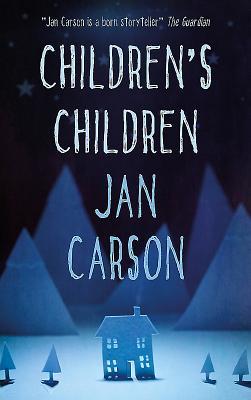
Children's Children by Jan Carson


Children's Children is a collection of fifteen short stories which cast a darkly humorous and oftentimes acidic eye, over life in post-conflict Northern Ireland. The stories contained in the collection are an eclectic selection of pieces which vary from traditional literary fiction to magic realism and subtle experiments with the short story form. They deal with the theme of legacy; the achievements, issues and problems this generation has inherited from the previous. Disillusioned street preachers, adulterous grocery shoppers, robotic brothers and child burglars are all given voice to express their experiences of life in contemporary Northern Ireland as Carson blurs the line between social commentary and modern parable.
Goodreads description


As the Goodreads description above makes clear not all the short stories in this collection are magic realism, nevertheless a lover of magic realism will find much to enjoy here. There is often a blurring of the edges in these stories, an unusual eye and voice. 

The characters in the stories are mostly ordinary folk, but they have something that sets them apart and makes them struggle. This is reflected in Carson's remarkable ability to write passages that combine the mundane with original and telling observation:
Dr Turner had laughed then, exposing the whiteness of his teeth. They were like tiny fingernails lined along his gums. The taste of coffee came off him every time he opened his mouth, for he was the type of man who leaned too close to women when he spoke.
These passages can be both humorous and dark at the same time.

The most obviously magic-realist story is the one about a mother of a floating six-year old who has to be tethered to the backyard fence to prevent her floating off. Then there is the story of the human statue who is losing the ability to move and impact of his immobility on his marriage. Other stories border on magic realism with an off-beat way of presenting the world, not magic realism but not conventional realism either. For example in one story a man creates an allotment in his box room and in another story a couple's elicit love affair consists entirely of shopping together.

The stories are sometimes allegorical and even political. The most obvious of these is the story Children's Children, in which the last two young people on an island meet the day before they must marry for the good of the island . He is from the northern part and she from the south. But where should they live: If we both move north, we'll upset the balance and tip the island into the sea. 

In addition to these magic realist, allegorical and off-beat pieces, there are some stories which are heartbreakingly realistic. These include stories about a woman's loss of a spouse, a child's view of fighting parents, and a daughter dealing with her mother's dementia.

In contrast to most short story collections, which usually have a few less strong stories among the good, I found all the stories in the collection strong and moving. As a consequence I will look out for a copy of Jan Carson's first novel Malcolm Orange Disappears.

I received this book free from the publisher in return for a fair review.

Friday, 22 July 2016

Magic Realism Blog Hop 2016 Introduction


On the 29th July the 2016 Magic Realism Blog Hop will start here.

What is the Magic Realism Blog Hop?
The hop is a magical realism mystery tour, with stops at blogposts covering all sorts of subjects - reviews, thoughts about magic-realist fiction, magic-realist art and film, useful information about magic realism, maybe even some original magic-realist fiction.

During the three days until the 31st July at least 25 blogs will feature posts about magic realism and some (including this one) will feature more than one post. At the bottom of each post will be a list of the links to all the other posts on the bloghop. So all you have to do is click on the links to hop around the bloghop and in so doing discover new blogs and bloggers and read a wide range of posts about magic realism. As posts will be added to the list throughout the three days, so do come back to check out what is new.

The history of the Blog Hop
This is the fourth magic realism bloghop. I organised the first in July 2013 on the first anniversary of this blog. As this blog reviews one magic realist book a week, that means that this hop marks 200 books reviewed here. Whilst not officially part of the Blog Hop I have updated my list of magic realism books. It's actually a list of the 700 magic realism books in my collection, so I only have 500 reviews to go (or 10 years of blogging) before I clear my current to-be-read list!

What I will be doing on the Blog Hop.
I am concentrating on the international nature of magic realism over my three blogs. On this blog I will feature two posts (in addition to this one) - on Saturday I will be posting a directory of international magic realism writers and on Sunday about Russian magic realism. On Adventures in the Czech Republic I will be showing how and why magic realism is part of the Czech identity. On ZoeBrooksBooks there will be a magic-realist poem.

Some useful information from previous blog hops
What is Magic Realism - the first post of the first blog hop
Useful Resources for Magic Realism
Free Magic Realism Short Stories and Books