Wednesday, 13 March 2013

Tracks by Louise Erdrich


A New York Times Bestseller, ‘Tracks’ is a masterpiece from Louise Erdrich, winner of the National Book Award for Fiction 2012 – a story for our times, narrated by a uniquely twentieth century figure.

By turns reticent, garrulous, spiritual and profane, Nanapush, like the Native American culture he belongs to, is a living contradiction – alien, beguiling, strong and dying…
Set in North Dakota, at a time in the early twentieth century when Indian tribes were struggling to keep what little remained of their lands, ‘Tracks’ is a tale of passion and deep unrest. Over the course of ten crucial years, as tribal land and trust between people erode ceaselessly, men and women are pushed to the brink of their endurance – yet their pride and humour prohibit surrender.

The reader will experience shock and pleasure in encountering a group of characters that are compelling and rich in their vigour, clarity, and indomitable vitality.

Amazon  Description


Tracks is a tale of a key moment in the destruction of Native American culture and society in the face of illnesses brought by the white man (we started dying before the snow, and like the snow, we continued to fall) and the machinations of the government officials and commercial companies interested in exploiting the natural resources that the Native Americans had both relied on and cherished:  once the bureaucrats sink their barbed pens into the lives of Indians, the paper starts flying, a blizzard of legal forms. 

The book follows the lives of two women. Fleur is an attractive young woman who loses her family to illness but is strong in the old ways, so much so that she is regarded by others as having magical powers. Pauline is half white and early on shows disdain for her native roots and expresses a desire to be like my grandfather, pure Canadian. This disdain expresses itself in a destructive spite towards Fleur and her family and  also in a masochistic Catholicism, which she uses to justify her actions. Both women are remarkable creations.

I wrote in my review of The Hummingbird's Daughter of duality. Here in another magic realist book we get duality. In fact, looking over the various books I have read as part of this magic realism challenge, dualism seems to be a regular element of the genre. As in The Hummingbird's Daughter we have two cultures meeting and clashing. Pauline's mind is torn apart by her two backgrounds. 

The duality in Tracks  is also reflected in the narrative structure. There are two narrators in the book, with alternate chapters spoken by Pauline and the old man Nanapush. Nanapush is a tribal elder, who has seen the destruction of the old ways: In the years I’d passed, I saw more change than in a hundred upon a hundred before.  He saved Fleur when she was found ill with her dead family and regards her as a pseudo-daughter. His narration is told to Fleur's estranged daughter in an effort to secure a reconciliation. It is not an accident that Nanapush is based on the Ojibwe trickster hero Nanabozho. In his tale Nanapush admits to tricking others and lying, so we are warned not to trust his narrative, although one gets the impression that his deception is done for good motives. Pauline's narrative is equally unreliable, but for reasons of her mental instability and self justification/delusion. 

One of the interesting aspects of this narrative structure is its impact on the magical elements. Both Nanapush and Pauline present Fleur as having magical powers linked to native spirits and nature: It was as if the Manitous all through the woods spoke through Fleur, loose, arguing. . . . Turtle's quavering scratch, the Eagle's high shriek, Loon's crazy bitterness, Otter, the howl of Wolf, Bear's low rasp. But should we always believe them? When I read Nanapush's accounts I didn't have any problems with the magic, but Pauline's account of magic, which in the second part of the book combines native American magic with visions of Jesus sitting on the stove, seemed more like the delusions of a tortured mind.

Another aspect of the narrative structure is that the central figure of Fleur is present but removed, always filtered through others' eyes. She is nevertheless a powerful presence in the book, haunting the actions and thoughts of others. This seems appropriate in that Fleur stands for the world that is being lost.   

by Zoe Brooks


Enhanced by Zemanta

Wednesday, 6 March 2013

The Man Who Walked Through Walls by Marcel Aymé


A collection of funny and fantastical short stories, Marcel Aymé's The Man Who Walked Through Walls (Le Passe-muraille), is a classic of French literature, loved by children and adults alike.

Monsieur Dutilleul has always been able to walk through walls but has never bothered using his gift, given the general availability of doors. One day, however, his bullying boss drives him to desperate measures, and he develops a taste for intramural travel... 

The titular tale sets the tone for this collection of ten stories from the great French humourist, novelist and children's writer Marcel Aymé. Elements of science-fiction and fantasy are present throughout this volume, written under Nazi occupation during the Second World War, which pokes fun at the occupiers and occupied alike.
Amazon description

I am embarrassed to say I had not heard of Marcel Aymé until I came across his work  while searching for magic realist books. I was somewhat relieved to hear that my bibliophile husband hadn't either. And yet Aymé is a writer described by George Simenon as The greatest French writer of the day.

Unfortunately little of Aymé's writing has been translated into English, which, if this collection of short stories is anything to go by, is a great shame. 

There are ten short stories in this book and nearly all can be considered magic realism. I was reminded of Kafka when I read the book. Aymé's approach is to take a fantastical element, set it in a realistic setting and follow the internal logic to its conclusion.This appeals to me - as I said in my review of The Peculiar Sadness of Lemon Cake I like there to be a logic within the story. Dutilleul, the man who walks through walls, starts hardly using his "gift" at all but a series of actions and events take him down a slippery path. Likewise the woman who can duplicate herself starts with just one other self , but after a while her other selves are duplicating and the numbers increase exponentially. 
Jean Marais' tribute to writer Marcel Aymé
Jean Marais' tribute to writer Marcel Aymé (Photo credit: towse)

Some of the stories are amusing surrealism, but others have a dark tone to them. Published in 1943, the stories reference the grim reality of life in occupied France. The most striking is Tickets on Time in which in response to shortages the government decides "to put unproductive consumers to death" by rationing the number of days they are alive. Unproductive is defined to include the rich, elderly, unemployed, writers and artists and of course Jews. Sadly the subject matter is still relevant in 2013.

My favourite story was The Seven-League Boots. This story looks at a gang of boys and their relationships, and the wider context of social status. Not until the end is there much sign of magic realism. In this and in all the stories, Aymé's strength is the characterization of the stories' participants. Despite being short stories the characters' motives and emotions are well defined and explored. No wonder Simenon admire Aymé so much. 


Zoe Brooks Google+ page
Enhanced by Zemanta

Wednesday, 27 February 2013

The Cure for Death by Lightning by Gail Anderson-Dargatz

Gail Anderson-Dargatz’s evocative first novel–a richly atmospheric coming-of-age tale novel set on a remote Canadian farm in the midst of World War II–reveals an assured and original voice.

The Cure for Death by Lightning is the story of Beth Weeks, a young girl whose life is thrown into turmoil by her abusive father, a mysterious stalker, and her own awakening sexuality. But friendship with a girl from the nearby Indian reserve connects her to an enriching mythology, and an unexpected protector ultimately shores up her world. The novel is sprinkled throughout with recipes and remedies from the scrapbook Beth’s mother keeps, a boon to Beth as she faces down her demons and discovers what she is made of–and one of many elements that gives The Cure for Death by Lightning its enchanting vitality.
Goodreads Description
This review contains spoilers.

I read Gail Anderson-Dargatz's coming-of-age story in two days. The writing was easily readable, and at times poetic (which is something I like in a book). You get a vivid impression of the landscape of British Columbia. There is a wonderful scene where a storm strips the petals from a field of flaxflowers and covers the farm with them: With blue flax in my cupped hands, blue flax on my hair, my face, my dress, I looked over a world that was blue and as strange as a dream. This scene could be thought of as magical, but the author in an interview explained that she had experienced just such an event. This beauty is contrasted with the routine brutality of killing farm animals and the ravages of the local wildlife, especially coyotes, on those same animals and possibly even children. There is a particularly gory description of a sheep which Beth finds after it has been attacked by coyotes: Coyotes go for the genitals and the soft belly of a sick sheep. They nip like a dog at the legs and face until the sheep falls. Then they eat her alive. This ewe was still alive, and her genitals were eaten away.

I found myself empathising with the narrator, Beth Weeks, who was in many ways a familiar and quite ordinary teenage girl. But Beth shouldn't be ordinary. Things happen to her and they happen around her, horrendous things, and yet she remains pretty constant. Even when she sees or experiences something shocking, such as catching someone she is fond of having sex with a cow, there's very little reaction. Big issues are skirted around, half referred to, apart from the violence against animals. We are left to fill in the gaps. Maybe this is the narrator's way of coping, but as a result when I got to the end of the book and went over it in my head I was shocked by what I had read. The book contains: self-harm, rape, missing children, suicide, lesbianism, incest, child abuse, bestiality, insanity, and violence against humans and animals. Poor Beth and her community have got the lot. Too much so for the novel to be completely credible or indeed focused. How could I possibly have read it so easily? Alas one of the reasons was the way magic realism was used in the book. 

In an interview with the now defunct magic realism magazine Serendipity the author is quoted as saying: Magic realism is so very useful in exploring the deepest parts of our psyches. Our dreams, after all, are full of magic realism elements, the uncanny. Magic realism draws from, and speaks to, the soul. In the end, though, what drew me to magic realism is the fun. Who doesn't like the chill of seeing a ghost? The thrill of being chased? The wonder of flowers falling from the sky? I love the freedom of knowing that anything can and will happen on the page.

English: Anthropomorphic Coyote trickster, fro...
 (Photo credit: Wikipedia)

The major magic realism element is the Coyote, a mythical trickster spirit of the Native Americans. Nora, the young half-breed, who is Beth's friend (lover?) explains the Coyote thus: Granny says if a man's got something wrong with him, if he's drunk or gets hit on the head or bushed or something, then Coyote can get inside him and make him crazy, make him do stuff. Bad stuff.

Beth senses that she is being followed by Coyote, she sees the path through the grass as something unseen chases her. The Coyote is blamed for taking possession of a young Indian man when he gets drunk, of Beth's father when he is violent or sexually abusive, of Coyote Jack the local recluse who attacks Beth, of Beth's attempted rapist, and for giving Filthy Billy Tourettes syndrome and fits. Well that's all right then - it's not the individuals involved, it's that nasty Coyote. Is this how magic realism should be used?  I feel really ill at ease with this. Maybe it's my west European sensibilities that are to blame, but maybe not. 

Perhaps part of the problem is that the author is combining two traditions - the Coyote trickster with the European werewolf and the hybrid Coyote is therefore more evil. The Native American Coyote is not evil as such, indeed he can be a force for good. Nora's grandmother says: Coyote also clears away the rules when they get too muddy.... It's good sometimes to turn everything on its head. 

Do things change for the good? Yes, by the end of the book Beth has come out stronger and more confident. But is the change due to Coyote? 

The book opens with a description of the page in the scrapbook kept by Beth's mother which features the cure for death by lightning. Also on the page is a tortoiseshell butterfly: My mother said that she'd caught the butterfly and pressed it between the pages of her scrapbook because of its torn wing. "Wonderful," she told me. "That it could still fly. It's a reminder to keep going." Is this butterfly how Beth sees herself: the survivor - the butterfly flying despite a torn wing or is she struck about the irony in her mother's words - the butterfly is no longer keeping going due to the cruelty of humans? This uncertainty runs through the book and left me unclear what to make of the novel.


by Zoe Brooks

Enhanced by Zemanta

Sunday, 24 February 2013

The Inner City by Karen Heuler


Heuler’s stories dart out at what the world is doing and centre on how the individual copes with it. Anything is possible: people breed dogs with humans to create a servant class; beneath one great city lies another city, running it surreptitiously; an employee finds that her hair has been stolen by someone intent on getting her job; strange fish fall from trees and birds talk too much; a boy tries to figure out what he can get when the Rapture leaves good stuff behind. Everything is familiar; everything is different. Behind it all, is there some strange kind of design or merely just the chance to adapt? In Heuler’s stories, characters cope with the strange without thinking it’s strange, sometimes invested in what’s going on, sometimes trapped by it, but always finding their own way in.
Goodreads Description 
  
One of the joys of writing this blog is that I read books I would not normally have considered. The Inner City is just such a book. I had not come across Karen Heuler's work before reading this collection of short stories, and having read it I intend to read more. Although some of the stories in the collection are not magic realism, many are and even those that aren't show a magic realism influence. Heuler clearly identifies herself as writing magic realism on her website: it was Marquez’s freedom that influenced me the most. In his world, people levitated. Literature was moving out of Minimalism and into Magic Realism, and that’s where I was moving too, whether at the front of the crowd or in the rear didn’t matter. 

Although Heuler speaks of the influence of Marquez, her stories put me in mind of the tradition of the European magic realists - Gogol, Ayme, and most definitely Kafka. There is a sense of alienation from modern society, or rather a sense that there is something out of kilter in the modern world. In the book's title story the inner city is revealed to be a place hidden within/beneath our own from where malignant puppetmasters manipulate our lives just for the fun of it. The Hair had me laughing out loud at the satire on business report presentations: Mindy wore an iridescent pearl-coloured body stocking with a long pearl-coloured skirt with tremendous slits.... "Fine fractals advanced to 78 by knocking out the middle," she said and did a split, her arms thrown upwards. But as in Kafka's work, the humour is tempered with a personal tragedy.  

After Images starts amusingly, satirising the use of opinion polls and sociological studies, but follows a logical path to a bizarre study photographing of the eyes of the dead in an attempt to reveal what people see when they die. This focus on the afterlife is most noticeable in The Great Spin, which centres on a young man whose family believe in the imminent arrival of the Rapture. 

There are several stories that deal with environmental themes. In Down on the Farm the subject is the sinister use of genetic manipulation and in Creating Cow a vegetarian creates a Frankenstein's monster. The Large People is a less disturbing environmental story with the message that Nature always takes the long view and the long view had no sorrow.  

Throughout the book there is the theme of change in identity. Whether it is the man who finds he can float in How Lightly He Stepped In Air, the transformation or, should I say, metamorphosis of children into other animals in The Difficulties of Evolution, or the loss of identity through the theft of physical attributes in The Hair, Heuler is excellent at portraying the sense of bewilderment at change. 

I enjoyed this book tremendously, and whilst I liked some stories more than others, there was not one that I thought weak. The book, as you can see from this review, was full of metaphors and the unexpected - magic realism at its best.

Note: this book was given to me by the publisher in return for an unbiased review.


Enhanced by Zemanta

Wednesday, 20 February 2013

Bless Me, Ultima by Rudolfo Anaya


Exquisite prose and wondrous storytelling have helped make Rudolfo Anaya the father of Chicano literature in English. Indeed, Anaya's tales fairly shimmer with the haunting beauty and richness of his culture. The winner of the Pen Center West Award for Fiction for his unforgettable novel Alburquerque, Anaya is perhaps best loved for his classic bestseller, Bless Me, Ultima... Antonio Marez is six years old when Ultima comes to stay with his family in New Mexico. She is a curandera, one who cures with herbs and magic. Under her wise wing, Tony will probe the family ties that bind and rend him, and he will discover himself in the magical secrets of the pagan past-a mythic legacy as palpable as the Catholicism of Latin America. And at each life turn there is Ultima, who delivered Tony into the world...and will nurture the birth of his soul.
Goodreads description


In this novel, as in The Hummingbird's Daughter, an elderly woman healer educates the young hero/ine spiritually. And as in that book the traditional healer character is a symbol of older traditions in a more modern world and she is also a symbol of the power of women in a man's world. I talked in my review of The Hummingbird's Daughter of the duality of the woman healer - regarded as a saint but also seen as a witch often by the same people. That duality is at the heart of this story.

In fact the issue of the conflict between different cultures is central to the book more generally. It is present in the boy's family. The Marez family of Antonio's father are descended from the Spanish conquistadors and so carry the restless blood of the sea. They are vaqueros (cowboys) and roam the llano. The Luna family of his mother are descended  from the Pueblo farmers who settle in one place and plant by the moonlight (Luna): “The sun was good. The men of the llano were men of the sun. The men of the farms along the river were men of the moon.”  Antonio wrestles to reconcile these two conflicting cultures and their demands. The struggle is also a spiritual one - between imported Catholicism and the indigenous pagan traditions, between the Christ and the Golden Carp. Although Ultima is a healer from the indigenous Pueblo tradition, she is able to help Antonio reconcile the conflict: Without the waters of the moon to replenish the oceans there would be no oceans. And the same salt waters of the oceans are drawn by the sun into the heavens, and in turn become again the waters of the moon. Without the sun there would be no water formed to slake the dark earth’s thirst. The waters are one. . . . You have been seeing only parts . . . and not looking beyond into the great cycle that binds us all.

There is a third culture in the book - that of Protestant non-Spanish speaking America. It is that culture that pulls Antonio's brothers away from the way of life of the Marez and Luna families. Antonio is made to speak English at school and is laughed at when he produces a tortillas instead of sandwiches.

Antonio is a naturally spiritual child, and responds intuitively to the power in the old healer. Ultima practices magic - she is called upon to counter the witches' curse laid on Antonio's uncle. She takes Antonio with her as her helper when she does so. The question as to whether Ultima is a witch is unresolved in the book. Being magic realism Ultima's magic is accepted as normal. As a result of this acceptance of "witchcraft" the book has been criticized by fundamentalist Christians andeven being banned from schools in one area of the USA. It is as if the conflict in the book is being reflected in real life. 

The book has been hailed as a masterpiece and it certainly has an important place in Latin American literature and in particular Chicano culture. But I have to differ. The book is an enjoyable read, the themes are interesting and young Antonio is an attractive hero. But there are continuity issues with the book - most noticeably at one point where the subject matter jumps. The struggle is portrayed as very much a case of good versus bad. Ultima's arch-enemy is referred to as evil and his sisters as witches. It seems a simplistic interpretation. So much more could have been done with these characters, given the focus on duality. And lastly Antonio just doesn't sound or behave like a nine-year old boy to me.


Enhanced by Zemanta

Wednesday, 13 February 2013

The Threads of the Heart by Carole Martinez

They say Frasquita knows magic, that she is a healer with occult powers, that perhaps she is a sorcerer. She does indeed possess a remarkable gift, one that has been passed down to the women in her family for generations. From rags, off-cuts, and rough fabric she can create gowns and other garments so magnificent, so alive, that they are capable of masking any kind defect or deformity (and pregnancies!). They bestow a breathtaking and blinding beauty on whoever wears them.

But Fasquita's gift makes others in her small Andalusian village jealous. And to make matters worse, Frasquita is an adulteress (it matters not that her betrayal came at her husband's behest after he gambled on her honor, and lost, at a cock fight). She is hounded and eventually banished from her home. What follows is an extraordinary adventure as she travels across southern Spain all the way to Africa with her five children in tow. Her exile becomes a quest for a better life, for herself and her daughters, whom she hopes can escape the ironclad fate of her family of sorcerers.

Goodreads description

This debut book by Carole Martinez was first published to much acclaim in France, it is now available in an English translation by Howard Curtis.

There are obvious parallels between this book and One Hundred Years of Solitude, something which the publisher points out in its publicity. It is a story of a family and is full of the sort of magic that we are familiar with in Marquez's masterpiece: Fasquita's daughters possess magic powers - one can stir up revolution with the beauty of her singing, another emits a heavenly light, another can give the kiss of death. Death herself appears as a beautiful woman. Fasquita's husband goes mad and goes to live in the chicken house and the child that is born afterwards has white feathers. 

But this is unlike One Hundred Years of Solitude in so far as it is the story of women. As the narrator, Frasquita's youngest daughter, states: Since Genesis and the beginning of books, men have slept with History. But there are other stories. Subterranean stories conveyed in the secrets of women, tales buried in the ears of daughters, sucked in with mothers' milk, words drunk from mothers' lips. In that statement we see the true intention of the author: to write epic magic realism about women. Book One of the novel opens with Frasquita being initiated into a family rite on the occasion of her first menstruation, and like all the women in her family she receives an heirloom - a box containing her destiny. She is not allowed to open it for nine months, when she does she finds it contains reels of thread and and other sewing equipment and with it her magical powers. 

In this book the feminine magic is linked to faith, in particular Catholicism. The family rite includes prayer and later Frasquita restores her child to life using the power of prayer. Early on there is an incident where Frasquita makes a heart for the statue of the Madonna. Questioned by the priest Frasquita says Yes, I don't understand why nobody did it before. She was so empty. Was it men who tore out her heart? In other magic realist books, particularly those from the Americas we have seen the European faith contrasted with the older indigenous magic, not so here.

Many of the men in the book are either fools or predators - such as the creepy paedophile doctor Eugenio or Jose, Frasquita's foolish husband. And there seems to be a common theme of men pursuing the impossible without regard to the others around them: Jose's whose obsession with cockfighting and then bareknuckle fighting makes him willing to risk his family home, wife and later his son or the anarchists Frasquita meets on her journey. And yet the women in the book are bound by custom and duty to stand by their foolosh men in this patriarchal society. The old midwife cannot bring herself to betray Eugenio, even though she knows of what he is capable, and Frasquita accepts the consequences of Jose's gambling. But at last Frasquita does break away and sets off on a quest, which becomes as obsessive as any man's, all the more so because it seems to have no end.

As in Marquez's work and that of Isabel Allende, with whom this book has also been compared, Martinez uses magic realism to tackle difficult subjects -  child abduction/murder, the atrocities of war, and of course the status of women. She also has a lyrical style which conjures up strong images - the desert landscape, Frasquita's wondrous sewing and at times the horror of man's cruelty: The people were roaring beneath the child’s voice, and the captain was asking his questions, and the guard was cutting Salvador’s face, gashing the cheeks, digging into the lines, attacking the muscle, widening the mouth, carving the features.

In Frasquita Martinez has drawn a wonderful central character. In fact her characters, in particular the women, seem to me to have a greater depth than Marquez's. A problem arises from this strength. Eighty per cent of the book has Frasquita at its heart, she is to use a suitable phrase the central thread of the book around which the other threads are woven. However she is absent from the last fifth of the book and the story focuses instead on the fates of her daughters. With the central thread gone, I felt that the story unravelled and lost focus

That criticism aside this novel heralds the arrival of a major magic realism writer. I look forward to Carole Martinez's next novel.

I was given this book by the publisher in return for an unbiased review.


Wednesday, 6 February 2013

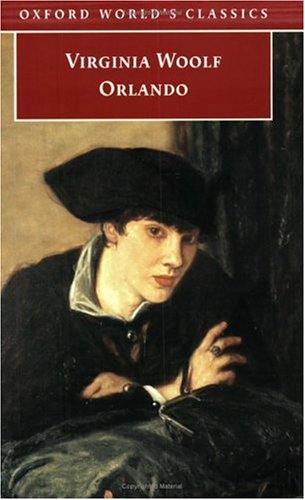
Orlando by Virginia Woolf


Virginia Woolf is one of the greatest novelists of the twentieth century and Orlando is one of her most unique and fantastic works. The protagonist, Orlando, begins the novel as a young sixteenth century aristocrat and a favorite of Queen Elizabeth I. She gives him an estate and orders him never to grow old. We then follow Orlando through the centuries, as he crisscrosses the world, falls in love, and becomes a woman. Profound and comic, Orlando is Woolf's deepest investigation of gender roles.
Goodreads description

I'm not too sure I agree with the Goodreads description - this book didn't come over to me as a deep investigation of gender roles. I am probably looking at it from a 21st century perspective when I say that the gender issue (which probably was remarkable at the time) was at best partly profound. Orlando's transformation was fun magic realism, but Orlando adapted with ease to the change. Woolf's view on the matter is: Different though the sexes are, they intermix. In every human being a vacillation from one sex to the other takes place, and often it is only the clothes that keep the male or female likeness, while underneath the sex is the very opposite of what it is above. 

Woolf is interested in how the individual adapts to their surroundings and how they are viewed. This includes the sex of the individual but also fashions, thus the Elizabethan Orlando is a lovesick youth much given to poetic similes and duels, the Jacobean Orlando suffers from melancholia and so on. This is enhanced by the mock biography format: For she had a great variety of selves to call upon, far more than we have been able to find room for, since a biography is considered complete if it merely accounts for six or seven selves, whereas a person may have many thousand.  Woolf plays with the different literary styles of the period, which might cause the reader some confusion, but is great fun and I only wish I was better read to enjoy them. 

The book seemed to me to be as much about literature and writing as about gender. Orlando writes poetry and novels and does so for over three hundred years, but s/he is not very good at it.  To put it in a nutshell, he was afflicted with a love of literature. It was the fatal nature of this disease to substitute a phantom for reality. but at the end Orlando was unaccountably disappointed. She had thought of literature all these years (her seclusion, her rank, her sex must be her excuse) as something wild as the wind, hot as fire, swift as lightning; something errant, incalculable, abrupt, and behold, literature was an elderly gentleman in a grey suit talking about duchesses. There's a laugh-out-loud scene where her attempt at writing is disturbed by an inkblot, to which Orlando adds wings and whiskers. S/he also tries to be patron of poets and writers, who welcome the money but are scornful of him/her, especially the poisonous Nicolas Greene. 

The magic realism in the book is not confined to the gender transformation, which in true magic realism fashion is not explained or regarded as unusual by Orlando and others. There is also the fact that Orlando and some other characters are immortal. Some we know to be dead even though they walk among us; some are not yet born though they go through all the forms of life; other are hundreds of years old though they call themselves thirty-six. In addition there is Orlando's longsightedness, for example Orlando is able to see the smoke of London and Mount Snowdon from his home.

There's an interesting take on magic at the end of the book: In the 18th century we knew how everything was done, but here I rise through the air, I listen to voices in America, I see men flying- but how is it done? I can't even begin to wonder. So my belief in magic returns.  This isn't developed, but it opens an interesting concept. I rather felt that is symptomatic of the novel, there is so much going on here, so many fascinating ideas, but in a slim book such as this not everything can be fully explored.


Wednesday, 30 January 2013

The Particular Sadness of Lemon Cake by Aimee Bender


On the eve of her ninth birthday, unassuming Rose Edelstein bites into her mother's homemade lemon-chocolate cake and discovers she has a magical gift: she can taste her mother's emotions in the slice. To her horror, she finds that her cheerful mother tastes of despair. Soon, she's privy to the secret knowledge that most families keep hidden: her father's detachment, her mother's transgression, her brother's increasing retreat from the world. But there are some family secrets that even her cursed taste buds can't discern.
Goodreads Description

This review comes with a spoiler warning.

The book concerns an apparently happy normal middle-class family in modern-day Los Angeles.  In many ways it is the Bildungsroman of the central character and the book's narrator Rose. But the family is far from happy and normal. The book opens with Rose's discovery of her "gift" and at the same time she discovers how unhappy her mother is. At the age of nine this is a difficult discovery: Many kids, it seemed, would find out that their parents were flawed, messed-up people later in life, and I didn't appreciate getting to know it all so strong and early. But the discovery is made worse by the fact Rose is unable to talk about her gift, on one occasion she gags as she tries to eat food prepared by her mother she says YOU'RE IN MY MOUTH, I said. GET OUT OF MY MOUTH and not surprisingly her mother doesn't understand and the doctor's reaction is to suspect bulimia. After that Rose finds ways of avoiding eating emotion-tainted food, but cannot avoid all her mother's food which means she is able to taste when her mother starts an affair. 

Her brother has autistic tendencies and seldom responds to his little sister. Her father seems blissfully unaware of what is going on and is bad at communicating. Each appears to be in their own world, with the sensitive and undervalued Rose bearing their sadness. I found the simple statement Mom loved my brother more quite heartbreaking.

After the first part, the focus of the book shifts to Joseph, Rose's brother as he tries to get away from his doting mother and find a space for himself. Then he disappears only to reappear again. He fails to get into the Ivy League College of his choice but still manages to persuade his mother to allow him to take a room near his college. He keeps disappearing and then one day Rose discovers him turning into a chair. We are now at the surreal end of magic realism. 

Furniture seems to play an important and symbolic part in the lives of the family. Rose's father persuades her mother that he is reliable by finding a pink stool, which Rose sentimentally saves. Her maternal grandmother sends packages of broken furniture and household goods to the family, including the chair Joseph becomes. Rose's mother succeeds in keeping a job which makes furniture - her affair is with a fellow worker. I haven't been able to work out what this symbolizes. 

When at last Rose talks to her father about her gift/curse he tells her that her grandfather had a similar gift and that he (her father) feared he might have one too, which is why he does not go into hospitals for fear that he will find out what it is. It seems all the family have been trying to cope with their "gifts" some better than others. Towards the end of the book Rose starts working in a restaurant.

I have been trying to analyse my response to this book. Although I am a fan of magic realism, I do tend to like some logic within it and there were a number of aspects of the tale, especially the chair transformation scene, which felt somehow wrong. Maybe if I had understood the symbolism involved, I might have felt happier. Maybe I don't like surrealism. The book also felt very bleak, the resolutions even for Rose were only partial at best.  


Enhanced by Zemanta

Tuesday, 22 January 2013

Sputnik Sweetheart by Haruki Murakami


Haruki Murakami, the internationally bestselling author of "Norwegian Wood" and "The Wind-Up Bird Chronicle," plunges us into an urbane Japan of jazz bars, coffee shops, Jack Kerouac, and the Beatles to tell this story of a tangled triangle of uniquely unrequited loves. 

A college student, identified only as "K," falls in love with his classmate, Sumire. But devotion to an untidy writerly life precludes her from any personal commitments-until she meets Miu, an older and much more sophisticated businesswoman. When Sumire disappears from an island off the coast of Greece, "K" is solicited to join the search party and finds himself drawn back into her world and beset by ominous, haunting visions. A love story combined with a detective story, Sputnik Sweetheart ultimately lingers in the mind as a profound meditation on human longing.

Goodreads Description


This is another book it is impossible to review without giving a spoiler warning. 

If you like unambiguous storylines and endings that tie-up don't read this book. This is a short book easily read, but much harder to grasp. I found myself thinking about it and wondering what happened to Sumire and Miu long after I put the book back on the shelf. For there are at least two mysteries - Sumire's disappearance and what was it Miu saw on the Ferris wheel and neither are fully explained. 

The book starts as a love triangle - K in unrequited love with Sumire, Sumire in love with Miu, whose feelings are at this stage unclear. But this is not a romance book or a book about relationships. Instead it is a book about how alone human beings are: I closed my eyes and listened carefully for the descendants of Sputnik, even now circling the earth, gravity their only tie to the planet. Lonely metal souls in the unimpeded darkness of space, they meet, pass each other, and part, never to meet again. No words passing between them. No promises to keep.  But even the sputnik image is ambiguous. Because it's not actually true: satellites pass each other regularly on their different orbits and I can't believe Murakami doesn't know this. If that is case, what does it mean for the mysteries in the book? 

Just as Sumire, transformed by Miu, appears to be slipping away from K into her new life, the book shifts. Miu contacts K and asks him to come to the Greek Island where she and Sumire have been holidaying. Sumire has vanished and Miu needs K's help. He discovers a computer floppy disk and on it two documents that Sumire has written. These take us towards a metaphysical answer to the mystery. An answer of parallel worlds, of Miu split between the two - in one world sexual and in the other not, and Sumire seeking the world in which the woman she loves can respond to her. The characters do not even know themselves: I have this strange feeling that I'm not myself anymore. It's hard to put into words, but I guess it's like I was fast asleep, and someone came, disassembled me, and hurriedly put me back together again. That sort of feeling. 

Sputnik Sweetheart is also metafiction. Sumire is an aspiring writer, but stops being able to write when she falls in love. And so the theme of the dissembled person - the two Mius, one feeling and the other not - is very much about the writer's condition. The writer is involved in the world and at the same time detached. The Sumire at the beginning of the book is never satisfied by her work, it is clearly good but it doesn't breathe. K tells her about the ancient gates of China, which contained the bones of fallen warriors and the blood of newly sacrificed dogs. Only by mixing fresh blood with the dried out bones would the ancient souls of the dead magically revive.... Writing novels is much the same. You gather up bones and make your gate, but no matter how wonderful the gate might be, that alone doesn't make it a living breathing novel. A story is not something of this world. A real story requires a kind of magical baptism to link the world on this side with the world on the other side.  Of course the image of sacrificed dogs also appears in the story of Laika the Russian dog sent into space. In the first of Sumire's documents she refers to the sacrificed dog and at the end K looks for bloodstains on his hands.

Murakami's writing style is deceptively easy and unpoetic. The poetry comes from the weaving of images and themes, which evolve, shift and change. It leaves you with the sense that you have been dreaming. But as K says: “The answer is dreams. Dreaming on and on. Entering the world of dreams and never coming out. Living in dreams for the rest of time.” 
Enhanced by Zemanta

Thursday, 17 January 2013

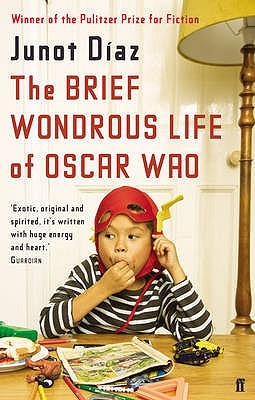
The Brief Wondrous Life of Oscar Wao by Junot Diaz


Things have never been easy for Oscar, a sweet but disastrously overweight, lovesick Dominican ghetto nerd. From his home in New Jersey, where he lives with his old-world mother and rebellious sister, Oscar dreams of becoming the Dominican J. R. R. Tolkien and, most of all, of finding love. But he may never get what he wants, thanks to the Fukú—the curse that has haunted the Oscar's family for generations, dooming them to prison, torture, tragic accidents, and, above all, ill-starred love. Oscar, still waiting for his first kiss, is just its most recent victim. 

Díaz immerses us in the tumultuous life of Oscar and the history of the family at large, rendering with genuine warmth and dazzling energy, humor, and insight the Dominican-American experience, and, ultimately, the endless human capacity to persevere in the face of heartbreak and loss. A true literary triumph, The Brief Wondrous Life of Oscar Wao confirms Junot Díaz as one of the best and most exciting voices of our time.

Goodreads Description

At first as I read the trials and tribulations of Oscar, the over-weight fantasy geek who desperately wants a relationship with a woman, I wondered how the author was going to sustain Oscar's story for a whole book. I needn't have worried: the book rapidly expands beyond Oscar's limited life to become a story of three generations of his family set against the terrible history the Dominican Republic. 

The other issue a reader encounters early on is the regular use of Spanish slang, of swear words and of geeky references to Sci Fi, fantasy and Japanese anime. Later one is hit by the misogyny that is displayed by many characters as well as a racism - for example the Oscar's mother is blacker than her family and not only is this considered a problem by them but even she likes to go out with paler skinned men.

The book's structure is complex. The book opens with Oscar's childhood and adolescence told by a (then) unnamed narrator, then shifts to a first-person narrative (which starts in the second-person) by Oscar's big sister Lola, then to a third person account of their mother's youth and so on  through the book. When an identity is finally given to the anonymous narrator, one realizes why the narration is the way it is - with swear words, slang and casual misogyny - namely that the narrator is a typical Dominican dude. However just as you realize that, you also realize that at times the narrator talks in an eloquent academic way and combines real insight and empathy alongside his Latino machismo. You also begin to question the accuracy of the narration - how could the narrator have known certain things? is there another narrator? Diaz's narrative style has you standing on shifting sands. 

The story of Oscar's family is a dark one, like so many who suffered under the brutal dictatorship of Rafael Trujillo Homeboy dominated Santo Domingo like it was his very own private Mordor.  For those of us who know nothing about the tragic history of the country Diaz provides footnotes. 

The parallels with One Hundred Years of Solitude are made clear, Macondo is referenced by the narrator. Oscar's family, as is the case with Marquez's Buendias, is cursed to repeat the mistakes and tragedies through the generations. The book opens with a definition and history of this curse which was carried in the screams of the enslaved from Africa. It is called fuku.  Fuku is a curse that lies on all Dominicans and their country - not only is Trujillo  portrayed as a purveyor of fuku, but it becomes clear that Dominican male attitude to women is also a curse. The counter to fuku is zafa. The narrator expresses the hope that Oscar has found zafa for his family by the end of the book. 

Fuku and to a lesser extent zafa are core themes to the book, and are clearly part of its magic realism. There are two other elements of magic realism, which might be said to be embodiments of fuku and zafa  - the golden mongoose who helps when members of the family are in extreme danger and the negative counter to the mongoose the eyeless man who appears as family members are going into danger and even in one case appears to take part in a brutal attack. 

Oscar's fuku is in some ways not that he is a geek, fat or with an difficult family, it is because unlike other Dominican males, he wants a meaningful relationship with a girl/woman. He rather sweetly hopes that being a good friend would lead to love and sex, only to have the object of his desire prefer a macho alternative. I don't want to spoil the ending, so I will simply say that Diaz suggests that the zafa Oscar may have found is also his fuku.

I enjoyed this book: it left me with all sorts of thoughts and ideas. It clearly is not suited to someone who likes simple linear narrative and unambiguous characters, but if you like to be challenged this is a great book. 


Enhanced by Zemanta