Thursday, 29 August 2013

Rising Up by Evie Woolmore


Tom Macindeor is an itinerant English teacher, spending the summer in Warsaw in the hope of finding out the truth about his grandfather, a Polish resistance fighter. But when he hears the voice of Ela, a young woman trapped in the Jewish Ghetto of 1942, a window opens not just on his past but the future of the ghetto and all those who live in it. Should he share what he knows of their fate, or will Ela's search for the truth about her own family doom them both?
Goodreads Description

I admire Evie Woolmore's courage in tackling a story set in the Warsaw Ghetto. I doubt I could ever do the same. The subject of the holocaust is one which is extremely sensitive and I suspect I could never be confident that my historical research was sufficient to tackle this darkest of periods in human history. 

Evie Woolmore's language and writing style are excellent. As the description above shows, there are two story lines in this book - Tom's story set in the present day and Ela's in 1942 -but the two are linked as the two central characters discover they can talk to each other. As someone who spends a lot of time in the Czech Republic, I was struck by how accurately Evie Woolmore portrays life in Warsaw. There was much here that struck a chord, for example the brightly coloured dyed hair of one of the Polish characters. 

Ela's story opens strongly with the description of her job working for the Germans, which consisted of disposing of the dead, looting their bodies and homes of any valuables. This shows some of the horror of the ghetto. However as the book went on there were times when I found the portrayal of Ela's life less believable, for example I had a problem with the ease with which Ela talks to her sister about a contact with a resistance member.  Ela's family are actually very well-off in terms of most of the  families around them. They are not living six to a room, which was the norm in the ghetto, and they even occasionally eat meat, when thousands of people were dying each month, most of hunger. I would have liked Ela to feel survivor's guilt, perhaps to do something about helping others.  

Both stories are written in the present tense and in the third person. This is essential to the story as at its heart is the fact that Tom and we know the awful truth of what will happen to the inhabitants of the ghetto and Ela's story, but Ela of course does not.  Tom is faced with the dilemma of whether to warn Ela, when she probably can do nothing about her fate. I was reminded of the work of Kate Atkinson, where the magic realism in the book poses philosophical questions and is at the heart of the dramatic tension. But is it right to use magic realism in this way, when the subject matter is so dramatic? Would I have liked the book more if it had simply been Ela's story, perhaps with Tom discovering it? Probably. But I certainly did get drawn in to Ela's story and wanted to see if she survived. 

I was given this book by the author in return for an honest review.
Enhanced by Zemanta

Monday, 26 August 2013

Stonefly by Scott J Holliday


Jacob Duke has come back to Braketon­—a sleepy, backwoods town bordering Dover, the mental institution where he spent his formative years. Jacob's intention is to enjoy Braketon's woods and water for the first time as a free man, but he soon discovers that Dover isn't through with him yet. Driven by a curse that compels him to grant any wish he hears, Jacob is drawn back into his disturbing former life by a young boy's desire to see his own father dead.

Complicating things are Lori Nelson, Jacob's friend-with-benefits who continues to put new boyfriends in his path, and Motown, Jacob's friend from his years at Dover, who carries a secret that rocks Jacob's foundation and makes him question his own morality.


This is a lovely short novel. Written in the first person, it gives the central character a strong individual voice. The reader gets inside his head from the outset: "Hey there," I said, pantomining a wave. Idiot. Why not how howdy partner while we're at it."  

Jacob speaks of his "curse" with a matter-of-factness that means that we don't question it. At first. But Jacob has a history, which comes out during the course of the book. Not only is there the period of the mental institution, but also the action that put him there. This unfolding of Jacob's past helps make this more than a simple modern fantasy story. 

His mother told him that she believed his father was a genie or djinn and Jacob believes that he has inherited the djinn's curse of being obliged to grant wishes, but without a genie's magic to fulfill the wish. Hence when the boy wishes his own father dead, Jacob is faced with a dilemma, for as he explains: Make a wish of a djinn and he's bound to grant it. If he cannot grant it - or if he chooses not to grant it - within six days, you will die.

Jacob discovers that the boy's father is abusive towards his son and wife, the local bully, in fact: This guy was comic-book evil. But Jacob cannot risk his newly gained  freedom by killing the man. But he must succeed or the boy will drop dead. That moral dilemma is the major plot driver for me. Without spoiling the book for you, let us just say that the plot twists nicely towards the end. 

Towards the end of the book I started to debate whether the magic was real or not. It is accepted by the main character, as well as by his mother, Lori and Motown. But it could just be coincidence or something to do with Jacob's mental condition. It doesn't matter. The ambiguity of magic realism is what appeals to me. It's up to you to decide. 

The book was given to me by the book's publicist in return for a fair review.

Wednesday, 21 August 2013

The People of Paper by Salvador Plascencia


Amidst disillusioned saints hiding in wrestling rings, mothers burnt by glowing halos, and a Baby Nostradamus who sees only blackness, a gang of flower pickers heads off to war, led by a lonely man who cannot help but wet his bed in sadness. Part memoir, part lies, this is a book about the wounds inflicted by first love and sharp objects.
Amazon description


In my recent post on what is magic realism, I talked about three strands of magic realism. The first of these is what I called "South American magic realism", as exemplified by Gabriel Garcia Marquez, with its merging of two cultures (a magic indigenous culture and the colonial western one). The second is what I called "European magic realism", with its roots in surrealism and its emphasis on metafiction and experimentation with form. As is always the way when you try to categorize books along comes a novel that fits in both categories. The People of Paper is just such a book

The fantastical in the book was extremely imaginative and striking: the woman created not from the rib of a man but from paper scraps, whose lovers bear the telltale scars of paper cuts as if members of a secret society; the metal turtles; the woman who is addicted to bee stings; the saint/mexican wrestler who dies in the ring, and so on. This has to be one of the most creative pieces of magic realism I've read. 

This creativity extends to the way the story is presented on the page: Baby Nostradamus is presented by black rectangles, the mechanical tortoise by binary code, as Little Merced learns to hide her thoughts sections are blacked out. This book has multiple viewpoint narration with most pages divided into columns, each taking a different viewpoint. At first I was impressed by this approach, but after a while found it tiring, physically and intellectually. In my edition, in order to ensure the columns did not continue over the page, the text size was so small that it occasionally caused me problems. Another more serious consequence of this structural device was that it could be confusing (I counted 24 different points of view in the first half of the book) and it was difficult to engage with the characters. The author's creativity, which I so delighted in, was getting in the way of my enjoyment.

There are two main stories in the book, that of the flower pickers against the omniscient planet, Saturn, and the writer's love life and the writing of the book. Both stories are about loss of lovers. When one character steps out of the flower picker narrative to observe "Saturn", we discover that Saturn is the author. Suddenly the book takes on a whole new aspect. It is also about how the writer's loss has impacted on the themes of the book. But, despite and also maybe because of this, I didn't find myself engaged with the emotions of the book. There didn't seem to be much emotional progression, which for me is an  important part of a good story. 

So do I recommend this book? Yes, you should read it if you are interested in magic realism. Some people will love it. Some, like me, will have their reservations. 

Enhanced by Zemanta

Wednesday, 14 August 2013

The Invisible Mountain by Carolina De Robertis


A gripping and lyrical story—at once expansive and lush with detail—this debut novel is a deeply intimate exploration of the search for love and authenticity, power and redemption, in the lives of three women, and a penetrating portrait of a small, tenacious nation, Uruguay, shaken in the gales of the twentieth century.

On the first day of the millennium, a small town gathers to witness a miracle and unravel its portents for the century: the mysterious reappearance of a lost infant, Pajarita. Later, as a young woman in the capital city—Montevideo, brimming with growth and promise—Pajarita begins a lineage of fiercely independent women. Her daughter, Eva, survives a brutal childhood to pursue her dreams as a rebellious poet and along the hazardous precipices of erotic love. Eva’s daughter, Salomé, driven by an unrelenting idealism, commits clandestine acts that will end in tragedy as unrest sweeps Uruguay. But what saves them all is the fierce fortifying connection between mother and daughter that will bring them together to face the future.

From Perón’s glittering Buenos Aires to the rustic hills of Rio de Janeiro, from the haven of a corner butchershop in Montevideo to U.S. embassy halls, the Firielli family traverses a changing South America and the uncharted terrain of their relationships with one another.


Goodreads Description


I was expecting to be disappointed by this book. With its similarities to Allende's House of Spirits (three generations of women living through times of oppression), I thought it would suffer in comparison, that it might be light South American magic realism. I was pleasantly surprised. I really enjoyed the book and found that it stood on its own as a piece of literature.

The magic realism in the book is more obvious at the beginning of the book with the miracle of Pajarita's survival and fades as we move further into the rationalist twentieth century and away from the rural setting to the urban. However, there was throughout the book a sense of returning imagery, of poetry and words, that is magic realist:  her pen moved and moved without her hand seeming to push it, forming the spines and spikes and loops of cursive words, sharp t’s and j’s, y’s and g’s with knots at their base as though to tie themselves together, tie women back together, and as she wrote the loops grew large, as if more rope were needed to bind what had blown apart inside her.

One of the book's strengths is the author's portrayal of the psychology of the main characters. They are not perfect, they are at times unattractive, but we are shown how their faults are the product of their experiences and sometimes genes. The best example of this is Eva's story.  Having suffered sexual abuse at the hand of her employer and family friend, she finds it hard to trust and relate to men. She manipulates her husband, a good man, into marrying her and giving her the economic security she craves, but that is not enough. She is oppressed by the upper bourgeois life she must lead as his wife, she is living a lie. It cannot last. This reader's sympathies was with both of them.

If I were to criticize this book, I would point out the way in which Pararita and then Eva fade into the background as the focus shifts on to the story of the next generation. I was loathe to lose them and their point of view. Nevertheless the author does a good job of weaving recurring imagery and themes through the generations to give a continuity.  The major theme of the book is of course motherhood and specifically mothers and their daughters. There is a wonderful description of Eva with her children: Eva could walk down the street- one child's hand in each of hers - and be struck by a fierce and sudden gale of happiness. It made her want to skip and run and kick up puddle water and pursue the sensuous crunch of brown leaves beneath her boot. So much opulent sensation on one sidewalk. 'Salomé, you get that one!' Small galoshes crushed a leaf, another, and two giggles (a three-year-old's, her mother's) mixed with the crackling sound.  Any mother will know that sensation of sudden maternal joy. 

With Salomé's story the politics of Uruguay come to the fore. Again Salomé's motivations for her actions are well-drawn. Although she actively chooses to get involved in revolutionary politics, she also slides into it, influenced as much by friendship as by youthful zeal. But the theme of motherhood is still there in Salomé's story and the book ends as it begins with Salomé writing to the daughter who does not know her story. 
I recommend this book to you. 

Saturday, 10 August 2013

Apocalypse Now Now by Charlie Human

Neil Gaiman meets Tarantino in this madcap, wildly entertaining journey into Cape Town's supernatural underworld.

I LOVE THE SMELL OF PARALLEL DIMENSIONS IN THE MORNING

Baxter Zevcenko’s life is pretty sweet. As the 16-year-old kingpin of the Spider, his smut-peddling schoolyard syndicate, he’s making a name for himself as an up-and-coming entrepreneur. Profits are on the rise, the other gangs are staying out of his business, and he’s going out with Esme, the girl of his dreams.

But when Esme gets kidnapped, and all the clues point towards strange forces at work, things start to get seriously weird. The only man drunk enough to help is a bearded, booze-soaked, supernatural bounty hunter that goes by the name of Jackson ‘Jackie’ Ronin.

Plunged into the increasingly bizarre landscape of Cape Town’s supernatural underworld, Baxter and Ronin team up to save Esme. On a journey that takes them through the realms of impossibility, they must face every conceivable nightmare to get her back, including the odd brush with the Apocalypse.
 
 Publisher's description
Okay, let's get something out of the way. This book is not magic realism, but hey it's great fun. The book starts very realistically, but once it enters the alternative world it stays there. I can see why the comparison has been made between the author and Neil Gaiman. Gaiman's books are at the far edge of magic realism, where magic realism and fantasy overlap. Both authors have a strain of humour which runs through their books. Charlie Human has some wonderful one-liners: Magic is S&M without a safe-word  and  His face has the texture of an old loofah.  Like Gaiman and Tarantino, Charlie Human plays with different genres and their cliches: you will find zombies, South African mythic creatures, kung-fu dwarfs, hard-bitten detectives, and giant mechanical beasts in this novel.

This book will appeal to teenage boys who don't read books and adults who do. It is fast-paced, laugh-out-loud funny and the hero and narrator is himself a teenage schoolboy, one who runs a school gang which operates a porn business. He sees himself as a logical, clinical, businessman... that creates plans, devises schemes and shifts pawns around like Kasparov. This me would drink neat vodka while stealing candy from babies and life savings from old people.  But during the course of the book he discovers that he has feelings: This is a me that feels. Gross, I know. This dual nature is explained later in the book.

Baxter's voice is brilliant. It rings true as that of a very bright teenage boy, whilst at the same time referencing literary influences. Baxter's commentary, with its irony and awareness, also helps keep the book from being overwhelmed by weirdness.

I gather that Charlie Human is one of a new generation of speculative fiction writers coming out of South Africa. This is his debut novel and a very impressive one at that.

This book was given to me by the publisher via Netgalley in return for a fair review. 

Wednesday, 7 August 2013

Death at Intervals by Jose Saramago


In an unnamed country on the first day of the new year, people stop dying. Amid the general public, there is great celebration: flags are hung out on balconies and people dance in the streets. They have achieved the great goal of humanity - eternal life. Death is on strike. Soon, though, the residents begin to suffer. For several months undertakers face bankruptcy, the church is forced to reinvent its doctrine, and local 'maphia' smuggle those on the brink of death over the border where they can expire naturally.

Death does return eventually, but with a new, courteous approach - delivering violet warning letters to her victims. But what can death do when a letter is unexpectedly returned?
Amazon description

Let us start with Saramago's style of writing. This at once caused me problems and delighted me. Visually the book is hard to read, with long paragraphs, narrow margins and no indication of speech (no quotation marks, no line breaks and seldom "he said").  I found myself breaking away from the story to decipher who was speaking, which is something I dislike. Although the prose could at times be said to be rambling, I loved it. It was like having Saramago in the room talking to me. There is something deferential about this style, but at the same time Saramago is a master storyteller and the prose weaves back to the story without fail. Another feature is the gentle humour the author displays: Death did indeed work her fingers to the bone, because, of course, she is all bone.

The book is split into two uneven parts. The first part, which takes up nearly two thirds of the book, focuses on the impact of first death going on strike and second the arrival of the violet letters. Mostly Saramago talks about the general impact on the country and its people (as outlined in the Amazon description).  In one exception we see the impact on one family who have two members who cannot die. Saramago suggests this exception was a mistake, the result of an overhasty judgement, on the part of the narrator. It is of course no such thing, but a necessary personalizing of the story, a focusing in on the human consequences of what has happened, which contrasts with the cynical realpolitik of the government. There is a degree of satire in this section, as the economic, religious and political leaders react to the absence of death. 

Ironically, having put his tongue out at the establishment, Saramago then says: it's high time we stuck our tongues out at her [death]. For in the second part the focus shifts on to death and the man, whose violet letters keep coming back. Far from sticking his tongue out, the author is full of compassion: Due to some strange optical phenomenon, real or virtual, death seems much smaller now, as if her bones had shrunk, or perhaps she was always like that, and it's our eyes, wide with fear, that make her look like a giant. Poor death. It makes us feel like going over and putting a hand on her hard shoulder and whispering a few words of sympathy in her ear, or, rather, in the place where her ear once was, underneath the parietal.

Death, having dealt impersonally with millions of people's deaths which appeared on the filing cards in her subterranean room, decides that she must observe the man in order to work out why the letters are coming back. She even decides to take on the appearance of a young woman. These changes have a great impact on her: For the first time in her life, death knew what it felt like to have a dog on her lap. And with that the book becomes a love story.

I loved much of this book. However I did find myself losing interest in the first part, not helped by the stylistic problems I described at the beginning of the book. But once death arrived as a real character everything changed for me.


Enhanced by Zemanta

Wednesday, 31 July 2013

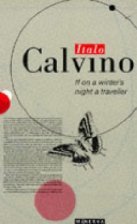
If On A Winter's Night A Traveller.


You go into a bookshop and buy If on a Winter's Night a Traveller by Italo Calvino. You like it. But alas there is a printer's error in your copy. You take it back to the shop and get a replacement. But the replacement seems to be a totally different story. You try to track down the original book you were reading but end up with a different narrative again. This remarkable novel leads you through many different books including a detective adventure, a romance, a satire, an erotic story, a diary and a quest. But the real hero is you, the reader.
Amazon Description

Metafiction is sometimes a trait of the magic realism genre. The Oxford Dictionary defines metafiction as:
fiction in which the author self-consciously alludes to the artificiality or literariness of a work by parodying or departing from novelistic conventions and traditional narrative techniques.  Calvino's book is a first-class example of this.

The book is an incredibly ingenious in how it approaches the story. It opens with the sentence: You are about to begin reading Italo Calvino's new novel, If on a winter's night a traveler. Relax. Concentrate. Dispel every other thought. Throughout the book the point of view of the protagonist, a young male reader known simply as The Reader, is in the second person. By apparently addressing us, the book disorients us. We know within a sentences we are in unusual reading territory. There is a second character, a female reader, referred to by the author as the Other Reader. The relationship between the two characters is one of the two plot drivers of the book.

The second plot driver is the search for the ending of the books that the two readers keep starting. The Reader starts one book which he thinks is by Calvino, but which stops after thirty pages. Trying to find a correct edition, he then finds out that the book is actually by a Polish writer, Bazakbal, but when he tries to get another copy, he finds that that this too is interrupted just as it is getting started. And so on as successive books turn out to be incomplete and written by another writer. In all, Calvino gives us the openings of ten different books in different genres. We share The Reader's frustration each time when he starts a book and begins to get into the story only to have his hopes dashed, because we too are taken up in the story, even if we know that the story will not be completed.

In many ways the book is about the process of reading and even book buying. There is a wonderfully observed section at the beginning where Calvino describes going in to a bookshop: In the shop window you have promptly identified the cover with the title you were looking for. Following this visual trail, you have forced your way through the shop past the thick barricade of Books You Haven't Read, which are frowning at you from the tables and shelves, trying to cow you.

The two central characters share a love of reading for reading's sake, in contrast to some of the other characters in the book. It is this shared love which drives the romance, but the book recognizes that reading is ultimately an activity you do alone: One reads alone, even in another's presence. But Calvino also draws the parallel between love-making and reading.

As I look back over the last few paragraphs I notice how often I have used the word "but". That is perhaps symptomatic of the illusive and playful nature of this book. Just as you think you are at ease with it, it does something else. In contrast to The Reader and Other Reader with their love and faith in books, there is what might loosely be termed the antagonist - a man who is deliberately subverting literature by flooding the market with counterfeit translations. The story of The Reader's search takes him from a realistic setting, to a fictitious country, where people he meets are counterfeiting infiltrators. It is like a room of mirrors, such as one that plays a prominent role in one of the stories.

This is not a book for people who like a conventional plot line. It is a book for people who enjoy playfulness and thought. It is an extraordinary read.


Enhanced by Zemanta

Sunday, 28 July 2013

Quin's Shanghai Circus by Edward Whittemore


In Edward Whittemore’s masterful and surreal alternate history, a man’s search for answers about his vanished parents propels him on an odyssey from the present into the past, from a bar in the Bronx to Tokyo and Shanghai during the Second World War.

Quin, born in China and raised in the Bronx, is orphaned in the closing days of the Second World War when his parents go missing and are presumed dead in Shanghai. Years later, in a Bronx bar, Quin encounters a stranger who hints that he can uncover the secrets of his past by accompanying Big Gobi, an adult orphan too simpleminded to travel alone, on a journey to meet his guardian in Tokyo. Quin arrives in Japan determined to uncover the truth about his parents’ past, but his search soon raises more questions than answers. What are the connections between a Russian anarchist, a one-eyed baron who is head of the Japanese secret service known as the Kempeitai, and the atrocities committed during the rape of Nanking? And what does any of it have to do with Quin’s parents?

Part espionage novel and part surreal fantasy, Quin’s Shanghai Circus, the first novel by Edward Whittemore, is a remarkable and audacious literary feat. Alive with a fascinating cast of characters and equally enthralling turns of events, former CIA officer Whittemore offers readers a mesmerizing glimpse at a secret history of the twentieth century.

I was delighted to receive this book from the publishers Open Road Media via Netgalley.  Open Road Media specializes in publishing backlist books electronically. Their lists include books like this one which are unavailable in print and which are hard to obtain as a printed book - the cheapest price on Amazon.co.uk for a second-hand paperback is currently £27.47!

One of the great masters of magic realism . . . Tom Robbins? John Irving? Even God Vonnegut—forget ’em—read Whittemore. —Jonathan Carroll.

Edward Whittemore's extraordinary life, as a CIA officer in the Far and Middle East, informs this novel not just through the setting (in China and Japan) but also in its view of the world as illusion and deception.  We are led through a world of lies, like Quin not knowing what and who to believe. This world is huge, realistic and surreal, like a drug taker's trip.

The image of the Shanghai Circus is a metaphor for life: let us recall that other circus, the circus we knew as children. The sweep of the trapeze acts, the grace of the dangerous cats, the ridiculous clowns, the lumbering elephants, the confusing jugglers, the flying bareback riders. A magical show without end because of the magic in a child's heart. Yet when we go back years later we see a different performance. The costumes are shoddy, the smells cheap, the clowns not quite so funny, the aerialists not quite so daring. The dream is gone and what we see is crude, even grotesque. Sadness? Yes. Because we know the circus hasn't changed.
In Whittemore's hands the grotesque circus with the murderous final performance becomes a realm of horror.

This is very much a book for adults. Scenes include a chilling account of the Japanese army's atrocities at the Rape of Nanking and the cast of grotesque characters includes the psychopathic brother of Mama, a tattooed ex-prostitute who had sex with some ten thousand men by the time she was twenty-five. It is not a book for the squeamish. I should probably add at this point that it is also a book leavened with humour, such as Japanese gangsters singing the company marching song to the tune of Roast Beef of Old England.

The other balance to the horror is the scenes of humanity, love and even tenderness, such as the relationship between Quin and the simpleton Big Gobi and that between Mama and the Japanese general she loved. At the core of the book are relationships. Quin starts the book wanting to know about his parents, but as the book progresses that search expands to a need to understand the interrelationship between a much larger cast of characters. As each new character is introduced, the reader and Quin have new questions.

The story twists, turns and reprises. We go down dead-ends, we start again, sometimes the dead ends are not dead at all. Anyone, who like me, enjoys American mystery thrillers will find much to enjoy here. This is a book which merits rereading, as you will miss things on first reading.

So, based on this book, is Whittemore one of the great masters of magic realism? Not if you are require magic realism to have magic. But as we have seen elsewhere on this blog, magic realism can also be defined as realistic fiction infused with surrealism or fantasy. When we read about some of the real activities of the secret services we can't help but think that some of what seems fantastical in this book, e.g. the meeting on the beach of three conspirators wearing gas masks to prevent their words being lip-read, might actually be realistic. This is an extraordinary novel and an important book in the magic realism canon.

This book was given to me by the publisher via Netgalley in return for a fair review.


Wednesday, 24 July 2013

Dandelion Wine by Ray Bradbury


This post is part of the Magic Realism Blog Hop. On Monday I wrote a post about what I have learned from my year of reading magic realism books and my attempt at a definition. Yesterday I gave short summaries of the 55 magic realist books I have reviewed so far on this blog. This is the 56th book in my magic realism challenge.

An endearing classic of childhood memories of an idyllic midwestern summer from the celebrated author of ‘Farenheit 451’.

In the backwaters of Illinois, Douglas Spaulding's grandfather makes an intoxicating brew from harvested dandelions. ‘Dandelion Wine’ is a quirky, breathtaking coming-of-age story from one of science fiction's greatest writers. Distilling his experiences into "Rites & Ceremonies" and "Discoveries & Revelations", the young Spaulding wistfully ponders over magical tennis shoes, and machines for every purpose from time travel to happiness and silent travel. Based upon Bradbury's own experiences growing up in Waukegan in the 1920s, ‘Dandelion Wine’ is a heady mixture of fond memory, forgiveness, magic, the imagination and above all, of summers that seemed to go on forever.
Amazon description

I had not read any books by America's great science fiction writer and had no idea what to expect. What I found was a book that reminded me of Cider with Rosie by Laurie Lee, another coming-of-age story, this time set in rural England not far from my hometown and a great favourite of mine. Both books are written by older men looking back at the golden days of their early teens. At the same time both Laurie Lee and Ray Bradbury remember the joyousness, wonderment and optimism of youth and also are able as adults to understand the world better. In particular Bradbury creates some lovely portraits of old people approaching death with dignity. Both writers enjoy a poetic love of words that shines through their descriptions, something not all readers appreciate, but I do. Bradbury's language is just beautiful.

Dandelion Wine is a series of short stories woven together by the boy's perceptions and his brother's. Each is bottled, stored and allowed to mature like the wines of the title. Each one is delightful and a pleasure to read. I enjoyed all of them. I know some people find Bradbury wordy but I loved his writing. I felt that the lushness of the writing suited the tales of golden times.

Although Bradbury is quoted as saying 'Dandelion Wine' is magic realism about my childhood, the magic realism is quite subtle and one cannot always be certain whether the magic is created by looking at the world through the eyes of a child. But then does that matter? Children believe in magic. Does it matter if the Lonely One is an evil monster or the local psychopath? Or whether Honeysuckle Ladies Lodge is really a coven of witches? The key to reading this book is to go along with it, to lay aside adult assumptions against magic. For a child the everyday world is magic realist and Bradbury conjures up that magic brilliantly. Plus there are some episodes which cannot be easily reasoned away.

Although the world Douglas inhabits is bright and magical, at the same time there is sadness in the book, as befits a realist account of childhood. There is that major disaster of childhood, the loss of a best friend, the friend's parents are moving away and suddenly taking him with them. There is illness, even a death of a much-loved family member, the end of summer and the impending return to school. And behind it all is the loss of childhood itself. This is the year when Douglas realizes: I’m ALIVE. Thinking about it, noticing it, is new. You do things and don’t watch. Then all of a sudden you look and see what you’re doing and it’s the first time, really. We as adults know that this is a sign of growing older.

The Magic Realism Blog Hop
Below are the other blogs on the Magic Realism Blog Hop. Please take time to visit them, you'll find some fascinating posts. Oh and while you're about do take part in the Rafflecopter giveaway at the bottom of the post. You could win a collection of magic realism ebooks. You get free entries by commenting on this or other posts, by joining the Magic Realism Facebook page (see right) or following this blog, and lots of other ways.


a Rafflecopter giveaway
Enhanced by Zemanta

Tuesday, 23 July 2013

Some Brief Descriptions of Magic Realism Books

Over the last year I have reviewed fifty-five magic realism books. As part of the Magic Realism Blog Hop, here is a summary of each book. Click on the title to go to the full review.

Winter's Tale by Mark Halprin  - North American modern, alternative history
The Story Sister's by Alice Hoffman - modern women's magic realism tackling difficult subjects
The Enchantress Of Florence by Salman Rushdie  - post-colonial magic realism, historical fiction
The Knife Thrower by Steven Millhauser - North American short stories
Nights at the Circus by Angela Carter - feminist British magic realism
The Snow Child by Eowyn Ivey - Alaskan modern fairytale
Life of Pi by Yann Martel - post modernist tale
The Wood Wife by Terri Windling - North American mythic fiction
Beloved by Toni Morrison - magic realism tackling the psychological legacy of slavery
The Ladies of Grace Adieu by Susanna Clarke - British retelling of fairytales
Girl with Glass Feet by Ali Shaw - British magic realism
The Minotaur Takes a Cigarette Break by Steven Sherrill - North American very realistic mythic fiction
Fludd by Hilary Mantel - quirky magic realism by Booker prize winning author
The Silver Cloud Cafe by Alfredo Vea - magic realist mystery focused on the lives of immigrant workers
Like Water For Chocolate by Laura Esquivel - Mexican magic realism, food as magic
The Tiger's Wife by Tea Obreht - Orange prize winning book set in the Balkans
The Scholar of Moab by Stephen Peck - surreal and amusing American magic realism
Chocolat by Joanne Harris - more food as magic
The Alchemist by Paulo Coelho - hugely popular fable from Brazilian writer
Metamorphosis by Franz Kafka - surreal story that inspired Garcia Marquez
The Particular Sadness of Lemon Cake by Aimee Bender - American surreal food-as-magic novel
Sputnik Sweetheart by Haruki Murakami - Japanse post-modernism
The Brief Wondrous Life of Oscar Wao by Junot Diaz - several generations of a family from the Dominican Republic
The Hummingbird's Daughter by Luis Alberto Urrea - Mexican, historical fiction around the life of a traditional woman healer
One Hundred Years Of Solitude by Gabriel Garcia Marquez - classic South American magic realism,
The Cure for Death by Lightning by Gail Anderson-Dargatz - magic realism set in British Columbia influenced by native American myth
The Inner City by Karen Heuler - short story collection from science fiction
Bless Me, Ultima by Rudolfo Anaya - Chicano magic realism set in New Mexico
The Threads of the Heart by Carole Martinez - French magic realism following strong female characters
Orlando by Virginia Woolf - British early magic realism set across the centuries
The Tragedy of Fidel Castro by Joao Cerqueira - Portuguese satirical magic realism,
This Magnificent Desolation by Thomas O'Malley - dark novel with touches of magic realism
Black Juice by Margo Lanagan - collection of short stories from Australian fantasy writer
Tracks by Louise Erdrich - native American magic realism
The Man Who Walked Through Walls by Marcel Aymé - collection of short stories by French magic realist
The Hearing Trumpet by Leonora Carrington - surrealist, feminist, British magic realism
Anansi Boys by Neil Gaiman - African gods meet modern London in this fun magic realist book
Sexing The Cherry by Jeanette Winterson - post modernist, historical magic realism
Life After Life by Kate Atkinson - British literary magic realism, what if you had life after life
Ceremony by Leslie Marmon Silko - Native American magic realism
Last Summer At Mars Hill by Elizabeth Hand - collection of short stories by
The Magic Barrel by Bernard Malamud - collection of Jewish American short stories (not all magic realism)
Forged In Grace by Jordan E Rosenfeld - indie writer's realistic portrayal of faith healer, psychological magic realism
The House of Spirits by Isabel Allende - family saga from leading South American magic realist
Goldenland Past Dark by Chandler Klang Smith - a freak circus tale
Thirty-Three Teeth by Colin Cotterill - a mystery for Laotian coroner and shaman
The Tooth Fairy by Graham Joyce - psychological magic realism set in 1960's Britain
Missing in Machu Picchu by Cecilia Velastegui - popular women's fiction meets Peruvian native beliefs
The Icarus Girl by Helen Oyeyemi - a child with Nigerian/British heritage meets a strange friend
Pedro Paramo by Juan Rulfo - massively influential magic realism novel, set in dream-like Mexico
A Floating Life by Tad Crawford - surreal magic realism
The Mistress of Spices by Chitra Banerjee Divakaruni - food as magic, India meets US culture
The Blue Fox by Sjon - Icelandic magic realist novella, historical setting
Dona Flor and her Two Husbands by Jorge Amado - epic magic realism tale by Brazilian writer
Spirits of the Ordinary by Kathleen Alcala - Jewish/Mexican magic realism.

The Magic Realism Blog Hop
Yesterday I wrote a post about what I have learned from my year of reading magic realism books and gave my attempt at a definition of magic realism. And tomorrow I will be reviewing my fifty-sixth magic realism book, the wonderful Dandelion Wine by Ray Bradbury.

Below are the other blogs on the Magic Realism Blog Hop. Please take time to visit them: you'll find some fascinating posts. Oh and while you're about it, do take part in the Rafflecopter giveaway at the bottom of the post. You could win a collection of magic realism ebooks. You get free entries by commenting on this or other posts, by joining the Magic Realism Facebook page (see right), by following this blog, and in lots of other ways.


a Rafflecopter giveaway
Enhanced by Zemanta

Sunday, 21 July 2013

What is Magic Realism


This is the first day of the Magic Realism Blog Hop. Twenty bloggers are taking part, so when you have finished reading this blog post pop along to the other blogs (see the links below).  

On the 29th July this blog will be one year old. I started the blog as a way of ensuring I finish my magic realism challenge - to read a book a week for a year. And the reason I started the challenge was because I was told I wrote magic realism, but I didn't know what that meant. By reading 52 books, I hoped to have an answer. I deliberately read as widely as possible, both in terms of geographical origin and genre. So what have I discovered?

The first thing I discovered is that there is no easy definition and that there are a number of interpretations of what magic realism is. 

There seem to be three main strands of magic realism. The first is what one might call Latin American magic realism, exemplified by the works of Isabel Allende and Gabriel Garcia Marquez. In this form of magic realism, "magical" events are treated as normal occurrences in an otherwise realist world and are not commented on. This magic realism strand is informed by the coming together of two cultures in a post-colonial world: the western realist/rationalist (and dominant) culture and the "magical" indigenous cultures of South America. Whether the post-colonial context is essential is open to debate, but this mixing of two cultures with different belief structures has become so frequent a theme in magic realism, that arguably it is essential to the definition. Examples of this "two cultures" magic realism are not restricted to South America, but also include native American writers such as Silko and Erdrich, Jewish writers such as Alcala and even Kafka, British South Asian writers like Rushdie and Afro-American writers such as Toni Morrison. Arguably this definition also applies to feminist magic realism, such as that by Angela Carter and Virginia Woolf. 

Then there is the European strand. The roots of the European magic realism are in the surrealist and post-expressionist movements. The first use of the phrase "magic realism" was by art critic Franz Roh in 1925 when writing about the post-expressionist movement: 
We recognize the world, although now - not only because we have emerged from a dream - we look on it with new eyes. We are offered a new style that is thoroughly of this world, that celebrates the mundane. This new world of objects is still alien to the current idea of Realism. It employs various techniques that endow all things with a deeper meaning and reveal mysteries that always threaten the secure tranquility of simple and ingenuous things.
For me this definition is still important: everyday things having deeper-than-expected meaning seems to be a key element of magic realism. 

This European strand has an approach that is very different from Latin American magic realism. It is more self aware, so much so that metafiction regularly features in some leading magic realist novels, such as Life of Pi, or If On a Winter's Night A Traveller. To show that my attempt at definition is fraught with problems, some of the best examples of this approach come from outside of Europe, such as works by Borges and Murakami. And there are plenty of common roots for both strands. Franz Kafka is in many ways not a magic realist writer, he is too surrealist, but he is remarkably influential on the development of magic realism. Arguably he is the root of magic realism - it was his story Metamorphosis that inspired Marquez to write as he does. 

There is a third strand, which is what might be termed popular magic realism. This uses magic realism as a story-telling technique. The magic can be a way of showing the psychology of characters, such as in the Tooth Fairy, or of exploring alienation, such as in The Story Sisters. It can be used to show religious and non-rationalist beliefs that exist even in western society, for example in Fludd. Or it can simply be used to add a touch of magic.

Magic realism in all these strands questions the nature of "reality". In some ways it is unfortunate that it is called magic realism. In the context of our world, which is dominated by rationalism and science, the term "magic" often implies unreality. However magic realism allows the writer to draw a world where there are alternatives to rationalism. It might be better described as "alternative realism". 

Please follow the links below to take you to posts on magic realism from lots of other bloggers. And please come back here tomorrow and Wednesday, when there will be two more posts as part of the blog hop. And there's a giveaway too - a collection of magic realist e-books and a Kafka bookmark. See the Rafflecopter below. Remember leaving a comment on this post gets you an entry.

Wednesday, 17 July 2013

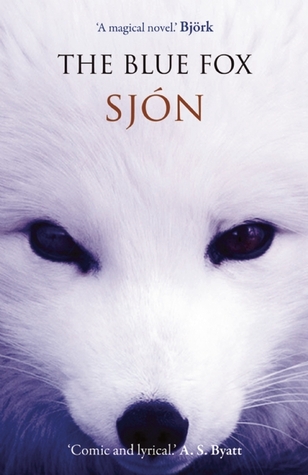
The Blue Fox by Sjon


The year is 1883, and the stark Icelandic landscape is the backdrop for this spellbinding fable that is part mystery, part fairy tale. The fates of a priest, a naturalist, and a young woman with Down syndrome are intrinsically bound and gradually, surprisingly unraveled.

"Sjon's fable...describes its world with brilliant, precise, concrete colour and detail while at the same time making things and people mysterious and ungraspable...The world of 19th-century Iceland is brilliantly and economically present: the bareness of the dwellings, the roughness of the churches and congregations, the meager food...The novel is a parable, comic, and lyrical about the nature of things."—A.S. Byatt for The Times

Sjon was born in Reykjavik, Iceland, in 1962. A novelist, playwright, lyricist, and poet, he wrote the lyrics to Bjork’s hit songs “Isobel,” “Joga,” and “Bachelorette” and was nominated for an Academy Award for his lyrics to the music for the film Dancer in the Dark, directed by Lars von Trier.

Goodreads Description.

This is one of those books I came across by accident while exploring Amazon. I’m not a great fan of the Amazon suggestions, they seem to often bear little resemblance to my likes or too much so in that I have already bought them (sometimes from Amazon), but sometimes they throw up a gem like this lovely novella by an Icelandic writer I had never heard of and now will be seeking out.

The book starts as the relatively simple story of a man hunting a fox across the winter wasteland, a contest of cunning and endurance. As was the writer’s intention I was firmly on the side of the blue fox vixen. It then expands into the tale of a herbalist, Fridrik Fridjonsson, and the Down Syndrome girl he saves and protects. The story is set in the 1883 when Down Syndrome is not understood and in Iceland children born with it are routinely killed at birth. Fridjonsson’s gentleness and generosity are in stark contrast with that of the hunter, who also happens to be the local priest and who refused to have the girl in his services.

As for the magic realism in the book let us just say it concerns the blue fox of the title. To say more would spoil the story. The ending too in which the strands are brought together must for the same reason remain a blank.

I loved this book. It is beautifully written and equally beautifully translated: Blue foxes are so curiously like stones that it is a matter for wonder. When they lie beside them in winter there is no hope of telling them apart from the rocks themselves.

The descriptions capture the landscape and the tension of the hunt beautifully. The story is as beautiful and brutal as a northern winter. Despite or perhaps because of that brutality I loved the humanity of the book: the portrayal of the herbalist and the girl’s relationship. I recommend this book to you.
 
Enhanced by Zemanta

Tuesday, 16 July 2013


Next week 20 blogs are joining forces to blog about magic realism. Visit again on the 22nd to find out more and to discover what I've learned from my year of reading and reviewing magic realism books.

Wednesday, 10 July 2013

Dona Flor and her Two Husbands by Jorge Amado


When Dona Flor's husband dies suddenly, she forgets all his defects and remembers only his passion. Erotic nightmares haunt her. Dr Teodoro, a local pharmacist, proposes marriage and Dona Flor accepts, hoping to recapture the ecstasy she now craves. One night, her first husband materializes naked at the foot of her bed, eager to reclaim his conjugal rights. The visit is the first of many, as Dona Flor, racked by desire but reluctant to betray the upright pharmacist, responds to the ethereal demands of her first husband. Dona Flor and Her Two Husbands shows why Jorge Amado is Brazil's best-known writer. It is the work of a brilliant story-teller whose love for his characters matches his powers of evocation. An epic book.
Amazon description


If I told you that Dona Flor's first husband Vadinho dies on page 3 and doesn't turn up as a ghost until 425, you wouldn't be surprised to hear that the description does not really cover what this book is about. It is a long book - my version amounted to 550 pages - and offers the reader a rich tapestry, filled with the colour, tastes (Dona Flor teaches Bahian cookery), smells and sounds of the Brazilian city of Bahia. In particular Amado draws the twilight world of gambling dens, casinos, whores, crooks and conmen that Vadinho lived in. The first half of the book is filled with tales about how Vadinho courted Dona Flor and their married life, and not only their lives but the lives of the many characters that inhabit Vadinho's and Dona Flor's lives.

Vadinho is the ultimate loveable rogue; indeed Dona Flor's passion and love for him survives his death. He is a gambler and womanizer. He is constantly on the lookout for people he can scrounge money off. He wins Dona Flor under false pretensions (claiming to be someone he is not in order to get into a party), and continues to deceive and play false with her, stealing money, disappearing for days and nights on end, having affairs with her pupils and the local prostitutes. Nevertheless this larger than life character is able to sustain Flor's interest and affection, as he does ours. One thing in his favour is that he is very good in bed, which is the reason Dona Flor finds herself overwhelmed by feelings of lust after his death. 

In contrast, her second husband, Teodoro, is an upright, hard-working and loyal husband, whose orderly behaviour verges on the obsessive compulsive, e.g. sex takes place on Wednesdays and Saturdays with an encore on Saturdays, optional on Wednesdays. But he is not enough for Dona Flor and with the arrival of the lusty ghost of Vadinho she is faced with a dilemma: neither man is perfect. Vadinho is no more reliable dead than alive and Dona Flor is reminded of the nights spent waiting fruitlessly for his return from some casino or harlot's boudoir. 

What Amado has done with this book is explore the dilemma many women face: a choice between the exciting bad boy and the reliable but boring good man. As Vadinho explains: I came back from the beyond and here you have me. To bring you joy, suffering and pleasure…to stir up your longing and provoke your desire, hidden in the depths of your being, your modesty. He [Teodoro] is the husband of Madame Dona Flor, who protects your virtue, your honor, your respect among people….To be happy you need both of us. 
In Amado's hands the theme is treated with humour and a sense of fun. In others' the heroine is destroyed by the problem.

The book, having been very realist for four hundred pages, explodes with magic with the arrival of the ghost and the resolution of the story. The book draws on Afro-Brazilian candomblé beliefs, which are similar to Haitian voodoo. Interestingly Amado published this book in 1966, before Marquez published One Hundred Years of Solitude and yet here is a book which combines magic, realism and a sense of humour in one book.

One of the problems of trying to reach a definition of magic realism, which is one purpose of this blog, is the issue of how we deal with subject matter that is a sub-genre in itself, in this case the reappearance of Vadinho after his death. Is this book a ghost story? It has a ghost. But then that ghost is not treated as unusual: Dona Flor seems to be half-expecting him. And the ghost offers the writer and the reader the way to explore then bad boy/ good man theme. Is that what makes this magic realism and not just a ghost story?  

I enjoyed this book, although on occasions I found myself wanting the book to get back to the main plotline, rather than be diverted down admittedly colourful sidestreets. Give yourself time to read and enjoy it. It is a book to be read with a large box of chocolates and a bottle of wine near at hand. 

Wednesday, 3 July 2013

Spirits of the Ordinary by Kathleen Alcala


A spectacular tapestry of folklore, spirituality, and landscape, this extraordinary first novel vividly blurs fantasy and reality as it details one family's search for identity. In a small village in northern Mexico, the Carabajals have long been practicing their Jewish faith in secret. The father, Julio, spends his days dabbling with alchemy. His wife, Mariana, cannot speak but is clairvoyant. Their son has allied himself with a Catholic woman and is obsessed with his search for gold. Central to the surprising destinies of these characters are the momentous events and the ancient and sacred cliff dwellings of Casas Grandes, high in the mountains. This story of two cultures, of the elusive bonds of love and faith, is dazzling in its originality.
From Goodreads description.


This book is one of a number of novels which followed on in the wake of One Hundred Years of Solitude and the Latin American magic realism boom. This book is not a simple Marquez or Allende wannabe. Unusually it combines Jewish mysticism with the dual belief systems of the indigenous peoples and their Catholic Spanish overlords. 

Kathleen Alcala, although a US citizen, comes from a Mexican family and regularly stayed in the area she writes about as a child. This gives the book great authenticity and the reader has a strong impression of the landscape, towns and culture of the area. In addition Alcala draws on the mix of Judaism and indigenous beliefs held by her mother's family. As the book makes clear, Judaism was still a persecuted religion at this time, practiced behind closed doors and far removed from organised Judaism and so open to dilution. 

There are several forms of belief in the book. One is Julio's strenuous approach, obsessively pursuing the Lord's truths and plans for the world in the texts and alchemical formulae that he hoards in his secret room, shuttered against the eyes of the world. When he tries to apply this approach to the garden, he ends up destroying its life force. Julio's wife, Mariana, dumb since being attacked as a child, is the opposite of her husband, open to receiving the divine through her oneness with nature. And then there is their son, Zacarius, who starts off as obsessive as his father destroying his marriage in his pursuit of gold and silver in the hills of Mexico, but who discovers a mystical understanding of the world and god through his experience of the local indigenous peoples and nature. These belief systems are in turn contrasted with the severity, worldliness and intolerance of Roman Catholicism. 

The book jumps from the story of one character to another, and not just Zacarius and his parents, but also Zacarius' wife Estela and her family, the Zacarius' twin brother and sister, even a visiting photographer gets a chapter or two. Unlike One Hundred Years of Solitude where the width of canvas could allow us to view a whole family through several generations, this novel is comparatively slim and so the movement between characters is jerky and unsatisfactory. That is not to say that the characterization is not good, it is. I would have preferred it if the writer had focused on giving us more of a narrative of Zacarius' life and the Jewish side of the family.   

The book's cover blurb speaks of the novel being in the tradition of Isabel Allende and Laura Esquivel - a multigenerational tale of family passions. To my mind it does not live up to Allende or Marquez, but then not many authors do. Nevertheless it is an enjoyable piece of magic realism.