Monday, 25 July 2016

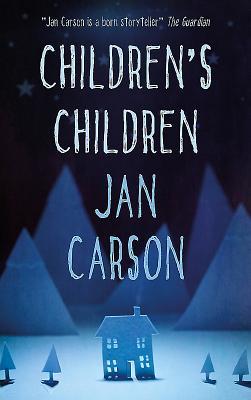
Children's Children by Jan Carson


Children's Children is a collection of fifteen short stories which cast a darkly humorous and oftentimes acidic eye, over life in post-conflict Northern Ireland. The stories contained in the collection are an eclectic selection of pieces which vary from traditional literary fiction to magic realism and subtle experiments with the short story form. They deal with the theme of legacy; the achievements, issues and problems this generation has inherited from the previous. Disillusioned street preachers, adulterous grocery shoppers, robotic brothers and child burglars are all given voice to express their experiences of life in contemporary Northern Ireland as Carson blurs the line between social commentary and modern parable.
Goodreads description


As the Goodreads description above makes clear not all the short stories in this collection are magic realism, nevertheless a lover of magic realism will find much to enjoy here. There is often a blurring of the edges in these stories, an unusual eye and voice. 

The characters in the stories are mostly ordinary folk, but they have something that sets them apart and makes them struggle. This is reflected in Carson's remarkable ability to write passages that combine the mundane with original and telling observation:
Dr Turner had laughed then, exposing the whiteness of his teeth. They were like tiny fingernails lined along his gums. The taste of coffee came off him every time he opened his mouth, for he was the type of man who leaned too close to women when he spoke.
These passages can be both humorous and dark at the same time.

The most obviously magic-realist story is the one about a mother of a floating six-year old who has to be tethered to the backyard fence to prevent her floating off. Then there is the story of the human statue who is losing the ability to move and impact of his immobility on his marriage. Other stories border on magic realism with an off-beat way of presenting the world, not magic realism but not conventional realism either. For example in one story a man creates an allotment in his box room and in another story a couple's elicit love affair consists entirely of shopping together.

The stories are sometimes allegorical and even political. The most obvious of these is the story Children's Children, in which the last two young people on an island meet the day before they must marry for the good of the island . He is from the northern part and she from the south. But where should they live: If we both move north, we'll upset the balance and tip the island into the sea. 

In addition to these magic realist, allegorical and off-beat pieces, there are some stories which are heartbreakingly realistic. These include stories about a woman's loss of a spouse, a child's view of fighting parents, and a daughter dealing with her mother's dementia.

In contrast to most short story collections, which usually have a few less strong stories among the good, I found all the stories in the collection strong and moving. As a consequence I will look out for a copy of Jan Carson's first novel Malcolm Orange Disappears.

I received this book free from the publisher in return for a fair review.

Friday, 22 July 2016

Magic Realism Blog Hop 2016 Introduction


On the 29th July the 2016 Magic Realism Blog Hop will start here.

What is the Magic Realism Blog Hop?
The hop is a magical realism mystery tour, with stops at blogposts covering all sorts of subjects - reviews, thoughts about magic-realist fiction, magic-realist art and film, useful information about magic realism, maybe even some original magic-realist fiction.

During the three days until the 31st July at least 25 blogs will feature posts about magic realism and some (including this one) will feature more than one post. At the bottom of each post will be a list of the links to all the other posts on the bloghop. So all you have to do is click on the links to hop around the bloghop and in so doing discover new blogs and bloggers and read a wide range of posts about magic realism. As posts will be added to the list throughout the three days, so do come back to check out what is new.

The history of the Blog Hop
This is the fourth magic realism bloghop. I organised the first in July 2013 on the first anniversary of this blog. As this blog reviews one magic realist book a week, that means that this hop marks 200 books reviewed here. Whilst not officially part of the Blog Hop I have updated my list of magic realism books. It's actually a list of the 700 magic realism books in my collection, so I only have 500 reviews to go (or 10 years of blogging) before I clear my current to-be-read list!

What I will be doing on the Blog Hop.
I am concentrating on the international nature of magic realism over my three blogs. On this blog I will feature two posts (in addition to this one) - on Saturday I will be posting a directory of international magic realism writers and on Sunday about Russian magic realism. On Adventures in the Czech Republic I will be showing how and why magic realism is part of the Czech identity. On ZoeBrooksBooks there will be a magic-realist poem.

Some useful information from previous blog hops
What is Magic Realism - the first post of the first blog hop
Useful Resources for Magic Realism
Free Magic Realism Short Stories and Books


Wednesday, 20 July 2016

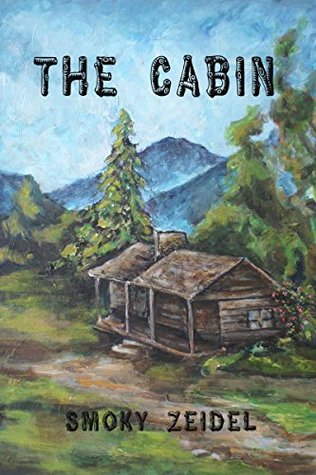
The Cabin by Smoky Zeidel


James-Cyrus Hoffmann has just inherited his grandfather's farm, and with it a mysterious cabin deep in the woods on Hoffmann mountain, a cabin he has dreamed about since childhood. When James-Cyrus enters the cabin, he is vaulted back through time to the Civil War era, where he meets Elizabeth, the brave young woman who lives there, and Malachi, a runaway slave.

James-Cyrus' neighbor, Cora, knows all too well the tragic history of the cabin. When James-Cyrus tells Cora about Elizabeth, Malachi, and his fantastic vault back through time, the two devise a plan to change the past and right a wrong that has haunted the Hoffmann family for generations. But can they find the key to unlock the past in time to change what history said happened to Elizabeth and Malachi?

Goodreads description

I reviewed Smoky Zeidel's The Storyteller's Bracelet in December: http://magic-realism-books.blogspot.com/2015/12/the-storytellers-bracelet-by-smoky.html. I enjoyed that book and so was very pleased when Smoky offered me a review copy of The Cabin

Time slip is something of a genre or at least subgenre of its own. And there is even a debate to be had whether it falls within magic realism. One of the issues with time slip is how you manage the implications of what happens when someone from the future impacts on the past. The grandfather paradox is well-known: You travel into the past and murder your own grandfather before he sires your mother or your father, and where does that then leave you?  Carl Sagan Ponders Time Travel Smoky Zeidel manages in The Cabin to solve this problem. I won't tell you how, as it will give away too much of the plot resolution.

The structuring of the novel is very artful, with chapters pursuing related storylines set in different times featuring the different generations. This could have been confusing, especially as there were some family names which recurred through the ages, but Smoky Zeidel managed to keep the different strands clear. In fact this weaving of stories across the ages is part of the underlying message and magic of the novel: There was a deep connectedness between mountain women in the Allegheny Mountains of Virginia, a connectedness that transcended the tangible, yet was as real as the forest itself. It was a part of the mountain magic, her grandmother had taught her when she was a young child, and it was particularly strong between Corrine and her sister, Catherine. 

I found the historical and folkloric context of the novel fascinating. As a Brit I was totally unfamiliar with the Native American tradition of fairy stones, and, I confess, I have only limited knowledge of the American Civil War and particularly the Underground Railroad, the network of secret routes and safe houses that allowed slaves to escape to the northern free states. The Hoffmann's cabin is one such safe house and it is also the portal between the different ages. 
   
This is a well-crafted and entertaining story, easy to read in one or two sittings. 

I received a copy of this book from the author in return for a fair review.
 

Sunday, 10 July 2016

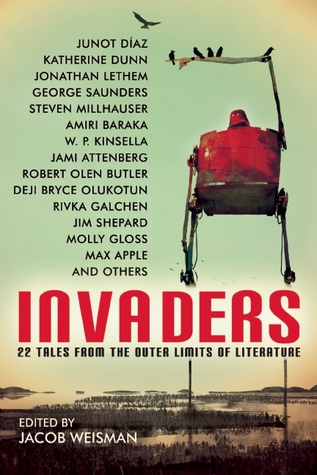
Invaders: 22 Tales from The Outer Limits of Literature


The invasion of the future has begun.

Literary legends including Steven Millhauser, Junot Diáz, Amiri Baraka, and Katharine Dunn have attacked the borders of the every day. Like time traveling mad-scientists, they have concocted outrageous creations from the future. They have seized upon tales of technology gone wrong and mandated that pulp fiction must finally grow up.

In these wildly-speculative stories you will discover the company that controls the world from an alley in Greenwich Village. You’ll find nanotechnology that returns memories to the residents of a nursing home. You’ll rally an avian-like alien to become a mascot for a Major League Baseball team.

The Invaders are here. But did science fiction colonize them first?

 Goodreads description

Whilst these stories are science fiction and not magic realism, many of the writers contributing to the anthology are already authors of magic-realist fiction, who have been invited to try their hands at speculative fiction. The resulting stories are remarkable and fascinating. One of the consequences of asking these literary authors to write sci-fi was there was generally a strong focus on the human element in the stories - relationships, sexual relations and indeed the nature of being human (something particularly appropriate to the sci-fi genre). 

I have reviewed two of the stories already on this blog (The Inner City by Karen Heuler, and LIMBs by Julia Elliott) because they have featured in collections which also contained magic realism.
W.P. Kinsella normally combines baseball stories with magic realism; in Reports Concerning the Death of the Seattle Albatross Are Somewhat Exaggerated he offers a story about an alien living as a baseball maskot. In Monstros Junot Diaz (author of The Brief Wondrous Life of Oscar Wao) has created a powerful story about a plague (and zombies) set in the Dominican Republic.

As you will have realized, the stories in the collection are very varied both in subject matter and in tone. This variety is reflected in my personal favourites, which include the aforementioned Kinsella story. While Death of the Seattle Albatross... is amusing and quirky, Fugue State by Brian Evenson and Escape from Spiderhead by George Saunders are darker and raise serious questions.

My favourite story was Molly Gloss's short story Lambing Season. As some of you will know, a literary heroine of mine is Ursula Le Guin. She is often categorized as a writer of science fiction and fantasy, but what attracts me to her writing is the ability to explore human nature and explore hard questions. Lambing Season reminded me of Le Guin's writings. It is a beautifully written and extremely human tale, in which a lonely shepherdess encounters an alien. This story is both gentle in touch and profound. 

This collection really explores the outer limits of literature as it claims. I recommend it to you. 

I received this copy of this book free in return for a fair review.


Sunday, 3 July 2016

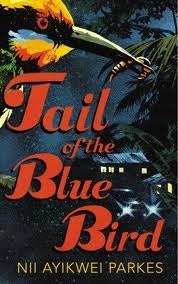
Tail of the Blue Bird by Nii Ayikwei Parkes


Sonokrom, a village in the Ghanaian hinterland, has not changed for thousands of years. Here, the men and women speak the language of the forest, drink aphrodisiacs with their palm wine and walk alongside the spirits of their ancestors. The discovery of sinister remains; possibly human, definitely 'evil'; in a vanished man's hut brings the modern world into the village in the form of Kayo; a young forensic pathologist convinced that scientific logic can shatter even the most inexplicable of mysteries. But as events in the village become more and more incomprehensible, Kayo and his sidekick, Constable Garba, find that Western logic and political bureaucracy are no longer equal to the task in hand. Strange boys wandering in the forest, ghostly music in the night and a flock of birds that come from far away to fill the desolate hut with discarded feathers take the newcomers into a world where, in the unknown, they discover a higher truth that leaves scientific explanations far behind
Goodreads description

It seems to me that detective stories offer excellent opportunities for magic realism, indeed so much so that there seems to be a subgenre of magic-realist mysteries.  This is because detection tends to be seen as rational and even scientific (especially as in this novel, when the central character is a forensic scientist), and these qualities can be counterpointed by the magical element in the story. 

As an exercise I started a list of magic-realist mysteries. It includes:


  • Under the Frangipani by Mia Couto
  • The Dave Robicheaux books by James Lee Burke
  • Colin Cotterill's Dr Siri Paiboun novels
  • The Invisible Guardian by Dolores Redondo
  • The Luminous Heart of Jonah S. by Gina B. Nahai
  • A Fierce and Subtle Poison by Samantha Mabry.


  • Of these probably Colin Cotterill's novels are the closest to Tail of a the Blue Bird - both have central characters who are forensic scientists and both operate with native cultures that have strong beliefs in ancestral spirits. In both there is a political element - Dr Siri deals with the communist government of Laos and Kayo (Parkes' young scientist) has to deal with a corrupt system, embodied by the ruthless Inspector Donkor who employs Kayo to come up with the "right" solution to the case. Interestingly this political element is contrasted both with the scientific truth being sought by the protagonists and the magical truth of the ancient beliefs.

    The ages-old world of Sonokrom is vivdly evoked by Parkes' rich language. It is not surprising that he is better known as a poet than as a novelist. The village characters talk in proverbs and folktales, both presented in the Ghanian version of English, without translation. The novel is in many ways a journey into an older and somewhat disorientating world. By taking the reader on this journey Parkes leads to the magic solution to the mystery, which would have been unthinkable at the beginning of the book.

    I really enjoyed this book, which I read in just two sittings.

    Saturday, 2 July 2016

    The Magic Realism Bloghop is coming. Sign up here


    Hello fellow bloggers. Yes, it is that time of year again. If you have a blog and are interested in magic realism, then please take part in this year's bloghop. All you have to do is write a post about magic realism on one of the days of the hop and provide a link to the other blogs on the hop (I will send you the link you will need to include via an email).  

    Not sure what to write? Here is the link to the first post in the 2015 bloghop, you will find a list of all the other posts on that hop at the bottom - http://magic-realism-books.blogspot.com/2015/07/the-autumn-of-patriarch-by-gabriel.html  

    If you are interested sign up below.  At this stage just add the general link to your blog to the list.  Please publicize the bloghop to your readers - feel free to download and reuse the image above and/or this smaller version:


    Monday, 27 June 2016

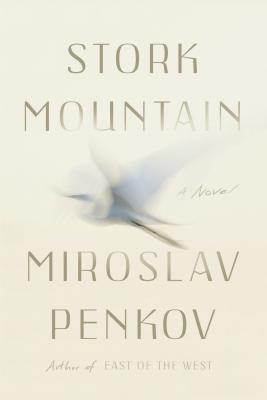
    Stork Mountain by Miroslav Penkov


    Stork Mountain tells the story of a young Bulgarian immigrant who, in an attempt to escape his mediocre life in America, returns to the country of his birth. Retracing the steps of his estranged grandfather, a man who suddenly and inexplicably cut all contact with the family three years prior, the boy finds himself on the border of Bulgaria and Turkey, a stone's throw away from Greece, high up in the Strandja Mountains. It is a place of pagan mysteries and black storks nesting in giant oaks; a place where every spring, possessed by Christian saints, men and women dance barefoot across live coals in search of rebirth. Here in the mountains, the boy reunites with his grandfather. Here in the mountain, he falls in love with an unobtainable Muslim girl. Old ghosts come back to life and forgotten conflicts, in the name of faith and doctrine, blaze anew.
    Goodreads description

    There is something about borderlands that are particularly conducive to magic realism. In a way they are a physical geographical manifestation of a key element of magic realism: the meeting of cultures and worlds. I was reminded as I read Stork Mountain of another magic realist book I read and reviewed recently Voroshilovgrad by Serhiy Zhadan. Both are books about borderlands, both feature an aimless young man returning to a family homeland in search of a family member. Of the two books, although I enjoyed Voroshilovgrad, I prefered Stork Mountain. 

    Stork Mountain is Zhadan's first novel; his collection of short stories East of West was and still is on my magic realism to-read list. It may be a first novel, but the story is expertly put together. Nothing and no one is quite what they seem. The denouement at the end took me completely by surprise and I am usually good at spotting such things. Like many a good magic-realism novel the past and the present, the myth and the here-and-now are woven together, and family history repeats itself or at the very least has echoes (sometimes misleading ones). Similarly the magic element is so woven into the story that at times the reader is not aware of it. 

    At its heart this is a story about relationships, in particular about the central character and his grandfather. There is a wonderful humanity about this book. All the characters are flawed, and when they respond to each other they do so in interestingly flawed ways, because they do not understand one another In addition to the protagonist's relationship with his grandfather, there is his longing for Elif, a girl so damaged by the relationship with her father that any hope of a relationship seems doomed. 

    I recommend this book to you and wait for Miroslav Penkov's next novel with great interest

    I received this book free from the publisher in return for a fair review


    Sunday, 12 June 2016

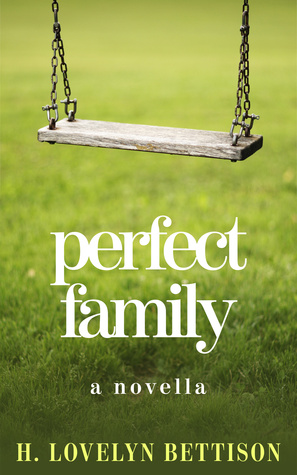
    Perfect Family by H Lovelyn Bettison


    Sadie always wanted the perfect family: a husband, a son, a dog, a house in the suburbs. For a little while she had it all. Then after an accident one afternoon, her son starts acting oddly and displaying strange new abilities. His new behavior threatens to bring to light a secret that she's been keeping for years. Will she be able to hold her family together or will the truth tear them apart?
    Goodreads description 

    I enjoyed this novella by a fellow member of the Magic Realism Facebook Group. In another writer's hands the plot could so easily have become somewhat hackneyed horror or sci-fi but Bettison chose to take the lighter, more nuanced magic realism route, which of course I prefered.

    It is difficult to write about the story without giving away the plot twists that the author has expertly woven into the novella. The story is in someways a variation on the changeling child archetype, which has appeared in folk and fairy tales since time immemorial.

    As this is a novella, inevitably the characterization is not as developed as it would be in a full-length novel. I would have liked to have known more of the central character's backstory. Why makes Sadie so desperately need to be a mother? Why does she find it impossible to talk to her husband about her secret? Although in the resolution Sadie is said to have resolved this, without the backstory it is hard to understand why.

    Although the final scene was pure magic realism, I did not see it coming and found it moving and enchanting. A lovely little book.

    I received this book free from the author in return for a fair review.

    Thursday, 9 June 2016

    1001: The Qaraq by Stephen Weinstock


    Sahara Fleming experiences disturbing visions. One is a lifetime as a Red Isle goddess harboring a deadly grudge. Another gives her an uncomfortably intimate view of a fourth century Persian orgy. Sahara suspects these images are more than vivid hallucinations, but she dismisses them as stress. She's four months pregnant and married to Amar, an emotionally aggressive stockbroker unwilling to be a father.

    When a mysterious circle of neighbors plants clues about her visions, Sahara realizes their true meaning. Sahara and her neighbors are a qaraq, a group of intertwined souls who come together lifetime after lifetime. Invited to the group's secretive meetings, Sahara hears their stories and learns her stormy marriage goes back centuries.

    Like a modern day Scheherazade attempting to save her marriage, Sahara shares the past life stories with Amar. But as her karmic knowledge grows, so does Amar's jealousy. She must abandon the qaraq or risk losing her family.

    Goodreads description

    This novel is a puzzle. I don't mean it is difficult to understand, but rather that in reading the book you find yourself joining Sahara and her qaraq friends in trying to puzzle out what the visions mean and how they connect. You might like to make notes, as there are lots of visions spread over many centuries and indeed millenia. It is not always clear who is who, as some names change, nor is it always clear whose visions are being related, but that is part of the puzzle. And moreover as Sahara and the Qaraq are also solving the puzzle you do not get lost (unless the author wants you to). 

    Stephen Weinstock acknowledges his debt to the Arabian Nights, which influences both some of the stories and the structure. The first story directly references Scheherezade (with Sahara as Scherezade). There are seventy-seven stories in total, so this is a long book and the first in a series of eleven, with a total of 1001 chapters. Stephen Weinstock has set himself a serious task, especially as the stories have different narrative voices and styles according to the person recalling and recounting them. I will be interested to see if he manages to sustain it over eleven books. 

    Then there is the story of Sahara and the other members of the qaraq. For me the book is more satisfying as a series of stories, than as a story about a woman in a stormy marriage.

    If you are interested in story telling, puzzles, reincarnation, and kharma, this is a book for you.

    I received this book free from the author (he is a member of the Magic Realism Books Facebook Group) in return for a fair review.


    Tuesday, 24 May 2016

    The Improbable Wonders of Moojie Littleman by Robin Gregory


    Moojie Littleman is not just another orphan with extraterrestrial friends, he is not just a kid who falls into a series of magical, mystical misadventures involving love and family and watermelons. He is, above all, the most unlikely and powerful hero ever known. 

    Moral allegory, mysticism, and lyrical prose, THE IMPROBABLE WONDERS OF MOOJIE LITTLEMAN tells the story of a disabled boy who is sent to St. Isidore's Fainting Goat Dairy, where determination to “belong” fuels his self-discovery. A surprising destiny awaits him if he can survive one last terrifying trial.

    Goodreads description

    Robin Gregory is a member of the Magic Realism Books Facebook Group I run and I always enjoy her contributions to discussions there, so I leaped at the chance to read and review her book. One of the issues we often discuss is where to place our books, this question is very relevant to The Improbable Wonders of Moojie Littleman. It could be fantasy, science fiction or magic realism. It could be for adults or for young adults or middle-graders.  

    The story's hero is a disabled boy who has some magical powers - the ability to heal being one and occasionally the power of levitation - but those wonders really don't help him much with his troubles. Having lost his parents twice (he is an orphan and then his adoptive mother dies and his father deserts him), Moojie is desperately in need of a family. He grows up with his gruff and unsympathetic grandfather, with whom he has a complex relationship. He also has an interfering aunt, who at first seems a caricature but who develops into someone as complex as his grandfather. 

    When Moojie meets the lighteaters (or hostiles as his grandfather calls them), he decides he wants them to be his family instead. They are exotic, so philosophic they talk in riddles a lot of the time, and then there is a beautiful lighteater that the adolescent Moojie falls in love with. In the end when the lighteaters are about to leave, Moojie is forced to decide which "family" he wishes to be with. I was struck that Moojie's feeling are often shared by children, who wonder what it would be like to have another family than their own.

    I very much liked the complex characterization of the key characters in the novel and the way the complexity is revealed as Moojie's own character grows. The lighteaters however are less developed, partly because of the riddles and partly because of their otherness. 

    The book is full of philosophy and lessons - the role of forgiveness being the most prominent - and I can see why some people have compared it with Paul Coelho's work. This is done without being heavy-handed, something I found offputting in The Alchemist. I am sure a lot of parents will encourage their children to read this novel for that reason.

    But were my son in middle grade I would not buy it for him. When he was twelve John was a picky reader and unless immediately taken by the story would abandon it. Most of the book's pacing is slow and although it really picks up at the end and gets exciting, my son would have given up by then. The other reason is the language. Gregory writes beautiful poetic prose, full of lovely descriptions. But there are a lot of words I did not know in the book and which I wasn't always able to work out from their context.  I assume these words are American dialect words and John and I are British. Maybe the publisher might like to consider a glossary or similar for the British market.  

    Those quibbles aside there is much to love in this book, as shown by the list of awards it has received (current finalist Indiefab Best Books of the Year, Library Journal Indie California Book Collection 2016, Gelett Burgess Children's Book of the Year Award 2015, Kirkus Reviews Best Indie Books Dec/2015, The Wishing Shelf Adult Fiction Award 2015).


    I received a free copy of the book from the author in return for a fair review.


    Sunday, 15 May 2016

    Albina and the Dog Men by Alejandro Jodorowsky

    A darkly funny, surreal novel set in Chile and Peru, Albina and the Dog Men is Alejandro Jodorowsky’s sprawling modern myth in which sexual desire appears as a dangerous and generative force that mutates and transforms, unraveling identities and rending the social and moral fabric of a small town... When two women, an amnesiac albino giantess and a woman called The Crab, arrive in this South American desert town, their otherworldly allure and unfettered sensuality and turns men into wild animals.

    A modern-day Kafka story on hallucinogens, with strong doses of mysticism and horror, Albina and the Dog Men reads like an ancient folk tale whispered at night, fused with an urgent critique of contemporary society. Its essence is dark magical realism that throws into question the nature of what it is to be human.

    Goodreads description 

    Over on the Magic Realism Books Facebook Group a discussion has started about the role of surrealism in magic realism and whether the two are distinct. This book highlights that the boundaries between the two are blurred. 

    Jodorowsky is best known for his work as a film director, but he is talented in many fields - Wikipedia  describes him as a film and theatre director, screenwriter, playwright, actor, author, poet, producer, composer, musician, comic book writer and spiritual guru. 
     
    It is worth examining Alejandro Jodorowsky's magic-realist and surrealist heritage. Jodorowsky was born in Chile in 1929 to Jewish Ukranian parents. As we have seen in other books reviewed on this blog, there are strong magic-realist South American, Jewish and Eastern European traditions and Jodorowsky was heir to all three. From 1950 he divided his time between France and Mexico. In Mexico he became friends with the British surrealist artist Leonora Carrington, whose book The Hearing Trumpet I reviewed in the early days of this blog. When I first read Albina and the Dog Men and before I researched the book's author, I was very much reminded of Carrington's work of magic realism. 

    The other book I was reminded of was Jeanette Winterson's Sexing the Cherry, whose monstrous and remarkable central character not only is called the Dog Woman but has the same elemental strength as Jodorowsky's two central female characters. But while I consider both Carrington's and Winterson's novels to be magic realism, I do not find Albina and the Dog Men to be so. For me there is not enough realism in this book to be magic realism. No this sexy, raucous, mystical and amazing book is just too surreal.

    I received this book free from the publisher in return for a fair review.


    Sunday, 8 May 2016

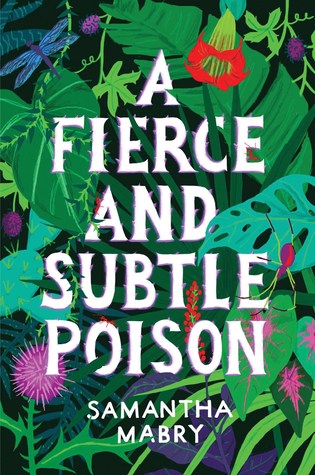
    A Fierce and Subtle Poison by Samantha Mabry

    Everyone knows the legends about the cursed girl--Isabel, the one the señoras whisper about. They say she has green skin and grass for hair, and she feeds on the poisonous plants that fill her family’s Caribbean island garden. Some say she can grant wishes; some say her touch can kill.

    Seventeen-year-old Lucas lives on the mainland most of the year but spends summers with his hotel-developer father in Puerto Rico. He’s grown up hearing stories about the cursed girl, and he wants to believe in Isabel and her magic. When letters from Isabel begin mysteriously appearing in his room the same day his new girlfriend disappears, Lucas turns to Isabel for answers--and finds himself lured into her strange and enchanted world. But time is running out for the girl filled with poison, and the more entangled Lucas becomes with Isabel, the less certain he is of escaping with his own life.

    Goodreads description

    This novel is another example of magic-realist mystery fiction. It is also a book for the young adult market, so let me start this review with a word of caution: I am not remotely a young adult. I am a middle-aged woman in her late fifties, so I am definitely not the book's primary market.

    The mystery angle is that girls go missing on the island of Puerto Rico, only to wash up on the beach covered with sores. When the latest girl is the central character's new girlfriend, he finds himself drawn into a desire to find out what happened to her. Is someone killing these girls and if so, why? The magical-realist angle is present in two ways: firstly the cursed girl herself and secondly the other stories told by the señoras about the spirits of the island. 

    The idea of a heroine who is poisonous and who needs to be surrounded by poisonous plants is not a new one - we encountered it a couple of years ago in Lisa van Allen's The Night Garden. It is handled well in this novel and fits with the lush vegetation of the Caribbean. The Puerto Rican traditional tales are less to the fore - there are hints in the novel about them but their contribution to the story is not fully developed. 

    I found the mystery in the novel disappointing. There is no attempt to develop false leads. The murderer's identity was obvious early on, indeed was something of a cliche. The murderer's attempt to implicate the central character was also predictable. 

    The central character, Lucas, is not particularly likeable.  He is an alien in the island and at the same time is alienated from his American family. He can see how much his father, and by default he, is disliked by the locals, but he still sometimes behaves as a typical rather selfish and spoiled Western teenager. Although he talks about his distress over his girlfriend's death, he doesn't really display much in the way of grief. However, faced with the disappearance of a little girl and the determination of Isabel, the cursed girl, Lucas steps up to the mark. 

    I received this novel free from the publisher in return for a fair review


    Sunday, 1 May 2016

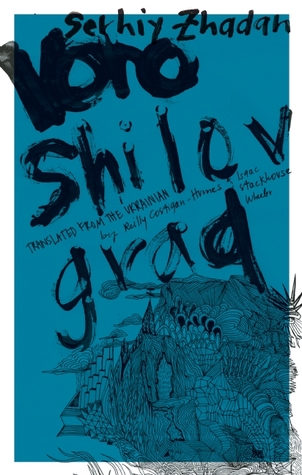
    Voroshilovgrad by Serhiy Zhadan


    A city-dwelling executive heads home to take over his brother's gas station after his mysterious disappearance, but all he finds at home are mysteries and ghosts. The bleak industrial landscape of now-war-torn eastern Ukraine sets the stage for Voroshilovgrad, the Soviet-era name of the Ukranian city of Luhansk, mixing magical realism and exhilarating road novel in poetic, powerful, and expressive prose.
    Goodreads description

    Wow, this is a difficult book to write about. Throughout the book I was reminded by Pedro Peramo by Juan Rulfo. The two novels focus on a man returning to a home town which is inhabited by ghosts. The similarity isn't simply a matter of sharing a central theme, but also in the way the writer disorientated me. The story is told from the point of view of the protagonist, Herman, who seems at times to be hallucinating or on drugs - or maybe he is just experiencing the surreal nature of life in his part of the world.
    The novel is set in the lawless land of eastern Ukraine, where smugglers cross the Russian border with contraband electrical goods, guns, and petrol, and battle with farmers. It is a land where the gangsters are government officials, where refugees troop towards the freedom of Europe, and ghosts play football with the living. This world of black soil rich in crops, oil and the hidden relics of the German army's retreat from Stalin's forces is brilliantly evoked by the writer. The book veers from poetic lyricism to brutal realism. And sometimes we get both at the same time, a feat I would have thought impossible, but Zhadan pulls it off. The other element that might surprise you is the level of bizarre humour that runs through the book. There is an amazing gypsy funeral, even the hymn at which had me chuckling:
    When the Lord takes you by the hand and leads you down the yellow brick road,
    When you leave this strange country where the weather and utilities cause constant vexation,
    When your young and handsome face yellows in photographs from your trip to Gurzof,
    Our loving family, including all the sons-in-law, daughters-in-law, and more distant relations, will follow your lead.

    The description refers to Voroshilovgrad as a road novel and the section at the back of the review copy I received referenced Easy Rider. The road in this novel is either full of potholes or made of  yellow bricks. The story doesn't just refer to The Wizard of Oz, but shares some of its themes - going on a journey and finding your home, and the importance of friendship. The novel's plot isn't the most conventional and the ending is not as conclusive as one might expect, but these things are to be expected in the context of Herman's uncertain world. 
    I received a copy of this novel free from the publisher in return for a fair review.

    Sunday, 24 April 2016

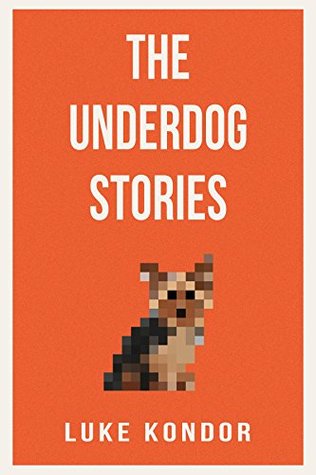
    The Underdog Stories by Luke Kondor

    A collection of strange, wonderful, sad, romantic, and weird tales about what happens when the underdog bites back.

    The latest book from the ‘master of wit and satire’ — a collection of surreal, subversive, and satirical tales.

    What happens when a community of tiny people move into a man’s beard?
    Why are portals appearing in Neville's tea?
    Will Rhuben’s marriage survive after he's turned into a dog?
    Who’s that singing in the shadows? 

    Goodreads description 

    I reviewed Luke Kondor's The Missing Body Parts of Mr Doherty last year here : http://magic-realism-books.blogspot.com/2015/07/the-missing-body-parts-of-mr-doherty-by.html

    The Underdog Stories is a collection of Luke's short stories and it has the same gently surreal feel about them that I saw in his other book. The magic realist writer he most reminds me of is Murakami, who also treads that path between surrealism and magic realism. Like Murakami there is something rather melancholic about the predicaments that Kondor's characters find themselves.

    The stories are:

    The People Who Live In My Beard - pretty self-explanatory but look out for the last line of that one.
    His Dirty Little Portal - a man discovers a portal to a parallel world in a mug of tea. 
    Doghouse - Dad moves into the doghouse literally
    @boyonawall - a clever piece about social media
    The Singer in the Shadows - a weird nightmare of an encounter
    Rent - a story about a young woman takes on a flat she can't afford and the impact it has
    Dog Gone Bad - Rhuben always knew he was really a dog, but he doesn't through the operation's implications on his marriage
    A Mother's Letter - just that only from a rather freaky mum
    The Underdog - "You're not the victim, you're the fucking underdog"

    A short short-story collection but a fun one.


    Sunday, 17 April 2016

    Magic Realism in Art

     Copyright The Phoenix Art Museum  Shown under Low Res Fair Use. In order to give support


    I put up a post over on the Magic Realism Books Facebook Group about the Group's proposed new rules. In it I write that the group welcomed to post about magic-realist art. And one person commented that they were not sure what magic-realist art was. As the subject is a large one, I decided not to answer in a comment or indeed a post on Facebook and instead to dedicate this post to the subject.

    It may seem strange that a Group dedicated to books should be encouraging posts about the visual arts. I wonder whether this was the commentator was thinking this, when he responded to my post. My answer is that the two forms are linked and the student of magic realism books can find much of relevance at looking at the story of magic realism in art, so much so that a study of the latter can perhaps shed a clearer or new light on literary magic realism.

    The first point to make is that term "magic realism" first appeared in the context of magic-realist art. It was coined in 1924 by German art critic Franz Roh for a new post-expressionist form of painting that represented mystical non-material aspects of reality in a realistic backdrop. He wrote that magic realism: employs various techniques that endow all things with a deeper meaning and reveal mysteries that always threaten the secure tranquility of simple and ingenious things...  it is a question of representing before our eyes, in an intuitive way, the fact, the interior figure, of the exterior world.

    Roh's book was published in Spanish in 1927 and some people argue that it influenced the development of South American magic-realist literature, although that claim can be disputed.

    Works by a number of artists have been called magic realist. These artists include Marc Chagall, Frida Kahlo (whose painting is shown above), and Marcela Donoso. One of the most influential artists on the movement was Henri Rousseau - as Andre Breton wrote with Rousseau we can for the first time talk about Magic Realism. You will find an interesting visual timeline here: http://www.monograffi.com/magic1.htm. In this timeline the examples seem realistic to a greater or lesser extent, but there is something unsettling about them - something that might be termed magic.

    As I am no student of the history of art, I suggest you take read the more detailed account of the history of magic-realist art found here: http://www.monograffi.com/essence1.htm. You will soon see there are certain similarities between visual and literary magicrealism. The most obvious being that the difficulty of definitions. As the author of that website writes:  A central challenge in identifying Magic Realism pertains to the boundaries between Realism and pure fantasy. Magic Realist artists often introduced unusual juxtapositions, eerie atmospheres and naive elements into their art. Typically the Magic Realists dealt with themes of isolation and alienation. Many of them studied the techniques of the Old Masters, and used these to establish, and also to twist, the illusions of reality. But they did not stray completely away from the real world. 

    So what is relevant to writers and readers of magic realism? Here are my thoughts (I welcome others):
    1) The two forms of magic realism have the same difficulty with definitions and for the same reason. 
    2) Realism is at the heart of the definition, but it depends on how you define and portray it
    3) The focus is as much on the background as much as the foreground. This is contrary to our modern European way of depicting the world and is of itself disturbing. This focus references earlier (medieval and Renaissance) art, as well as primitive or non-European art
    4) Challenging and subverting the "normal real" is core to the form. It is a political art form.
    5) Roh's strand born in the heady challenging environment of the Weimar Republic was brought to a halt with the rise of fascism and the subsequent world war. It made me wonder about the impact of the war on the development of European literary magic realism
    6) The real is very real and often detailed, which is what makes the magic element so disturbing.
    7) The magic is also real. Fridha Kahlo said I don't paint dreams or nightmares. I paint my own reality. It could almost be Gabriel Garcia Marcia saying that. 

    Kahlo's picture above is a good example of all but point 4. It also has the added magic-realist device of conflating time.

    For more food for thought and look at the work a contemporary magic-realist painter in the context of the history of the form, do watch this excellent illustrated lecture.


    Wednesday, 13 April 2016

    Video Interview with Kathleen Alcala

    As my ongoing ill-health is preventing me from reading my normal magic-realist book a week and therefore my weekly review, I thought I might share with you this video interview with Kathleen Alcala. I reviewed the book referenced in the interview Spirits of the Ordinary in July 2013. The link is here http://magic-realism-books.blogspot.com/2013/07/spirits-of-ordinary-by-kathleen-alcala.html

    Sunday, 3 April 2016

    The Magic in Magic Realism - Guest Post

     As I am ill and unable to post reviews, I am posting this guest post by Lily Iona Mackenzie, author of Fling. The post originally appeared on Lily's blog as part of last year's magic realism blog hop.

    The Magic in Magic Realism


    So much has been said about magic realism that it’s difficult to add anything new to the conversation. However, I wondered if putting on my poet’s hat and parsing the two words might crack open another perspective.

    The term magic implies some slight of hand, an ability to make things appear and disappear at will. In a magic show, magicians exercise their ability to draw viewers’ attention away from what the magicians are doing so they can convince those watching that a rabbit really does appear at random out of an empty hat, or that any number of equally fantastic events can occur. In this case, the magic isn’t really magical in the sense of a supernatural intervention because there’s a trick at its foundation based on perception and how skillful the magician is at keeping the audience distracted enough not to notice the hoax involved.

    Something similar happens with writers. They capture our attention through assembling strings of words that become a compelling narrative we follow. Just as a viewer at a magic show sets aside his/her momentary doubts about what’s happening before his/her eyes, so too do readers enter the narrative dream. That enables the writer to convince readers that the setting, characters, and events taking place are actually happening in real time when, in truth, they aren’t. They only come to life in the readers’ imagination as readers let go of their immediate world to undertake this journey into the unknown. Put this way, reading can seem like a potentially dangerous endeavor, and it can be if a writer’s ideas and images shatter some preconceived notion about the world and about us.

    Magic also has the ability to temporarily take people out of the constraints of everyday life and make them feel they can transcend it. Instead of being locked inside the usual routines that structure our days, we find release when something magical happens, such as when we watch a play in a theatre and suddenly our world is transformed. We’re no longer our daily selves, but we begin to identify with what’s occurring on the stage and participate in all of the characters involved, good guys and bad guys. We’re under the actors’ and director’s spell, convinced that the action unfolding in front of us is real, though it’s only make believe.

    From these examples I’ve given, it’s easy to see that any writing, whether it’s a novel or a play, has a magical component to it. Words themselves are transformative in that they can so easily metamorphose into other words: world contains word and old. Add or subtract a letter here or there and we’ve landed in a different meaning. Words in themselves are slippery and magical, calling forth images just by naming things: red chair, oak table, 2006 Honda Accord, green plaid coat, eucalyptus tree. Read the text and suddenly something appears in our mind’s eye. Amazing!

    And then there’s the way the wind can blow open a door, filling the house with a gust of cold air, or the sun can illuminate a field and immediately transform our experience of that place. Or the timer on our living room lamp switches on silently and the room is now swathed in light, creating a totally different atmosphere. That’s one reason we talk about something magical happening, or of a place as being magical. In fact, the world is magical not only in its inherent changeability but also because of our interaction with it.

    That’s where “realism” enters the discussion. Reality is both magical and “real,” if by real we mean something that isn’t imagined. I’m not a philosopher, but this computer I’m typing on has a life distinct from mine. My husband, who is sitting reading in a chair across from me, can see it and agree on its reality. But it also exists in a world where objects can become symbols for something else, so while my computer retains its identify as a writer’s tool, it also can represent a window into another universe. It can become a metaphor for many things, just as most objects can.

    This, then, seems to be the foundation for what we call magic realism. Language by its very nature is magical, transforming our everyday reality in multiple ways, carrying us aloft on the wings of thought.

    You can visit Lily's blog at https://lilyionamackenzie.wordpress.com

    Sunday, 27 March 2016

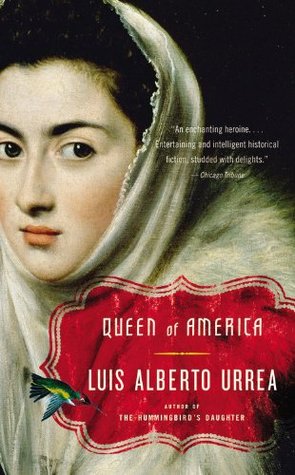
    Queen of America by Luis Alberto Urrea


    As I am unable to read books at the moment I am very grateful to Malcolm R Campbell, author of the excellent Conjure Woman's Cat, for allowing me to republish his review of Queen of America. This is the sequel to probably my favourite magic-realist novel The Hummingbird's Daughter, which I reviewed here.


    “Although Urrea has stitched a seamless end to the saga initiated in The Hummingbird’s Daughter, Queen of America lacks the clarity of vision of its prequel. Having left behind Mexico’s rich landscape and languages, the Urreas — Tomás and Teresita, and the author as well — grasp for inspiration.” – New York Times 2011 review by Mythili G. Rao

    If Urrea’s powers as an author of magical realism and his great-aunt Teresa’s powers as an inspiring healer reach their apex in The Hummingbird’s Daughter, they become a lingering, bittersweet denouement in Queen of America. Urrea writes in the novel’s notes and acknowledgements that “The story is not the history.” Writing a novel rather than a non-fiction account of his family’s history led Urrea on a twenty-year journey to pull together myths and stories and facts into a cohesive whole that is whole as an impression of what happened rather than–as he says–a textbook.

    After she flees Mexico at the end of The Hummingbird’s Daughter, Teresa is carried by multiple tides more powerful than even her imagination can grasp. Initially, she settles with her father in a variety of locations in the Southwest. It’s closer to what they know, but it’s also dangerous inasmuch as the Mexican government still considers her an enemy of the state and persists in sending assassins to put an end to it. Until her father manages to land on his feet and start a profitable life in the States, finances are in short supply.

    After suffering through an assault, Teresa leaves her family behind and looks for a way to continue her healing work elsewhere. Unfortunately, her upkeep and life are taken over by a consortium that primarily seeks profit out of her fame. Her life becomes, in today’s terms, a lengthy tour where she is at once visiting royalty and a caricature of her former self.

    She experiences many wonders on this journey, including a prospective chance for love, companionship and normality. And she experiences many heartbreaks. In these highs and lows, readers will find her to be wonderfully human. Urrea knows his character and brings out her soul in this sequel.

    By the time she frees herself from the sweep of events controlled by others, she has spent her capital. In many ways, it’s a well-deserved rest, one that she’s ultimately at peace with.
    Urrea has handled her story with humor, more of his rich language, and a deep look into the psyches of the major characters. The story is told well and Teresa emerges as a complete person. While Urrea did not write a textbook and was free to interpret events (perhaps more truthfully as fiction than as facts) he is nonetheless constrained by the realities of Teresa’s life. No doubt, he would disagree. Suffice it to say, the historical Teresa did not lead a revolt against the Mexican government or become a catalyst for Indian rights and freedom while on tour, nor go on to accomplish great and mythic deeds in the U. S. If she had, Queen of America might have reached the stunning heights of its predecessor.

    Teresa bloomed in The Hummingbird’s Daughter and faded as all flowers must in Queen of America. It is still a must-read for everyone who began the journey in The Hummingbird’s Daughter–for closure.


    This review first appeared on Malcom's blog: https://knightofswords.wordpress.com/2016/02/25/review-queen-of-america-by-luis-alberto-urrea/

    Saturday, 26 March 2016

    Apologies


    I am afraid I am unable to post at the moment. I have been suffering labyrinthitis for the last two weeks and it doesn't appear to be clearing anytime soon. The main symptom is vertigo when I look down or up and so reading is almost impossible.

    Sunday, 13 March 2016

    The Invisible Guardian by Dolores Redondo


    The naked body of a teenage girl is found on the banks of the River Baztán. Less than 24 hours after this discovery, a link is made to the murder of another girl the month before. Is this the work of a ritualistic killer or of the Invisible Guardian, the Basajaun, a creature of Basque mythology?

    30-year-old Inspector Amaia Salazar heads an investigation which will take her back to Elizondo, the village in the heart of Basque country where she was born, and to which she had hoped never to return. A place of mists, rain and forests. A place of unresolved conflicts, of a dark secret that scarred her childhood and which will come back to torment her.


    Torn between the rational, procedural part of her job and local myths and superstitions, Amaia Salazar has to fight off the demons of her past in order to confront the reality of a serial killer at loose in a region steeped in the history of the Spanish Inquisition.

    Amazon description

    As I am sure I have said elsewhere on this blog, I have always had a liking for crime fiction. Within crime fiction there seems to be a growing sub-genre of magic-realist crime fiction. Eka Kurniawan's Man Tiger, which I reviewed here is longlisted for this year's International Man Booker Prize.  Then there are the works of Mia Couto, James Doss, James Lee Burke, Colin Cotterill, and others. Now we can add Dolores Redondo to the list.

    The Invisible Guardian has already seen great commercial success in Europe, as well as being shortlisted for The International Dagger Award (a prize for best crime novels translated into English). So I came to this book with high expectations. If you are someone who reads crime fiction mainly to find out who did it, you are likely to be disappointed, as I worked out who the serial murderer was quite easily. But there is far more to this book than that.

    In fact if I were to criticize anything in the book it would be that there is almost too much going on. The novel has so many themes, every character is provided with a substantial backstory, and the descriptions of the forest and countryside extend over many pages.

    The story's setting in the Basque country in a town set in deep forested valleys is beautifully invoked by the author. It is an area steeped in pre-Christian traditions and beliefs, including in the Basajaun, a sort of Basque Bigfoot. It is these traditions that provide the magic realism in the story and which Amaia Salazar, of course, at first rejects.

    Much of the tension in the book comes from the central character's struggles with the traumas of her childhood. These resurface in her consciousness as a result of both returning home and because of the nature of the murders that she is investigating. She is also struggling with a recalcitrant fellow male officer who resents her leading the investigation (something of a trope in detective stories) and her vicious older sister Flora. It was these psychological struggles that engaged me and kept me wanting to know more.

    This is the first in a series of crime novels by the author and it will be interesting to see where Redondo is able to take Amaia, having revealed so much of her backstory in the first book. It will be interesting too to see if the magic realism makes it into book two.

    I received this novel free from the publisher in return for a fair review.
    Sunday, 6 March 2016

    Reservation Blues by Sherman Alexie


    Coyote Springs is the only all-Indian rock band in Washington State—and the entire rest of the world. Thomas Builds-the-Fire takes vocals and bass guitar, Victor Joseph hits lead guitar, and Junior Polatkin rounds off the sound on drums. Backup vocals come from sisters Chess and Checkers Warm Water. The band sings its own brand of the blues, full of poverty, pain, and loss—but also joy and laughter.

    It all started one day when legendary bluesman Robert Johnson showed up on the Spokane Indian Reservation with a magical guitar, leaving it on the floor of Thomas Builds-the-Fire’s van after setting off to climb Wellpinit Mountain in search of Big Mom.

    In Reservation Blues, National Book Award winner Alexie vaults with ease from comedy to tragedy and back in a tour-de-force outing powered by a collision of cultures: Delta blues and Indian rock.

    From the Amazon description 

    Having read a lot of new magic realism books lately I decided that this week I would read and review a magic-realist classic. I hadn't read this novel before this week and boy was it a joy. Sherman Alexie's work is an example of what is great about magic realism. 

    It shows without sentimentality the harsh reality of life on the reservation - the alcoholism, the poverty, the violence and, something I have seen myself in working with disadvantaged people, the dislike of those of their own who might be about to do something with their lives. There are good reasons why Coyote Springs sing the blues, apart from Robert Johnson's devilish guitar. But Alexie manages to portray all this in a novel which is at times funny, surreal, beautiful and, yes, magical. 

    On the face of it a straightforward story well told, there are layers of meaning and imagery in Reservation Blues that give it depth and width. An example of this is the band's treatment at the hands of the Cavalry Records. Not only does this show the cynical exploitation of the Indian image and culture (the company prefers to dress up two white women as Indians than deal with the real thing), but also the record executives are called Armstrong, Wright and Sheridan. All three are the names of US cavalry commanders who led the genocide of the Indian Wars.

    Dreams feature prominently in the book, adding both historical perspectives and insights into the past lives of the members of the band.The use of dreams is sometimes derided by critics as a cop-out, a shorthand, but Alexie sets up his use of dreams by explaining their role in native American culture and in the lives of the individual members of the band: Junior based all of his decisions on his dreams and visions, which created a lot of problems.

    Over the course of the novel the characters and the backstories of the band members are revealed and the reader comes to understand and even like them - even Victor and Junior who start the book as bullies and drunks. Indeed the conclusion of Junior's story is haunting.

    Magic pervades the book - the traditional magic of Big Mom, the burning strings of Robert Johnson's guitar and Thomas' storytelling magic, which climbed into your clothes like sand, gave you itches that could not be scratched.  Victor fights against the magic and old beliefs, refusing to believe, but nevertheless the magic is there, like the ghostly horses screaming in the night. This book is the same, a magical book that stays with you.